How to Build Effective Tools for Global Sourcing?

Building effective tools for global sourcing is a complex process. It requires careful planning and strategic execution. Companies often face challenges in identifying suitable suppliers and managing logistics. The right tools can simplify these tasks. However, building with tools is not just about technology. It's also about understanding the global landscape.

Organizations need to focus on different aspects when creating sourcing tools. For instance, they must consider cultural differences and communication barriers. These factors can significantly affect supplier interactions. Additionally, tools should be user-friendly and adaptable. Leaders must create an environment that encourages feedback and reflection on the tools in use.

It's important to remember that no tool is perfect. Continuous improvement is essential. Organizations should be proactive in seeking ways to enhance their sourcing strategies. This ongoing process ensures that the tools remain relevant in a constantly changing global market. By embracing challenges, companies can build effective tools that truly support their sourcing needs.

How to Build Effective Tools for Global Sourcing?

Understanding the Importance of Global Sourcing in Business Strategy

Global sourcing has become an essential component of business strategy in today's interconnected market. A recent report from Deloitte indicated that effective global sourcing could enhance operational efficiency by up to 30%. This increase in efficiency often comes from cost savings, access to diverse talent, and the ability to mitigate risks. Businesses are increasingly tapping into global talent pools. Companies using global sourcing strategies report a 25% reduction in operational costs, as they locate resources in regions with competitive pricing.

Tips: Establish clear communication channels. Cultural understanding can influence sourcing efficiency. Regular check-ins are crucial for managing expectations.

However, global sourcing is not without its challenges. Companies may face difficulties in quality control, time zone differences, and varying regulatory environments. According to a study by McKinsey, nearly 60% of firms said they encountered significant issues related to supplier management when sourcing globally. Businesses must invest time in building robust partnerships to navigate these complexities and ensure a reliable supply chain.

Tips: Identify potential risks early. Regular assessments can help mitigate unforeseen challenges. Engage local experts for better insights into regional dynamics.

How to Build Effective Tools for Global Sourcing?

Dimension Description Importance
Cost Efficiency Global sourcing can reduce costs through competitive pricing and lower labor costs in certain regions. High
Quality Assurance Sourcing from global suppliers allows access to higher quality materials and advanced technologies. Medium
Risk Management Diversifying suppliers globally helps mitigate risks related to local market fluctuations and geopolitical issues. High
Market Expansion Establishing a global supply chain can facilitate entry into new markets and customer bases. Medium
Innovation Collaboration Global sourcing fosters innovation through collaborations with suppliers who have unique insights and technologies. High

Identifying Key Tools and Technologies for Global Sourcing

Global sourcing requires effective tools and technologies to streamline processes. Identifying the right tools is essential for success. Software solutions like Supplier Relationship Management (SRM) systems can improve communication with suppliers. These platforms help manage contracts and performance metrics efficiently.

Tips: Focus on platforms that offer real-time data. This ensures informed decision-making and avoids costly errors. Integration with existing systems is crucial too. Tools should support various file formats to ensure compatibility.

Additionally, data analytics is a powerful tool in global sourcing. It helps organizations identify trends and optimize strategies based on performance metrics. However, relying solely on data can be misleading. Balancing quantitative insights with qualitative judgments is necessary.

Tips: Regularly review your data sources for accuracy. Outdated information can lead to poor decisions. Consider incorporating input from local teams who understand market dynamics. Their insights can enhance data-driven strategies.

Global Sourcing Tools Effectiveness

Establishing Criteria for Evaluating Global Suppliers Effectively

When establishing criteria for evaluating global suppliers, clarity is key. Define your objectives clearly. What do you want from your suppliers? Consider quality, cost, and reliability. Each factor plays a significant role in supplier selection. Reliable suppliers can reduce risks. The quality of materials impacts the final product.

Using a scoring system can help provide structure. Assign values to different criteria. This approach can reveal strengths and weaknesses in potential suppliers. However, be cautious about overemphasizing cost. It’s easy to overlook quality when focused solely on price. A cheaper option may not always result in savings.

Engaging multiple stakeholders can add depth to the evaluation process. Involve teams from procurement, quality assurance, and logistics. Each perspective sheds light on different aspects of a supplier's performance. Don’t forget to review supplier histories. Past experiences often hint at future performance. Regularly reassess your criteria as market dynamics change. Adaptability is crucial in a global sourcing strategy.

Implementing Best Practices for Communication and Collaboration

Effective communication and collaboration are essential in global sourcing. Companies often face cultural differences, language barriers, and time zone challenges. These factors can complicate communication. It’s vital to develop strategies that enhance clarity. One approach is to use simple language and avoid jargon. Clear agreements can prevent misunderstandings.

Regular check-ins can greatly improve collaboration. These meetings should focus on specific goals. They should encourage open dialogue. This fosters trust and ensures everyone is on the same page. Technology can facilitate these interactions. Tools like video conferencing and messaging apps help bridge gaps. However, reliance on technology alone may obscure nuances in communication.

Lastly, feedback loops are critical. They allow teams to identify areas for improvement. Encouraging feedback can reveal unspoken issues. This reflection is often overlooked, yet it holds significant value. Addressing these points leads to stronger relationships and more effective sourcing strategies. As teams learn and adapt, the effectiveness of their communication and collaboration will enhance over time.

Measuring Success and Continuous Improvement in Sourcing Tools

How to Build Effective Tools for Global Sourcing?

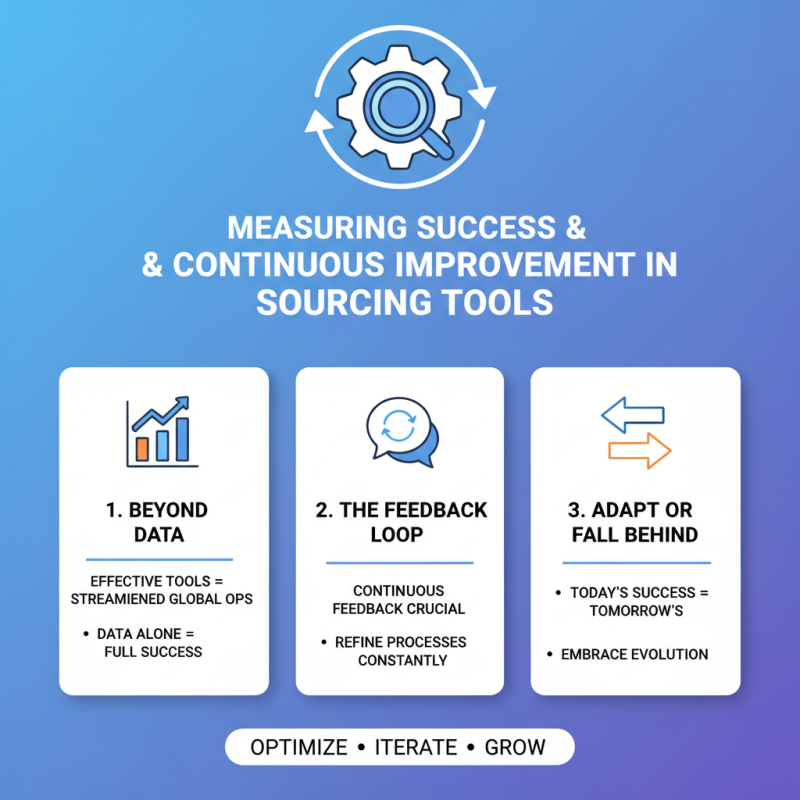
Effective sourcing tools are pivotal for businesses aiming to streamline operations globally. Success in these tools cannot be measured solely by data. Continuous feedback is necessary to refine processes. One must acknowledge that what works today may not be effective tomorrow.

Tips: Regularly gather input from users. Their insights can reveal unseen gaps in functionality. Analyze performance metrics frequently. This includes tracking order fulfillment times and supplier reliability. Small adjustments can lead to significant improvements.

Having a clear set of benchmarks is important. Set measurable goals to evaluate the effectiveness of sourcing tools. For instance, aim for a specific percentage reduction in sourcing costs over time. However, be prepared to adjust these benchmarks based on market changes. Embrace a mentality of constant evolution in your approach to sourcing tools.

WhatsApp