
2026 Best Physiotherapy Electric Machine for Clinics?
Choosing a Physiotherapy Electric Machine for a clinic is not simply a matter of comparing screens, presets, and prices. The right equipment should support the treatments your clinicians provide, fit the available space, and feel straightforward during a busy appointment. A compact unit beside a treatment table may suit one clinic; a multi-modality system may better serve another. There is no universal winner.
Electrotherapy educator and physiotherapist Tim Watson is a useful reference when considering clinical reasoning. A fair paraphrase of his teaching—not a verified verbatim quotation—is: “Let the patient’s needs guide the choice of modality.” That principle matters. Device features cannot replace assessment, practitioner training, or thoughtful treatment planning. Clinics should also check usable output settings, controls, cleaning requirements, service support, and staff training before purchase. Ask how the machine will work during a real appointment, not only in a product demonstration.
This guide explores what “best” can mean in 2026, from practical clinic workflows to device capabilities and evaluation criteria. It will help readers compare options without treating marketing claims as clinical proof. A polished interface can be appealing. It can also distract. Some clinics may need fewer features than expected, and that deserves an honest second look. Ultimately, equipment selection should reflect the clinic’s patients, services, and professional judgment—not a trend or a long feature list.
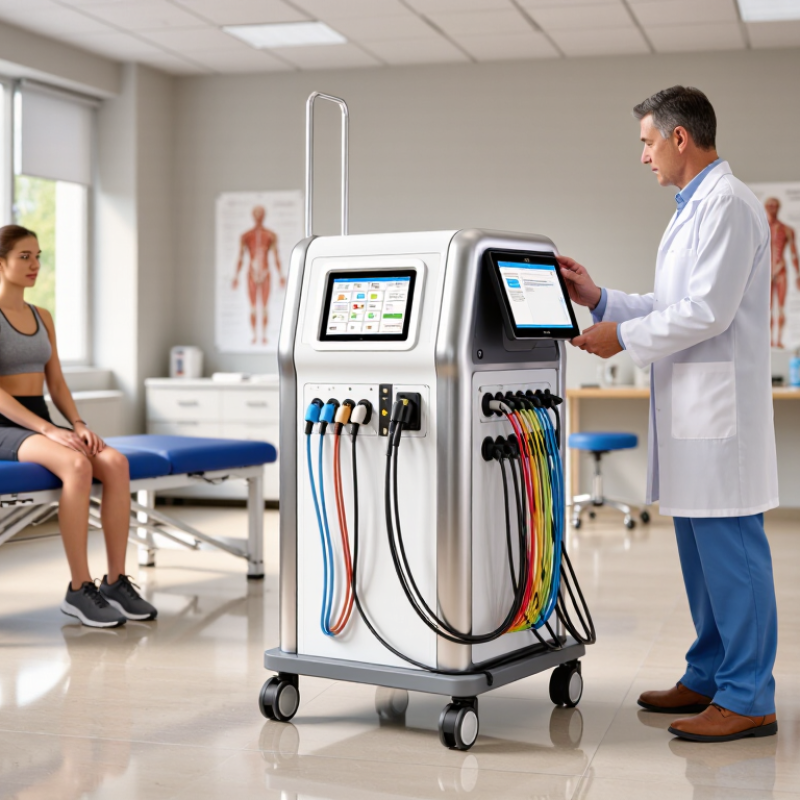
What Is a Physiotherapy Electric Machine?
What Is a Physiotherapy Electric Machine?
A physiotherapy electric machine is a clinical device that uses controlled electrical energy to support selected treatment goals. Many deliver small pulses through adhesive electrodes placed on the skin. Depending on the device and program, these pulses may help manage pain or encourage muscle contraction. Some clinic units combine several electrotherapy options, so the name does not describe one standard machine.
A therapist chooses settings based on the person’s symptoms, health history, and treatment plan. During a session, patients may feel a mild tingling or tapping sensation; it should not feel sharply painful. Not a cure. The device is one tool, not a replacement for assessment, movement practice, or other appropriate care. That distinction can be easy to overlook when a machine looks impressive.
Safe use depends on careful placement, clean electrodes, and gradual adjustment of intensity. Skin should be checked before and after treatment, especially if sensation is reduced. Certain medical conditions or implanted devices may affect whether electrical stimulation is suitable, so clinicians should screen patients and follow device instructions. In practice, settings are not always perfect on the first attempt; feedback matters, and treatment should be adjusted rather than simply turned up.
| Machine Type | What It Does | Common Clinical Uses | Typical Output or Settings | Potential Clinic Advantages | Selection Considerations |
|---|---|---|---|---|---|
| TENS unit | Delivers electrical pulses through surface electrodes to stimulate sensory nerves. | May be used as an adjunct for temporary pain relief in selected patients. | Many devices offer adjustable frequencies, commonly around 1–150 Hz, and pulse widths that may range roughly from 50–400 microseconds. | Relatively simple to operate; treatment can be adjusted for comfort and patient response. | Check electrode placement, skin sensation, patient tolerance, and device-specific precautions. Pain relief does not establish or treat the underlying cause. |
| NMES / muscle stimulation unit | Uses electrical pulses to produce or assist a muscle contraction. | May support muscle re-education or strengthening when clinically appropriate, including in some rehabilitation programs. | Common programs use frequencies of about 20–50 Hz and pulse widths around 200–400 microseconds; actual settings depend on the device and treatment goal. | Useful when a therapist wants to target a muscle group and document a structured stimulation program. | Contraction quality, comfort, electrode placement, and the patient’s clinical status matter. It is not a substitute for an individualized exercise plan. |
| Interferential current (IFC) unit | Delivers two medium-frequency currents that intersect to create a modulated treatment frequency. | Commonly used in clinics as an adjunctive electrotherapy option for symptom management. | Carrier frequencies are commonly in the kilohertz range, often about 2–10 kHz; modulation settings vary by device and protocol. | Some units provide multiple channels and preset programs for different electrode arrangements. | Confirm the available channels, controls, and electrode configurations. Evidence and suitability depend on the condition and treatment objective. |
| Microcurrent unit | Provides very low-intensity electrical current, often below the level that produces a visible muscle contraction. | Offered by some clinics as an adjunct modality for selected treatment plans. | Output is commonly specified in microamperes; available ranges and waveforms vary substantially between devices. | Low-intensity output may be appropriate when a treatment plan calls for stimulation without a strong motor response. | Compare measurable output specifications and clinical protocols. Do not assume that lower current means better outcomes. |
| Therapeutic ultrasound unit | Converts electrical energy into acoustic energy delivered through a treatment head and coupling medium. | May be used as an adjunct in selected musculoskeletal treatment plans. | Common devices offer 1 MHz and 3 MHz frequencies, with adjustable intensity; available ranges differ by model. | Provides a separate modality from surface electrical stimulation and can be included in a combination device. | Requires appropriate training, coupling, treatment-head movement, and screening of the intended treatment area. Follow device instructions and applicable clinical guidance. |
| Combination electrotherapy and ultrasound unit | Combines electrical stimulation functions with therapeutic ultrasound in one console. | Useful for clinics that routinely provide more than one modality and want shared equipment. | Functions and specifications depend on the configuration; check each output separately rather than relying on the “combination” label. | Can save space and consolidate controls, accessories, and maintenance workflows. | Check whether the modalities can operate independently or simultaneously, the number of channels, consumable costs, service support, and staff training needs. |
| Clinical and safety note | A physiotherapy electric machine is a device that delivers electrical stimulation or another energy-based treatment under a clinician’s direction. No single machine is best for every clinic: selection should reflect patient needs, intended use, staff training, device specifications, maintenance, and local regulations. Screen patients for device-specific contraindications and precautions, follow the manufacturer’s instructions, and consult qualified clinical guidance. The parameter ranges above are general examples, not treatment prescriptions. | ||||