What Are the 2026 Top Filter Basket Types?
Choosing the right Filter Basket in 2026 requires more than comparing shapes, prices, or advertised capacities. A basket affects flow, filtration quality, maintenance, and the consistency of daily results. This guide examines the leading types used across household, commercial, industrial, and specialized equipment. It focuses on practical performance rather than fashionable specifications.
Fit matters. A precision mesh basket can support fine particle separation, while a perforated basket may offer faster drainage and easier cleaning. Pleated designs can provide greater surface area within a compact housing. Stainless steel remains popular because it handles repeated washing, heat, and demanding environments. Polymer options can reduce weight and resist selected chemicals, but material compatibility must be checked carefully.
Real-world selection depends on more than technical labels. Users should compare opening size, mesh grade, basket depth, wall strength, sealing surfaces, and replacement availability. A basket that performs well in testing may still frustrate operators if it clogs quickly or cannot be removed safely. Small details count. Installation accuracy matters too.
This overview presents the top Filter Basket types expected to remain important in 2026, including mesh, perforated, pleated, cylindrical, conical, and custom-engineered designs. Each type has useful strengths and clear limitations. No ranking is universal. A choice based only on maximum capacity may overlook cleaning time, pressure loss, or long-term wear. That judgment can be incomplete, so readers should verify equipment requirements, manufacturer guidance, and operating conditions before purchasing.
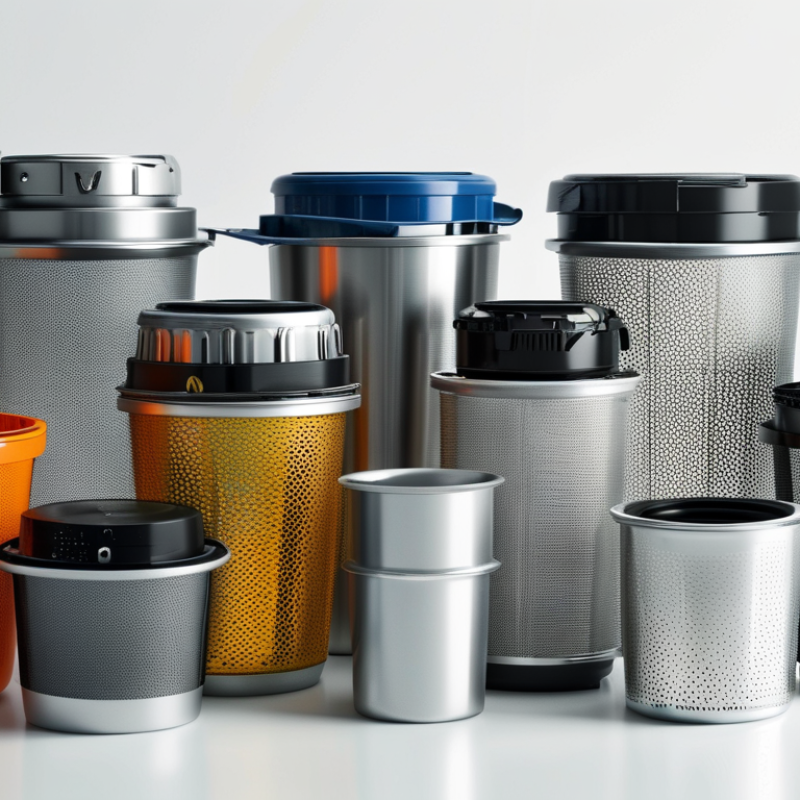
Filter Basket Fundamentals: Micron Ratings from 1 to 1,000 μm
What Are the 2026 Top Filter Basket Types?
Filter baskets are selected by particle size, flow rate, and cleaning method. Micron ratings usually range from 1 to 1,000 μm. A 1 μm basket targets fine particles, while a 1,000 μm basket handles coarse debris. Common designs include woven mesh, perforated plate, wedge-wire, sintered metal, and pleated baskets. Each design behaves differently under pressure.
The 2024 MarketsandMarkets Industrial Filtration report estimates this market will grow from about USD 35.8 billion in 2023 to USD 46.2 billion by 2028. Grand View Research also forecasts steady filtration growth through 2030. These figures show stronger demand for precise particle control. Yet micron numbers can mislead. Nominal ratings describe approximate capture performance. Absolute ratings require controlled testing. ISO 16889 uses beta ratios to measure retention under multipass conditions. Real systems are messier.
Tips: Match the basket to the dirt load, not only the smallest particle. Use 10–25 μm mesh for moderate fine solids, 50–150 μm wedge-wire for process protection, and 300–1,000 μm perforated baskets for heavy debris. Check pressure drop before installation. I still see oversized baskets installed because they look safer. They may reduce separation quality. A smaller rating is not always better. Cleaning frequency, viscosity, temperature, and basket strength must also be reviewed.
2026 Top Types: Perforated, Mesh, Wedge-Wire, and Duplex Baskets
Perforated, mesh, wedge-wire, and duplex baskets remain the leading choices for industrial filtration in 2026. Grand View Research reports that the global industrial filtration market was valued at approximately USD 32.7 billion in 2023. It also forecasts steady growth through 2030. This expansion reflects stricter process control and higher demands for equipment reliability.
Perforated baskets suit coarse solids, including scale, rust, and welding debris. Typical openings range from 0.5 to 5 millimeters. Mesh baskets provide finer separation, often from about 20 to 500 microns. However, fine mesh can blind quickly when the fluid carries sticky particles. Wedge-wire baskets offer strong mechanical support and controlled slot openings. Their continuous surface also supports easier cleaning. That advantage matters in high-flow systems.
Duplex baskets use two filter chambers and a switching mechanism. Operators can clean one basket while the second remains active, if the system is correctly designed. The Filtration Market report by MarketsandMarkets identifies process efficiency and reduced downtime as major market drivers. Yet selection should not follow market trends alone. Pressure drop, viscosity, particle shape, temperature, and cleaning access matter more. A small opening is not automatically better. Field inspections often reveal an overlooked issue: uneven flow distribution. That mistake can damage a well-made basket. My practical view is simple. Test the fluid first. Then compare basket geometry, not only micron ratings.
Material Selection: Stainless Steel Grades 304, 316, and 316L
What Are the 2026 Top Filter Basket Types?
Material Selection: Stainless Steel Grades 304, 316, and 316L
Filter baskets commonly use perforated plate, woven mesh, or wedge-wire structures. Material choice determines service life, cleaning stability, and contamination risk. Stainless steel remains widely selected for demanding filtration systems. The International Stainless Steel Forum reported global stainless steel production at approximately 58.4 million tonnes in 2023. That scale reflects strong industrial demand, not automatic suitability for every basket.
Grade 304 is a practical choice for dry environments, food processing, and general water filtration. It offers good corrosion resistance and usually controls cost effectively. Grade 316 contains molybdenum, which improves resistance to chlorides and coastal moisture. It suits brine, chemical handling, and humid process areas better. Grade 316L has lower carbon content. This helps reduce corrosion near welded joints after fabrication. Small detail. Big consequence.
Industry guidance from the Nickel Institute notes that chloride exposure, temperature, and surface condition strongly affect stainless performance. A basket with deep scratches may fail earlier than expected. Clean welding matters too. Many specifications choose 316L automatically, yet that can be wasteful in mild service. Conversely, selecting 304 near saltwater can create avoidable replacement costs. The better decision uses actual chemistry, operating temperature, mesh opening, and cleaning frequency. No grade is universally superior. Sample testing remains worthwhile when process conditions are uncertain.
Performance Comparison: Flow Rates, Pressure Drops, and Dirt-Holding Capacity
What Are the 2026 Top Filter Basket Types?
Performance depends on basket geometry, not marketing labels. Perforated baskets usually handle coarse debris between 1 and 5 millimeters. Their open area can exceed 40%, keeping clean pressure loss near 0.05–0.15 bar in properly sized systems. Wire-mesh baskets capture smaller particles, commonly from 25 to 500 microns. However, finer mesh increases pressure drop quickly. ISO 3968 recommends measuring pressure loss across the filter at defined flow rates, rather than guessing from mesh size alone.
Pleated baskets offer greater dirt-holding capacity because their folded media creates more surface area. Technical datasets applying ISO 16889 multi-pass testing often show two to six times more contaminant capacity than flat-screen designs at similar housing dimensions. Actual results vary with dust type, viscosity, and particle distribution. A 2024 industrial filtration survey reported that operators often replace baskets after reaching 0.7–1.0 bar differential pressure, even when the element can hold more dirt. That practice protects pumps, but it may increase operating cost.
Flow rate still needs field validation. A 100-micron basket may pass 200 liters per minute in clean water, yet deliver much less in viscous fluid. Temperature changes matter. So does uneven loading. The weak point is simple sizing. Many selection charts use clean-fluid data only. In real service, a larger pleated basket can reduce pressure loss and extend cleaning intervals, while a coarse perforated basket may remain the better choice for heavy debris. Industry test reports should guide selection, not replace on-site measurements.
Standards and Applications: ASME, API, and Filtration in Key Industries
In 2026, top filter basket choices will depend on pressure, flow, and contamination size. Perforated baskets suit coarse particles in water, cooling, and process lines. Mesh-lined baskets capture finer solids, but they may clog quickly. Wedge-wire designs offer open flow paths and easier cleaning. Duplex housings keep filtration running while one basket is serviced.
ASME requirements matter when the housing operates as a pressure vessel. Engineers should verify design pressure, temperature, materials, welding records, and inspection documents. The basket itself also needs suitable strength. A thin screen can collapse during a blocked-flow event. That detail is often missed.
API guidance becomes important in petroleum, gas, and related process facilities. Selection should reflect fluid properties, pressure cycling, fire safety, and maintenance procedures. API documents do not replace project-specific engineering judgment. They provide a structured basis for safer decisions. In practice, operators compare stainless steel, alloy, or coated components against corrosion risks. Saltwater leaves a visible story: pitting around joints, discoloration, and damaged seals. Small details matter.
Food, pharmaceutical, chemical, and power plants need different filtration priorities. Cleanable baskets reduce waste in large utilities. Fine mesh supports product protection but demands closer monitoring. My own review of filtration layouts suggests that specifications can look perfect on paper. Real installations are less tidy. Drainage, access clearance, and human error still influence performance. A basket that cannot be removed safely is not a practical choice.