
China has become a major center for machine-tool production, but choosing among its manufacturers takes more than comparing prices. Buyers must assess machining accuracy, spindle performance, controller compatibility, and the support available after installation. Small details matter. A rigid machine frame, for example, can help reduce vibration during prolonged cutting, while clear service documentation can save hours when a fault appears.
Automation figures provide useful context, though they do not directly measure CNC machine sales. The International Federation of Robotics reported that China installed 276,288 industrial robots in 2023, equal to 51% of global installations that year (World Robotics 2024). This points to a substantial manufacturing ecosystem, not proof that every supplier offers the same quality. Cnc Devices should be evaluated by application: a compact router for woodwork has different demands from a high-speed machining center for metal parts. There is no universal winner.
This guide examines Chinese manufacturers through practical criteria, including product range, technical specifications, quality-control practices, export experience, and customer support. It also considers whether a supplier can provide verifiable details, such as repeatability figures, maintenance schedules, and parts availability. Those details deserve more weight than polished product photos. Some comparisons will remain imperfect because specifications vary by model and operating conditions. Readers should confirm claims directly with manufacturers and, where possible, request a sample cut or factory acceptance test before committing to a purchase.
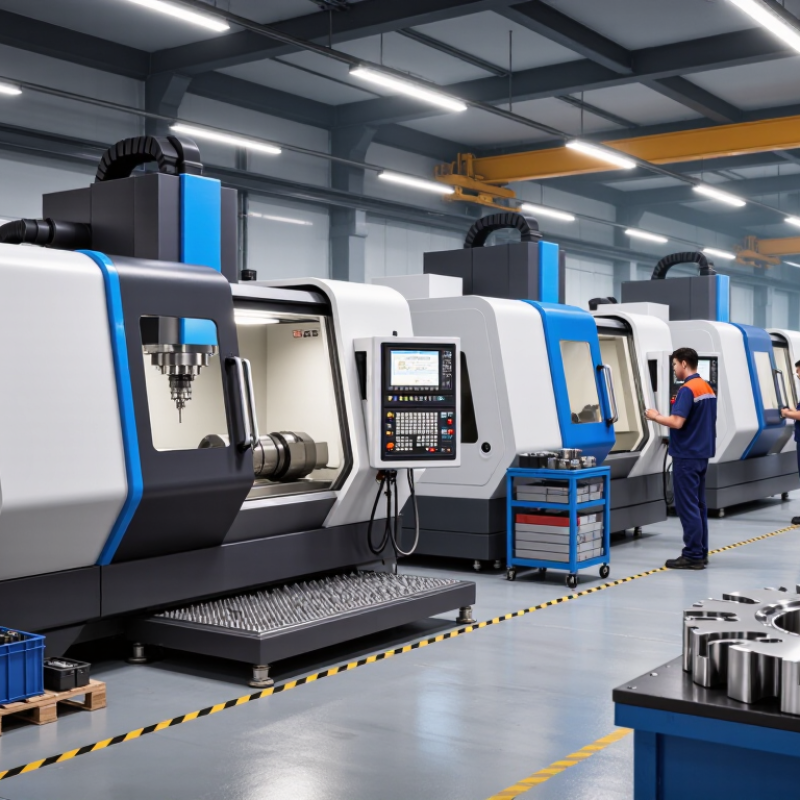
CNC devices are machines that follow programmed instructions to cut, drill, mill, or shape material. A computer controller guides each movement, helping repeat a design with consistent dimensions. Common examples include milling machines, lathes, routers, and laser cutters. Each suits different materials and tasks. A mill can shape a steel bracket, while a router may cut cabinet panels from wood. The machine is only part of the process. Software, tooling, workholding, and operator skill all affect the final result.
In a typical job, an operator prepares a digital design and converts it into tool paths. The controller then moves the cutting tool and workpiece along planned axes. A metal part may need several operations, such as drilling holes and finishing its edges. Coolant can reduce heat during cutting, while clamps keep the stock from shifting. That matters. Buyers comparing Chinese manufacturers should ask what materials and tolerances a machine can handle, and request sample results where practical. Specifications alone can be misleading. A capable machine still needs careful setup, maintenance, and quality checks; even a small programming or measurement error can spoil a batch. Tool wear is easy to overlook.

Evaluating a CNC device manufacturer in China starts with evidence, not catalog claims. The International Federation of Robotics’ World Robotics 2024 reports that China installed 276,288 industrial robots in 2023, or 51% of global installations. That scale signals a strong automation ecosystem, but it does not prove an individual supplier’s accuracy or service quality. Numbers need context.
Ask for acceptance-test records matching the exact model and configuration. Check positioning accuracy and repeatability using ISO 230-2 test methods, and request results at the intended operating temperature.
Watch a sample cut on your material. Inspect its edge finish, chip removal, spindle vibration, and tool wear. Then measure the sample independently.
Review calibration logs, component traceability, software update policies, spare-parts lead times, and technician response commitments. Claims are not proof.
Ask for customer references with similar materials and shift patterns, and confirm support terms in writing. Compare three-year costs, including tooling, maintenance, and downtime.
One detail is easy to overlook: accuracy figures are hard to compare when test conditions differ. Record those conditions in the purchase agreement.
Who Are the Best CNC Device Manufacturers in China?
Notable Chinese CNC Device Manufacturers and Their Strengths
China’s CNC sector includes manufacturers focused on machining centers, turning systems, and numerical controllers. Their strengths often lie in broad product ranges, competitive pricing, and application-specific configurations. Some factories support custom fixtures and automation integration, useful when a production line needs more than a standard machine. Others emphasize local technical support and readily available replacement parts. Those details matter when a spindle stops mid-shift.
The International Federation of Robotics reported 276,288 industrial robots installed in China in 2023, or 51% of global installations. This indicates a large automation ecosystem, but it does not rank CNC makers or prove machine accuracy. Buyers should compare test records, positioning specifications, controller compatibility, and service response times. A polished brochure is not a machining trial. I would also check performance using the buyer’s actual material and cutting conditions; that step is easy to overlook.
Tips: Request a sample cut and inspect its dimensions, surface finish, and cycle time. Confirm what the warranty covers, and ask who handles troubleshooting after installation. A low purchase price can still bring delays.
Chinese CNC manufacturers offer several machine types, each suited to different shop-floor demands. Vertical machining centers handle milling, drilling, and tapping on compact parts. Horizontal centers improve access to multiple faces and can reduce repositioning. CNC lathes produce shafts, bushings, and other rotational components. For complex parts, five-axis machines and mill-turn centers combine operations, though they often require more skilled programming.
Technology matters as much as machine type. Look for rigid cast structures, responsive servo drives, automatic tool changers, and probing systems that check workpiece position. Thermal compensation can help control dimensional drift during long production runs. Yet a five-axis label alone proves little. Ask for repeatability test results and sample cuts using material similar to yours.
Automation is gaining importance. The International Federation of Robotics’ World Robotics 2024 report records 541,302 industrial robots installed worldwide in 2023, with Asia accounting for about 70% of new installations.
This is not a CNC sales figure, but it shows the region’s strong automation base. For buyers, practical checks include chip evacuation, controller usability, maintenance access, and local service response. Small details count. A machine may cut accurately in a demonstration, then struggle with heat, chips, or rushed setups.
Comparing CNC device manufacturers starts with the work, not the brochure. List your materials, part dimensions, tolerance targets, and expected shifts per day. A shop cutting aluminum prototypes needs different spindle speeds and changeover features from a plant machining steel parts in long runs. Ask for measured positioning accuracy and repeatability, then request a test cut using your material and tooling. Demand proof. A polished sample may not match your actual production conditions.
Check how each machine connects with your existing controls, inspection equipment, and production software. Deloitte’s 2024 Smart Manufacturing Survey found that 86% of surveyed manufacturers expect smart manufacturing to be a key competitiveness driver within five years. That makes data access and integration worth testing, not just discussing. The International Federation of Robotics reported 4.28 million industrial robots operating worldwide in 2023, up 10% from 2022. For automated lines, confirm robot interfaces, guarding, and recovery procedures with the manufacturer. For smaller workshops, service response, spare-part availability, and operator training may matter more than automation options. I would not overrate a long feature list; some specifications look impressive but say little about uptime on your floor. Ask for references from comparable production environments and a written acceptance-test plan.
| Production Need | CNC Machine Capability to Consider | Best-Fit Applications | Evidence to Request When Comparing Manufacturers | Key Trade-Off |
|---|---|---|---|---|
| General-purpose job-shop production | Three-axis vertical machining center or CNC lathe; prioritize practical work envelope, tool capacity, and ease of setup. | Prototypes, repair parts, and varied small-to-medium batches across common materials. | Machine specifications for the exact model; sample-part cutting test; details of installation, operator training, and local service arrangements. | Flexible and comparatively straightforward to operate, but complex parts may require multiple setups. |
| Precision prismatic parts | Rigid machining center with suitable spindle, thermal-management provisions, and verified axis performance. | Housings, plates, fixtures, and components with multiple milled features. | Positioning and repeatability test results under stated measurement conditions; inspection data for a representative test part. ISO 230-2 covers tests for positioning accuracy and repeatability of numerically controlled axes. | Performance depends on the machine, workholding, environment, tooling, and process—not just the advertised specification. |
| Complex parts with multiple angled features | Five-axis machining center; compare simultaneous five-axis capability with indexed positioning capability. | Impellers, contoured surfaces, and parts requiring machining from several directions. | Clarify the rotary-axis configuration and usable travel; request a test cut using a part geometry similar to the intended work and review the inspection method. | Can reduce setups and improve access to complex surfaces, but usually requires more advanced programming and process planning. |
| Rotational parts and turned features | CNC turning center; consider bar capacity, spindle configuration, tooling, and whether a sub-spindle or driven tools are required. | Shafts, bushings, threaded components, and parts combining turning with limited milling. | Confirm maximum workpiece dimensions, bar-feeding compatibility, tooling configuration, and sample-part results for the intended material. | A turning center is efficient for rotational work; parts with substantial milling may need a more capable mill-turn configuration. |
| High-volume, repeat production | Production-oriented CNC machine with automation interfaces, reliable workholding, and a defined loading and unloading plan. | Repeated batches of the same part where cycle time and consistent operation matter. | Request a production trial with agreed cycle-time assumptions, tooling and changeover details, and documentation of automation interfaces and safety provisions. | Automation may improve throughput, but adds integration, programming, and maintenance requirements. |
| Large or heavy workpieces | Heavy-duty machining center or suitable large-format machine; assess table capacity, travels, structural design, and foundation requirements. | Large molds, frames, structures, and components that exceed standard machine capacity. | Verify allowable workpiece mass and dimensions, machine layout, installation requirements, and a representative machining test. | Large capacity requires careful planning for transport, installation, workholding, and facility space. |