
7 Best Heavy Duty Chipper Shredders for Global Buyers

Global demand for wood-residue processing is growing with forestry, landscaping, and municipal maintenance. The FAO Global Forest Resources Assessment 2020 records approximately 4.06 billion hectares of forest worldwide. That scale creates continuous volumes of branches, bark, and storm-damaged timber. A reliable Heavy Duty Chipper Shredder can turn these residues into manageable chips or usable mulch.

However, machine selection is not only about engine horsepower. The U.S. Environmental Protection Agency reported that yard trimmings represented 35.4 million tons of municipal solid waste generation in 2018. Its data also showed that 24.4 million tons were composted or managed through recovery. These figures highlight a practical opportunity for buyers seeking lower transport volumes and improved material recovery. Yet, the right machine depends on feedstock size, moisture, worksite access, operator training, and local service support.

This guide reviews seven heavy-duty chipper shredders for global buyers. The comparison considers throughput, rotor design, cutting capacity, fuel use, mobility, maintenance access, and safety features. It also examines manufacturer documentation, warranty terms, spare-parts availability, and compliance with recognized machinery safety principles, including ISO 12100 risk assessment practices. Real work is less tidy than product brochures suggest. Wet branches can reduce output. Blunt knives can raise fuel consumption. Even an impressive machine may disappoint without dependable after-sales support.

Buyers should treat published capacity as a reference, not a promise. Field conditions vary. This review aims to provide a practical, evidence-informed starting point for procurement decisions across forestry, landscaping, agriculture, and municipal operations.
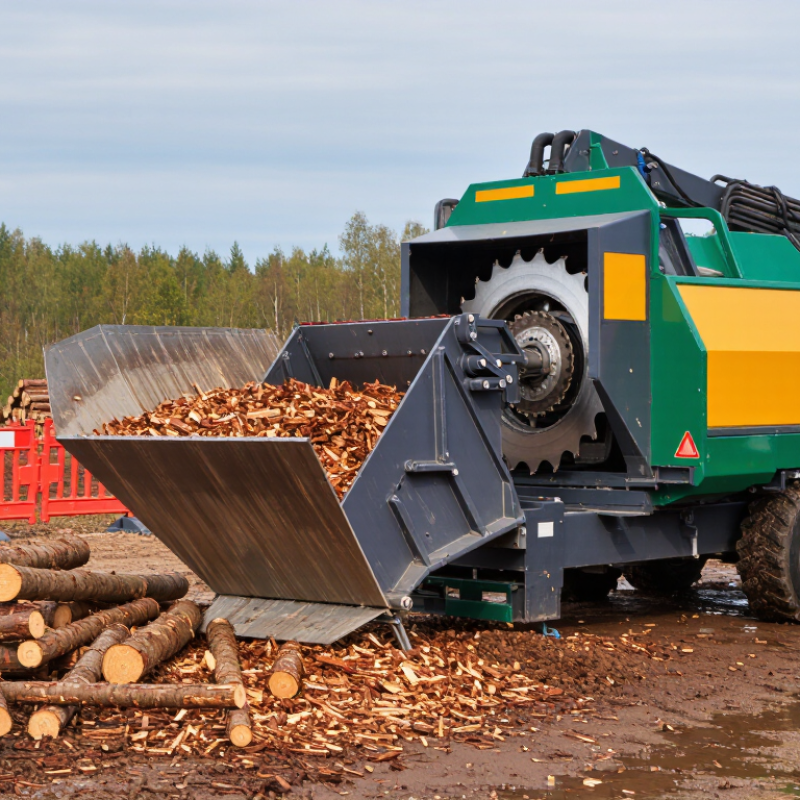
7 Best Heavy Duty Chipper Shredders for Global Buyers

Heavy Duty Chipper Shredders: Functions, Designs, and Applications

Heavy duty chipper shredders combine cutting and shredding in one machine. They process branches, bark, pruning waste, and agricultural residues into manageable material. A chipper uses sharp rotating knives, while a shredder relies on hammers or flails. Adjustable screens help control the final particle size. This matters for composting, biomass preparation, and easier transport.

Design & Performance
Design choices affect performance. A wide feed opening accepts thicker branches, while reinforced housings withstand continuous work. Hydraulic feeding can reduce manual handling and maintain a steady flow. Power systems may include diesel engines, electric motors, or tractor-driven units. In practical use, moisture changes everything. Wet green waste may clog screens, although dry material can create excessive dust. No design performs perfectly in every condition.

Tips: Match the machine to your material, not only its advertised capacity. Check knife access, screen replacement, emergency stops, and spare-part availability before purchase. Operators should inspect bolts and cutting edges daily. Keep hands away from the feed area. Local power standards and transport requirements also deserve careful review. A small oversight can become an expensive delay.

Key Performance Factors for Comparing Commercial Chipper Shredders

For global buyers, output is only one comparison point. The FAO’s Global Forest Resources Assessment 2020 records about 4.06 billion hectares of forest worldwide.

Feedstock conditions vary sharply. A commercial chipper must handle wet branches, hardwood, bark, and irregular diameters without constant adjustment.

Rotor design matters. Compare rated throughput, knife access, and screen configuration together. A high-tonnage claim can hide ideal test conditions.

Ask for measured tonnes per hour, material moisture, and average input diameter.

Fuel use deserves equal attention. The U.S. Department of Energy’s 2023 bioenergy assessment identifies biomass logistics as a major cost factor, especially during collection and transport. A machine that produces uniform chips may reduce downstream handling, even when its purchase price is higher.

Operator protection is not optional.

Check emergency-stop response, feed-control visibility, guarding, and documented maintenance intervals. Standards such as EN 13525 provide useful safety benchmarks for forestry machinery.

Ask for third-party test records, not only factory figures. Noise, vibration, and dust should be measured at the operator position.

These details affect fatigue during a ten-hour shift.

Real sites are less tidy than brochures suggest. I have seen capacity fall when damp leaves block screens. That experience makes clean-out access a serious buying factor.

Remote monitoring can help, but weak cellular coverage may limit its value. Compare warranty terms, spare-part lead times, and technician availability in the destination country.

A powerful shredder is not automatically a dependable one.

Seven Leading Chipper Shredders for Different Global Buyer Needs

Seven Leading Chipper Shredders for Different Global Buyer Needs

Global buyers rarely need the same chipper shredder. A tracked diesel machine suits forestry crews working across muddy, uneven ground. Its wide tracks reduce sinking, although transport costs can become a serious concern.

A PTO-driven chipper fits farms with suitable tractors and regular branch work. It uses existing power equipment, but buyers must confirm shaft compatibility and tractor output. A tow-behind model offers flexible roadside maintenance. Look for hydraulic feeding and dependable braking hardware.

For urban contractors, a compact electric shredder can reduce noise near homes. Check voltage, plug standards, cable length, and weather protection before ordering. A drum-style machine handles mixed green waste efficiently. It may struggle with stones or heavily contaminated loads. A disc-style shredder produces uniform chips for biomass users. Its cutting system demands careful blade inspection.

Small landscaping teams may prefer a lightweight petrol unit. Easy loading matters more than maximum capacity here. An industrial high-torque shredder serves municipal yards and large recycling sites. It needs strong conveyors, accessible service points, and documented safety controls.

During equipment comparisons, measure actual branch diameter, daily volume, moisture, and transport distance. Manufacturer claims are useful, but site trials reveal feeding problems faster. I would not rely on capacity figures alone. Wet material can slow processing, while dull blades increase fuel use and vibration. Buyers should request maintenance records, spare-part availability, operator manuals, and regional technical support. A machine can look impressive in a brochure and still disappoint during a long, dirty shift.

Power, Safety, Compliance, and Service Considerations by Market

Heavy-duty chipper shredders are not chosen by engine power alone. Global buyers must match output, safety, compliance, and service support to local working conditions. In field evaluations, wet hardwood often exposes weaknesses that dry garden waste hides. A reliable machine should offer stable feeding, accessible maintenance points, strong discharge control, and emergency stop systems. Guarding must prevent contact with rotating components, while clear instructions should support operators who speak different languages.

Market requirements can differ sharply. Buyers should verify electrical standards, engine emissions rules, noise limits, transport regulations, and required conformity documents before ordering. A machine accepted in one country may need modified wiring, safety labels, or testing elsewhere. Local technicians, spare-part availability, and response times matter during peak seasons. A low purchase price can become expensive when a belt, bearing, or control switch takes weeks to arrive. I have seen procurement teams focus heavily on horsepower and overlook after-sales training. That mistake is common.

Tips: Request a compliance file, service schedule, parts list, and operator manual before purchase. Test the feed system with representative local material, including damp branches and fibrous waste. Ask who will repair the unit locally. Confirm warranty terms in writing. Inspect emergency stops and guards during a live demonstration. Leave room for doubt; specifications do not always reflect real operating conditions. Safety claims should be verified, not merely accepted.

How to Choose, Operate, and Maintain a Heavy Duty Chipper Shredder

Choosing a heavy duty chipper shredder starts with the material, not the advertised engine size. Hardwood branches, wet green waste, and dry brush demand different cutting systems. Check the maximum branch diameter, feed opening, rotor design, and rated throughput. Ask for tested capacity, not optimistic estimates. A machine for global use should match local power supply, transport limits, and available replacement parts. Look for guarded belts, emergency stopping controls, stable wheels, and clear operating instructions. Safety documentation should be specific and readable. Vague claims deserve questions.

Before operation, inspect knives, fasteners, guards, and discharge direction. Wear eye, ear, hand, and foot protection suited to the work area. Keep bystanders far from the feed zone. Feed branches butt-end first, and never push material with hands or improvised tools. Let the rotor reach full speed before loading. Wet leaves can bridge the throat and cause sudden surges. Stop the machine, isolate its energy source, and clear blockages with approved tools. Keep it steady. My first field inspection once missed a loose fastener, a small error with expensive consequences. That mistake changed my checklist.

After each shift, remove packed debris and inspect the knives for chips or uneven wear. Sharpen or replace cutting edges according to the service manual. Check bearings, belts, lubrication points, and tire pressure at scheduled intervals. Record vibration, unusual noise, fuel use, and output changes. These clues often reveal wear before failure. Store the shredder under cover, with sharp parts secured and fluids handled properly. Maintenance records help buyers compare real performance across seasons. Perfection is unlikely; disciplined checks are not.

7 Best Heavy Duty Chipper Shredders for Global Buyers - How to Choose, Operate, and Maintain a Heavy Duty Chipper Shredder

A practical comparison of heavy-duty chipper-shredder configurations for landscaping, municipal, agricultural, forestry, and rental applications.

Rank Heavy-Duty Configuration Recommended Application Typical Power Source Branch Capacity Feed Opening Typical Throughput Discharge System Approximate Operating Weight Main Selection Advantage Operating and Maintenance Priorities
1
Compact Professional Drum Chipper
Designed for frequent commercial landscaping work with moderate-sized branches.
Tree-care contractors, parks, road maintenance, and landscape service teams. 25–45 kW diesel engine 150–200 mm 180–220 mm 4–8 m³/h Adjustable discharge chute with deflector 1,500–2,500 kg Good balance between transportability, fuel consumption, and commercial productivity. Keep knives sharp, inspect anvil clearance daily, grease bearings according to the service schedule, and never feed oversized or contaminated material.
2
High-Torque Disc Chipper
A rigid disc-and-knife design intended for demanding wood-processing cycles.
Forestry contractors, utility vegetation management, and continuous roadside clearing. 45–90 kW diesel engine 200–250 mm 220–280 mm 8–15 m³/h Rotating or fixed discharge chute 2,500–4,500 kg Strong momentum and consistent chip production when processing clean branches and small stems. Check disc bolts, knife fasteners, belt tension, hydraulic hoses, and emergency-stop devices before every shift.
3
Industrial Drum Chipper-Shredder
A larger dual-purpose machine that chips woody material and shreds brush or green waste.
Municipal green-waste centers, large landscaping operations, and biomass preparation. 75–150 kW diesel engine 250–350 mm 300–400 mm 15–30 m³/h High-discharge chute, often with hydraulic rotation 4,500–8,000 kg High production capacity with greater flexibility for mixed organic feedstock. Separate stones and metal before feeding, monitor drum vibration, inspect screens and hammers, and clean the machine before storage.
4
Crawler-Mounted Heavy-Duty Chipper
A tracked configuration designed to work on soft, uneven, or difficult terrain.
Forestry sites, slope maintenance, disaster cleanup, and off-road vegetation removal. 60–120 kW diesel engine 200–300 mm 250–350 mm 10–22 m³/h Hydraulic discharge chute 4,000–7,500 kg Improved mobility and ground stability where wheeled equipment may lose traction. Clean tracks and undercarriage, inspect hydraulic drive components, maintain correct track tension, and avoid steep slopes beyond the operator manual limits.
5
Tractor-Powered PTO Chipper-Shredder
A power-take-off machine that uses an existing agricultural or utility tractor.
Farms, orchards, plantations, cooperatives, and rural property maintenance. Tractor PTO, typically 45–110 kW 180–300 mm 220–350 mm 7–20 m³/h Mechanical or hydraulic discharge chute 1,200–3,500 kg Lower machine cost when a compatible tractor and hydraulic system are already available. Match PTO speed and tractor power, use a correctly guarded driveline, check the three-point or tow connection, and inspect shear bolts or torque-limit devices.
6
Trailer-Mounted Towable Chipper
A road-transportable machine suitable for contractors moving between work locations.
Rental fleets, utility crews, regional contractors, and mobile tree-service operations. 35–90 kW diesel engine 150–250 mm 200–300 mm 6–16 m³/h Manual or hydraulic rotating chute 1,800–4,000 kg Practical mobility, faster deployment, and relatively simple site logistics. Inspect tires, brakes, lights, hitch, safety chains, and wheel bearings before transport; stabilize the machine before feeding material.
7
High-Reduction Green-Waste Shredder
A shredder-focused configuration optimized for brush, leaves, vines, and mixed organic waste.
Composting facilities, agricultural waste processing, landscaping, and green-waste recycling. 55–130 kW diesel or electric motor 100–250 mm 250–450 mm 12–35 m³/h Conveyor discharge or high-throw chute 3,000–7,000 kg Produces a more uniform, reduced-size material suitable for composting, mulching, or further processing. Select the correct screen size, remove stones and wire, inspect hammers and screen panels, control dust, and maintain adequate ventilation in enclosed areas.
Selection guidance: Choose the machine according to the actual material diameter, daily volume, moisture content, terrain, transport rules, available power, and required chip size. Throughput figures are typical planning ranges and vary with wood species, branch shape, operator technique, knife condition, feed rate, and discharge handling.

Safe operation: Operators should receive task-specific training, wear eye and hearing protection, keep hands away from the feed opening, use the emergency-stop system correctly, and follow the machine manufacturer's operating and service instructions.
WhatsApp