
7 Best Prison Ceiling Downlight Options for Buyers?

Choosing a Prison Ceiling Downlight is not just a matter of brightness. In secure facilities, the fitting must also suit the ceiling, cleaning routine, and maintenance plan. A poorly matched light can create glare, dark corners, or unnecessary service calls. Small details matter.

This guide introduces seven downlight options for buyers to compare. It looks at practical features such as housing strength, lens design, ingress protection, light output, and ease of inspection. Published specifications are useful, but they do not tell the whole story. Room height, ceiling material, and existing controls can change how a fixture performs. A bright model may still feel harsh in a compact room.

Buyers should check manufacturer data and have qualified facility or electrical professionals confirm suitability for the intended setting. Pay close attention to installation requirements, cleaning compatibility, and any site-specific safety standards. Do not assume that a product described as “vandal resistant” will meet every facility’s needs. That label can mean different things.

There is no perfect option for every building. Trade-offs remain. A sealed fitting may simplify cleaning, while a specialized design could affect replacement cost or lead time. Comparing these seven choices against real site conditions can help narrow the field. Use the guide as a starting point, then verify details before specifying or purchasing any Prison Ceiling Downlight.
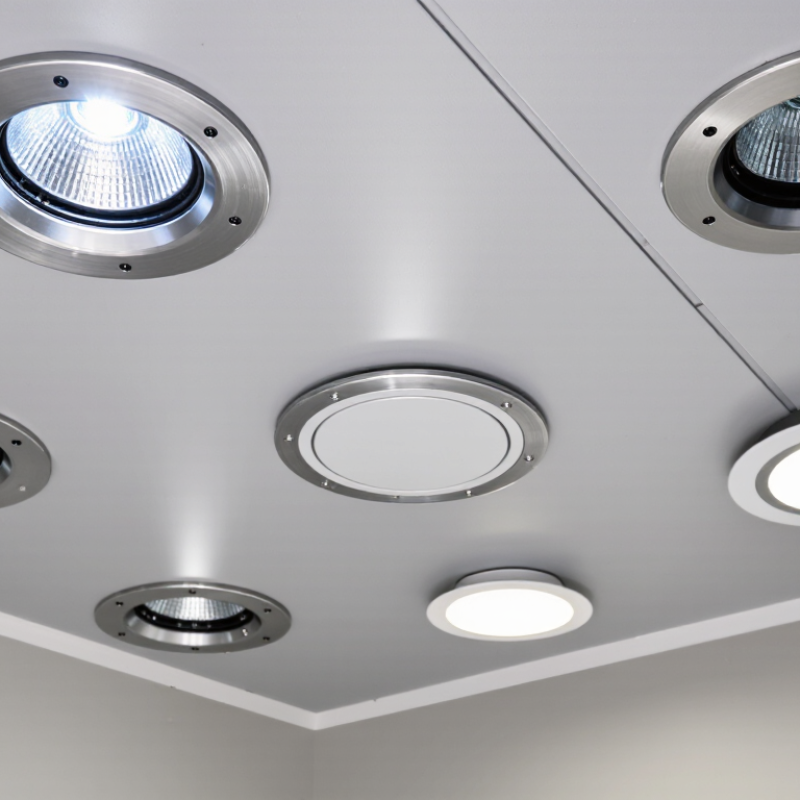
7 Best Prison Ceiling Downlight Options for Buyers?

Understanding Prison Ceiling Downlights and Their Requirements

In a secure facility, a ceiling downlight must do more than brighten a room. It should provide even, predictable light across sleeping areas, corridors, and washrooms. Uneven pools can obscure steps and make routine checks harder. A recessed, flush-fitting body reduces exposed edges, while a robust lens and housing can withstand frequent cleaning and everyday impacts. No fitting is truly maintenance-free. It matters.

Before choosing a model, check the mounting depth, ceiling construction, and access method. A sealed face can limit dust and moisture entry, but the required rating depends on the room and cleaning routine. Ask for photometric data, glare information, and a clear maintenance plan; brightness alone is not enough. Choose a color temperature that supports comfortable visibility without harsh contrast, and confirm compatibility with controls if needed. Have a qualified professional assess emergency lighting separately. Local electrical and fire requirements vary, so verify specifications with the facility team and a qualified installer. Replacement access is easy to overlook. A secure fitting is useful, but technicians still need a safe way to inspect and service it.

7 Best Prison Ceiling Downlight Options for Buyers: Understanding Requirements

These seven commonly available correlated color temperature (CCT) choices range from warm to cool white. CCT is only one selection factor: prison installations also require suitable tamper-resistant construction, impact and ingress protection, and lighting levels designed for the specific space. Requirements vary by facility and local regulations; verify them before purchasing.

Key Safety and Performance Criteria for Secure Facilities

In secure facilities, a ceiling downlight must withstand routine cleaning, vibration, and attempted tampering. Look for a flush, snag-resistant profile, concealed or captive fasteners, and a sealed housing. An IK10 rating indicates resistance to a 20-joule impact under IEC 62262; it is a useful screening point, not proof that a fixture suits every location. Specify ingress protection for the cleaning method, too. IP65, defined under IEC 60529, means dust-tight construction and protection against water jets.

Light quality matters as much as toughness. Poor uniformity can leave hard shadows around doorways, observation points, and room edges. Review photometric files and confirm maintained illuminance with a site-specific lighting plan. Check glare, colour consistency, flicker performance, and access for servicing. Small details matter. A protective lens may cut useful output, so compare delivered light after the cover is fitted, not just bare-lamp figures.

Energy figures help frame operating costs, but they are not prison-specific guarantees. The U.S. Department of Energy’s 2022 Energy Savings Forecast of Solid-State Lighting projected 5.1 quads of primary-energy savings in 2035 from LED adoption across general illumination. For a facility, assess actual wattage, controls, replacement intervals, and emergency-lighting requirements together. No specification catches every blind spot; mock-ups can reveal glare or shadows before installation. Verify final choices against facility risk assessments and applicable local requirements.

7 Best Prison Ceiling Downlight Options for Buyers? — Key Safety and Performance Criteria for Secure Facilities

Downlight option Potential application Safety and construction criteria Performance criteria to compare Buyer checks
Recessed, sealed vandal-resistant downlight General circulation areas where a recessed ceiling installation is suitable. Look for a secure, tamper-resistant fixing method and a robust, securely retained lens. Specify an impact-resistance rating appropriate to the assessed risk. Compare delivered lumens, efficacy, glare control, colour rendering and dimming compatibility. Confirm ceiling construction, access for maintenance and the tested impact rating of the complete luminaire—not just its lens.
Shallow-profile recessed downlight Locations with limited ceiling void depth or restricted installation space. Check that the shallow housing does not compromise secure mounting, thermal management or access to electrical connections. Compare output and beam distribution with deeper models; a compact housing may affect heat dissipation and achievable output. Verify required cut-out dimensions, clearances, driver location and operating temperature against the installation conditions.
Vandal-resistant surface-mounted downlight Concrete ceilings or other locations where recessed installation is impractical. Specify a secure mounting arrangement, tamper-resistant fasteners and a robust enclosure. Assess exposed edges and fixings for the site’s security requirements. Compare light distribution, glare and output for the mounting height and room layout. Check the substrate, fixing method and maintenance access; confirm the assembly has been tested in its intended mounting configuration.
Low-profile, anti-ligature-oriented luminaire Spaces where the facility’s risk assessment calls for reduced opportunities for attachment. Evaluate the complete installed assembly, including housing, trim, fasteners and ceiling interface. A product description alone does not establish suitability. Compare uniformity, glare, usable light levels and compatibility with the facility’s lighting controls. Obtain project-specific review from qualified security and design professionals; confirm installation details and any applicable local requirements.
Sealed downlight for wash-down or damp areas Bathrooms, shower areas and other locations with moisture or cleaning exposure. Select an ingress-protection rating suited to the actual exposure. IP65 indicates dust-tight protection and protection against water jets; confirm suitability for the cleaning method. Compare output, corrosion resistance and performance under the expected temperature and humidity conditions. Check the rating for the complete installed luminaire, including cable entries and seals, and follow the manufacturer’s cleaning instructions.
Emergency-lighting downlight Escape routes or other designated areas requiring emergency illumination. Use equipment and installation arrangements that meet applicable local emergency-lighting rules and the facility’s life-safety design. Compare emergency-mode output, rated duration, monitoring method and performance with the approved lighting design. Confirm testing, maintenance and commissioning requirements; do not assume a standard downlight provides emergency lighting.
High-efficacy, controlled-output downlight Areas where energy use, lighting control or long operating hours are key considerations. Retain the same security, impact and ingress-protection requirements as the location demands; control features do not replace physical protection. Compare measured luminaire efficacy, useful service life, flicker performance, dimming range and control-system compatibility. Review photometric data and controls with the lighting designer, and verify that any sensors or accessible components are suitable for the secure environment.

Note: These are generic fixture configurations, not certified product recommendations. Required impact resistance, ingress protection, emergency performance and anti-ligature measures depend on the room, installation and applicable codes. Confirm ratings and test evidence for the complete luminaire assembly before purchase.

Seven Types of Prison Ceiling Downlights Compared

Seven Types of Prison Ceiling Downlights Compared

Choosing a downlight means balancing visibility, cleaning, durability, and maintenance access. Recessed LED fixtures sit nearly flush, while surface-mounted units suit shallow ceilings. Sealed-lens models reduce dust buildup around the optic. Vandal-resistant fixtures use stronger housings and secured covers. Anti-ligature designs minimize accessible protrusions. Emergency-integrated downlights add backup illumination, and dimmable models support varied routines. No type solves every problem; a robust fitting can still create glare in a polished corridor.

Energy use matters across large facilities. The U.S. Department of Energy’s Energy Saver guidance reports that LEDs can use up to 90% less energy and last up to 25 times longer than incandescent bulbs. That comparison is not a guarantee of savings against existing institutional lighting. Check actual wattage, driver life, lumen output, color rendering, and replacement access. A bright sample on a workbench may feel harsh across a long, pale hallway; mock-ups are worth the extra step.

Tips: Compare sealed, vandal-resistant, and emergency models against the site’s cleaning and maintenance routines. Verify ingress protection and impact ratings in the product documentation, then test glare at ceiling height. Keep one spare driver type where practical. It is easy to overlook service access until a fixture fails.

Assessing Durability, Light Quality, and Maintenance Needs

In custodial spaces, a ceiling downlight must handle frequent cleaning, long operating hours, and occasional impact. A tough-looking housing is not enough. Check the lens, seals, fasteners, and rated operating temperature together. Light quality matters too: harsh glare can make a room uncomfortable, while uneven illumination leaves corners dim. Review measured output and color consistency, not just wattage. A practical shortlist includes sealed polycarbonate, impact-resistant metal, stainless-steel, recessed tamper-resistant, gasketed wet-area, high-efficiency LED, and serviceable modular options. Each suits different conditions; no single design fits every room.

Tips: Ask for maintenance instructions and replacement-part availability before purchase. Inspect how the lens opens, and whether staff can clean it without damaging the seal. A smooth lens may wipe quickly, but tightly sealed units can take longer to service. Check light levels in a sample room at night and during routine cleaning. Small differences become obvious across a long corridor.

Track failures and cleaning time for a few months after installation. Note flicker, yellowing, loose covers, and persistent dark spots. These details help buyers compare real performance with product data. Be cautious about over-specifying impact resistance: heavier fixtures can complicate repairs, and “durable” does not mean maintenance-free. Review the selected fitting with facilities staff before ordering in quantity.

Choosing the Right Downlight for a Prison Environment

Choosing a downlight for a prison environment means balancing visibility, durability, and maintenance access. A bright fitting is not automatically a safe or comfortable one. Check the maintained light level on floors, work surfaces, and faces, then assess glare from standing and seated positions. A recessed, flush lens can reduce snag points, while a sealed, impact-resistant housing helps withstand frequent cleaning and everyday knocks. Details matter.

Specify the complete fitting, not just its LED module. Review housing material, lens strength, ingress protection, fastener security, and how staff can replace components safely. Ask for photometric files and independent test reports; use them to model uniformity and dark spots in cells and corridors. The U.S. Department of Energy’s LED lighting guidance says LEDs use at least 75% less energy and can last up to 25 times longer than incandescent lamps. These figures compare technologies, not guaranteed savings against an existing prison installation.

Controls need careful thought. Dimming can cut energy use, but poorly chosen settings may create uneven light or interfere with routine checks. Select a color temperature that supports clear visual tasks without feeling harsh at night. There is a compromise: tougher lenses may slightly reduce light output. Review samples on site before ordering; drawings alone can miss reflections from pale walls.

WhatsApp