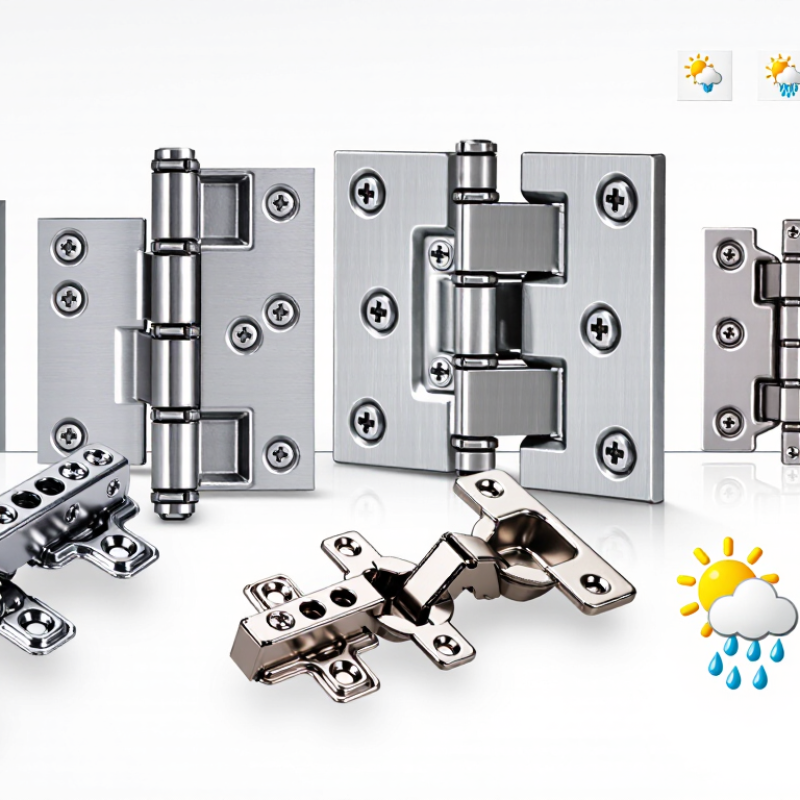
2026 Best Stainless Steel Door Hinges for Global Buyers

Choosing the best stainless steel door hinges in 2026 requires more than comparing prices or polished surfaces. Global buyers need dependable hardware for homes, offices, hospitals, hotels, and industrial buildings. A Door Hinge Stainless Steel product must support repeated movement, stable alignment, and long service life. It should also suit the door’s weight, frame material, traffic level, and local climate.

Practical experience shows that details often decide performance. A hinge with a reinforced knuckle can reduce movement under heavy doors. Precision-machined pins may improve smooth operation. Ball bearings can help busy entrances open with less resistance. Grade 304 stainless steel suits many indoor and moderate outdoor applications. Grade 316 may offer better protection near coastlines, swimming pools, and chemical areas. Finish quality matters too. Rough edges, uneven polishing, or weak welds can signal deeper manufacturing problems.

Testing should include load checks, cycle testing, corrosion assessment, and dimensional inspection. Reliable suppliers should provide material reports, tolerance data, installation guidance, and traceable quality records. However, no single hinge fits every project. Door thickness, closer force, temperature changes, and regional building requirements can alter the final choice. Some product claims also sound stronger than the available evidence. Buyers should ask for independent test results when safety or heavy use is involved. A careful comparison of construction, certification, warranty, and after-sales support can prevent costly replacements. This guide examines leading 2026 options with a practical and critical view. Not every impressive specification guarantees real-world durability.

2026 Best Stainless Steel Door Hinges for Global Buyers

What Are Stainless Steel Door Hinges and Why Do They Matter?

Stainless steel door hinges are mechanical joints that connect a door to its frame. They allow controlled movement while carrying the door’s weight through repeated opening cycles. Unlike ordinary steel, stainless steel resists rust through a protective chromium-rich surface. Its performance still depends on the grade, finish, and environment.

For global buyers, hinge selection affects safety, service life, and installation quality. A hinge for an indoor office may not suit a coastal entrance with salt-heavy air. Grade 316 usually offers stronger corrosion resistance than grade 304 in marine environments.

Leaf thickness, pin diameter, bearing design, and screw strength also matter. I once treated hinge size as the main concern. That assumption was wrong. Poor alignment caused rubbing, noise, and uneven gaps within months.

Tips: Match the hinge to door weight, frequency, and climate. Check the manufacturer’s load data, material grade, and test evidence. Inspect the frame before ordering, because weak fixing points can defeat a strong hinge. Choose removable pins only when maintenance access is safe and appropriate. A smooth finish looks attractive, but surface appearance alone does not prove durability. Small details matter.

How to Compare Stainless Steel Grades, Strength, and Corrosion Resistance

2026 Best Stainless Steel Door Hinges for Global Buyers

Stainless steel grade is the first comparison point, but it is not the whole answer. Grade matters. Type 304 stainless steel suits many indoor and mildly humid environments. Type 316 offers better resistance to salt, chlorides, and coastal exposure. Type 430 can reduce cost, yet its corrosion resistance is usually lower. Buyers should request the exact material designation, not only “stainless steel” on a quotation. Heat, cleaning chemicals, and trapped moisture can change real-world performance.

Strength depends on more than the advertised load number. Check the hinge leaf thickness, knuckle construction, pin diameter, bearing design, and screw-hole layout. A heavy door may need three or more hinges, depending on its height, closing force, and daily cycles. Door movement also creates impact loads that static calculations can miss. A safety margin is sensible. Test it physically. Open and close a sample door repeatedly, then inspect loosened screws, pin wear, and leaf distortion.

Corrosion resistance should be verified through material certificates and suitable test data. Salt-spray results can help, but they do not perfectly represent every climate or installation. Pay attention to welds, cut edges, and concealed surfaces, where rust may begin quietly. In practical inspections, even a well-polished hinge can fail when carbon-steel screws touch stainless surfaces. That detail is easy to overlook. Buyers should also confirm tolerances, packaging protection, and replacement availability across different markets. A specification sheet can still mislead.

Which Hinge Types and Features Suit Different Door Applications?

Choosing the best stainless steel door hinge depends on the door’s weight, movement, location, and maintenance demands. A light interior door usually suits standard butt hinges with a removable pin. They are simple, economical, and easy to adjust during installation. Heavy timber, steel, or glass doors need ball-bearing hinges. Their smoother rotation reduces friction when doors open repeatedly throughout the day.

Exterior and coastal doors face rain, salt, and temperature changes. Stainless steel with suitable corrosion resistance is more reliable in these conditions. However, “stainless steel” is not enough information. Buyers should check the steel grade, finish, hinge thickness, and supplier test documentation. A concealed hinge creates a clean appearance for modern doors, but installation requires accurate routing and stronger frame preparation. It can become troublesome when installers lack the correct templates.

Spring hinges can close lightweight doors automatically, while adjustable versions allow better tension control. They may suit utility rooms, offices, or controlled access areas. For wide doors, continuous hinges spread the load along the frame and reduce stress around individual screws. Fire-rated, security, and high-traffic applications require hinges tested for the complete door assembly, not only the hinge itself. Local building requirements still matter.

From site inspections, I have seen attractive hinges fail because screws were too short or the frame was weak. That mistake is easy to overlook. Check the door’s weight, opening angle, clearances, screw material, and expected cycle count before ordering. Sometimes, choosing a larger hinge feels safer, but poor alignment can create binding, noise, and premature wear.

How to Evaluate Sizes, Load Capacity, Installation, and Maintenance

2026 Best Stainless Steel Door Hinges for Global Buyers

How to Evaluate Sizes, Load Capacity, Installation, and Maintenance

Choose hinge size from the door’s height, thickness, weight, and opening frequency. A 100 mm hinge may suit a light interior door, while taller or heavier doors often need 125 mm or more. Do not rely on appearance alone. ANSI/BHMA A156.1 testing classifies hinges by durability, with higher grades covering substantially more operating cycles. That matters in hotels, hospitals, and busy entrances.

Check load capacity as a complete system, not a single hinge claim. Three hinges distribute weight better than two, but poor screw anchoring can still cause sagging. Use stainless screws that match the frame material and verify the manufacturer’s tested load rating. Installation should keep hinge leaves flush, with even gaps around the door. A 2 mm uneven gap can create rubbing, noise, and premature wear. Small detail. Often missed.

Maintenance is simple but not optional. Inspect loose screws, corrosion spots, and pin movement every six to twelve months. Coastal air requires more frequent cleaning with clean water and a mild detergent. Avoid chlorine-based cleaners, which may damage stainless surfaces. UNEP’s 2024 Global Status Report for Buildings and Construction states that buildings consume 32% of global energy. Durable hardware cannot solve that challenge alone, but fewer replacements can reduce material waste. My practical concern is clear: published capacity figures are not always tested under identical conditions, so buyers should request test methods, cycle data, and installation limits before comparing prices.

What Should Global Buyers Check When Selecting Suppliers and Products?

2026 Best Stainless Steel Door Hinges for Global Buyers

What Should Global Buyers Check When Selecting Suppliers and Products?

Global buyers should verify the steel grade before comparing prices. The International Stainless Steel Forum reported 58.4 million tonnes of crude stainless steel production in 2023. High supply does not guarantee consistent hinge quality. Request mill certificates, heat numbers, and positive material identification records. Grade 304 suits many indoor applications. Grade 316 offers better resistance near saltwater, chemicals, and humid climates. However, “316” on a quotation proves very little alone.

Check performance against recognized standards, such as ANSI/BHMA A156.1 or EN 1935. Ask for cycle testing, load ratings, corrosion-test conditions, and sample reports. A supplier should explain test duration, failure limits, and laboratory responsibility. Salt-spray hours can mislead buyers. They do not perfectly predict outdoor service. Inspect pin diameter, knuckle alignment, leaf thickness, screw-hole accuracy, and machining burrs. Small defects can create loud movement or uneven door gaps.

Supplier reliability needs equal attention. ISO 9001 certification may show process control, but it cannot replace factory audits or batch inspections. Review production capacity, traceability, packaging strength, and complaint response times. Confirm whether samples match mass production. I would still order a small pilot batch. Datasheets can look complete and remain wrong. Field conditions are less polite than factory samples. Consider local humidity, door weight, installation tools, replacement access, and long-distance shipping damage before approving a large order.

2026 Best Stainless Steel Door Hinges for Global Buyers - What Should Global Buyers Check When Selecting Suppliers and Products?

Selection Dimension Recommended Product Benchmark Common Options Verification Data to Request Global Buyer Consideration Risk Signal
Stainless Steel Grade Use AISI 304 for general indoor and moderate outdoor applications; use AISI 316 or 316L for marine, coastal, chloride-rich, or chemical environments. 304; 316; 316L; ferritic grades for lower-cost, lower-corrosion-risk applications. Material test report, grade declaration, chemical composition, and traceability from raw material to shipment. Grade selection should reflect salt exposure, humidity, cleaning chemicals, and expected service life. Unclear grade or “stainless steel” stated without a specific designation.
Hinge Type Choose the construction according to door weight, opening frequency, adjustment needs, and installation method. Butt hinge; ball-bearing hinge; spring hinge; lift-off hinge; concealed hinge; weld-on hinge; adjustable hinge. Product drawing, movement description, bearing details, adjustment range, and installation instructions. Ball-bearing types are generally more suitable for heavy or frequently used doors than plain-bearing types. Product type does not match the door’s weight, usage frequency, or frame structure.
Load Capacity Select only from tested load data; allow a safety margin rather than matching the hinge rating exactly to door weight. Light-duty interior doors; medium-duty commercial doors; heavy-duty steel, security, or industrial doors. Test method, number of hinges used, door dimensions, load position, cycle count, and allowable deformation. Capacity depends on hinge spacing, screw strength, frame rigidity, door width, and eccentric loading. A load figure is published without test conditions or installation assumptions.
Standard Sizes Confirm the full dimensional drawing before sampling and match the hinge leaf to the door and frame preparation. Typical butt-hinge heights include approximately 75 mm, 89 mm, 100 mm, 102 mm, 114 mm, and 127 mm; other sizes are available. Overall height, width, leaf thickness, knuckle diameter, hole spacing, corner radius, and pin diameter. Metric and imperial hole patterns may differ; avoid relying only on nominal size descriptions. Drawing omits tolerances or uses inconsistent units.
Surface Finish Use a finish that supports the required appearance, cleanability, and corrosion resistance without hiding surface defects. Mill finish; brushed finish; satin finish; polished finish; bead-blasted finish; PVD-coated finish. Surface roughness target where relevant, finish sample, coating thickness for coated products, and cleaning procedure. Brushed and satin surfaces can show directional variation; finish consistency should be checked across batches. Visible scratches, weld discoloration, pits, sharp edges, or inconsistent polishing.
Pin and Bearing Design Use a removable or non-removable pin according to security needs; use suitable bearings for frequent operation. Plain stainless pin; ball-bearing design; washer-bearing design; security pin; greaseable bearing arrangement. Pin material, bearing material, lubrication requirements, pull-out resistance, and cycle-test results. Security pins can reduce hinge-side removal risk; bearing design affects noise, wear, and operating force. Loose pin, rough movement, metal-to-metal binding, or no stated maintenance guidance.
Corrosion Testing Use a recognized test method and compare results only when the material, finish, preparation, and evaluation criteria are equivalent. Neutral salt spray testing according to ISO 9227 or ASTM B117; field exposure testing for project-specific validation. Laboratory report, test duration, specimen preparation, corrosion rating, and red-rust acceptance criteria. Salt-spray hours are not a direct prediction of service life in every environment. Only “passed salt spray” is stated without a report or test conditions.
Mechanical Performance For building hardware, check whether the product is tested or classified under EN 1935 where the intended application requires it. General hardware specification; commercial-duty specification; architectural hardware classification; project-specific test requirement. Test certificate, grade/classification, cycle performance, corrosion category, and conformity statement. Standards requirements vary by country, door assembly, fire rating, and public-building application. A standard number is listed without the applicable product classification or certificate scope.
Fasteners and Compatibility Use compatible stainless fasteners and verify screw length, head style, thread, and substrate requirements. Wood screws; machine screws; self-tapping screws; through-bolts; concealed fixings; security fasteners. Fastener material and grade, thread specification, torque guidance, hole size, and installation torque. Dissimilar-metal contact may cause galvanic corrosion, especially in wet or salty environments. Supplied screws are not identified or are unsuitable for the door and frame material.
Quality Control Require documented inspection procedures for dimensions, material, finish, movement, packaging, and batch traceability. Incoming material inspection; in-process inspection; final inspection; sampling inspection; 100% visual inspection for critical surfaces. Inspection plan, sampling level, tolerance chart, nonconformity procedure, corrective-action records, and batch photographs. Consistent inspection records reduce variation between samples, production batches, and shipments. Supplier cannot provide batch records or control measurements.
Packaging and Logistics Protect finished surfaces from abrasion, moisture, contamination, and mixed-part contact during international transport. Individual protective bags; separators; inner cartons; export cartons; pallets; moisture-resistant packing. Carton dimensions, gross and net weight, packing quantity, pallet configuration, labeling, and HS-code proposal. Confirm destination-country labeling, import documents, packaging regulations, and damage-claim procedures. Parts are packed together without separators or corrosion protection.
Supplier Capability Prefer suppliers able to provide samples, engineering drawings, stable production capacity, inspection evidence, and after-sales support. Standard catalog supply; OEM production; custom dimensions; private-label packaging; project-based engineering support. Sample approval process, minimum order quantity, lead time, capacity information, audit access, and warranty terms. Evaluate total landed cost, not only unit price: tooling, testing, packaging, freight, duties, defects, and replacement cost. Supplier avoids technical questions, changes specifications without notice, or refuses pre-shipment inspection.

Note: Load capacity, corrosion resistance, service life, and compliance depend on the complete door assembly, installation method, environment, and applicable local requirements. Request product-specific test evidence before placing a commercial order.

WhatsApp