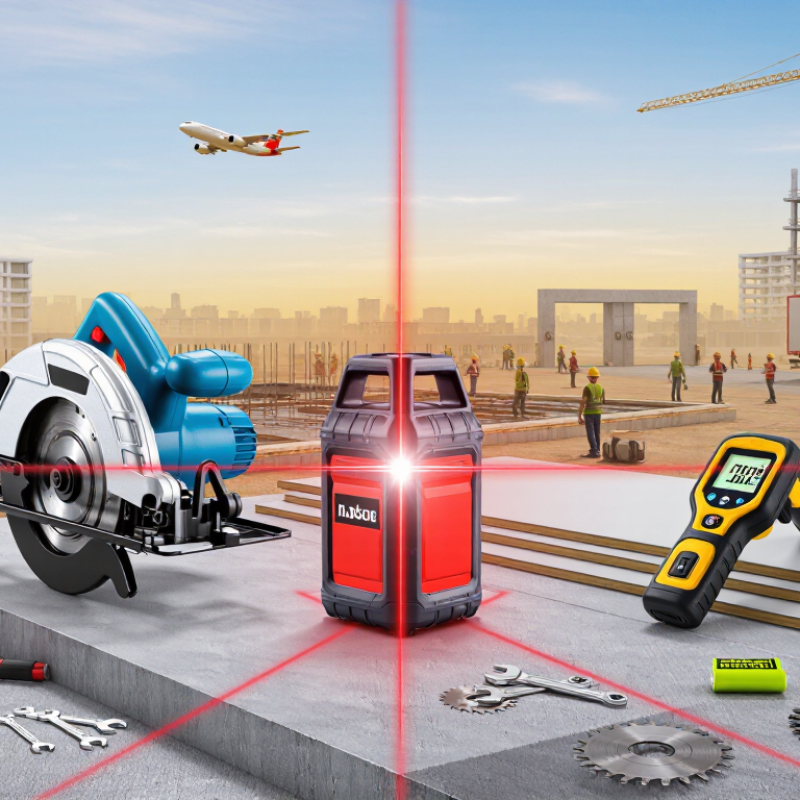
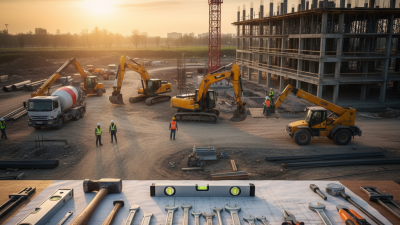
Global construction projects demand more than quality materials. They require reliable building materials tools that perform across climates, jobsite conditions, and professional standards. A laser level must remain accurate in humid heat. A diamond blade must cut dense concrete without excessive vibration. A moisture meter can prevent hidden damage before wall panels are installed.
Canadian contractor and construction educator Mike Holmes has a practical message: “Do it right the first time.” His principle fits international work especially well. The correct building materials tools can reduce rework, protect workers, and support consistent results across distant teams. They also help contractors document quality through measurements, calibrated settings, and repeatable procedures.
Performance matters. So does availability. A global supplier should offer clear specifications, replacement parts, training, and responsive technical support. Tools should suit local power systems, transport limits, and site safety requirements. Small details matter, such as a sealed case surviving a dusty flight or a spare battery arriving before a concrete pour.
Yet no tool guarantees perfect construction. Mistakes still happen. A rushed operator may misuse an excellent saw. A poorly checked level can distort an entire façade. This is where experience becomes essential. Project managers must compare tool ratings, test samples, review supplier records, and consider actual site conditions. Building materials tools are valuable because they connect technical knowledge with physical results. Their greatest advantage is not simply speed. It is dependable control, when people use them carefully.
Why Choose Building Materials Tools for Global Projects?
Definition and Scope of Building Materials Tools
Building materials tools are equipment used to measure, cut, shape, join, test, and install construction materials. Their scope covers hand tools, power tools, measuring devices, lifting equipment, and inspection instruments. These tools support work with concrete, steel, timber, glass, insulation, and composite panels.
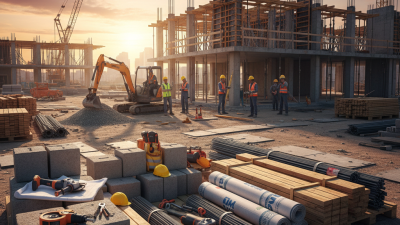
On a concrete site, workers may use mixers, trowels, cutters, moisture meters, and vibration tools. A timber project requires saws, drills, clamps, levels, and fastening tools. Global projects also demand equipment suited to local power systems, climate conditions, material properties, and safety requirements. A humid coastal site may require corrosion-resistant tools. Dusty environments need stronger protection and easier cleaning.
Definition matters. It prevents teams from treating every tool as interchangeable. A tool may perform well in a workshop but fail beside a windy tower or on uneven ground. Experience shows that calibration records, maintenance logs, and operator training often matter as much as tool capacity. Measured results should be checked against project specifications and applicable local standards.
No tool is perfect. Our first selection is not always right. A heavy cutter can increase fatigue, while a compact model may reduce productivity. Practical evaluation should consider accuracy, handling, repair access, replacement parts, and training time. Reliable tools support consistent workmanship, but disciplined use remains essential.