
Top Carbon Seamless Pipe Manufacturer for Global Buyers
Global buyers need more than a low quoted price when selecting a Carbon Seamless Pipe Manufacturer. They need consistent chemistry, verified dimensions, and dependable delivery across borders. The World Steel Association reported approximately 1.89 billion tonnes of crude steel production in 2023, showing the scale of the industrial supply chain behind modern infrastructure. Yet scale alone does not prove quality.
Seamless carbon steel pipes support oil and gas lines, pressure systems, boilers, and structural projects. Their reliability depends on steelmaking, piercing, heat treatment, testing, and accurate documentation. The IEA identifies iron and steel production as responsible for roughly 7% to 9% of global energy-related carbon dioxide emissions. This pressure is changing buyer expectations. Responsible manufacturers now need stronger process control, material efficiency, and clearer environmental reporting.
A capable Carbon Seamless Pipe Manufacturer should work with recognized standards, such as ASTM, ASME, API, or EN specifications, according to project requirements. Buyers should review mill certificates, heat-number traceability, ultrasonic testing records, hydrostatic results, and inspection procedures. A pipe may look flawless under warehouse lighting. Its real performance appears under pressure, temperature, and time.
Experience matters here.
The OECD’s Steel Market Developments reports also highlight continuing uncertainty in global steel demand, trade, and production costs. Therefore, dependable sourcing requires technical judgment, not attractive catalog language. No supplier is perfect. Certificates can contain errors, delivery estimates can shift, and specifications may be misunderstood. A trustworthy manufacturer acknowledges these risks, communicates early, and corrects weaknesses with evidence. This guide examines the practical capabilities, quality systems, export readiness, and sustainability signals that distinguish a reliable global supplier from an ordinary pipe vendor.
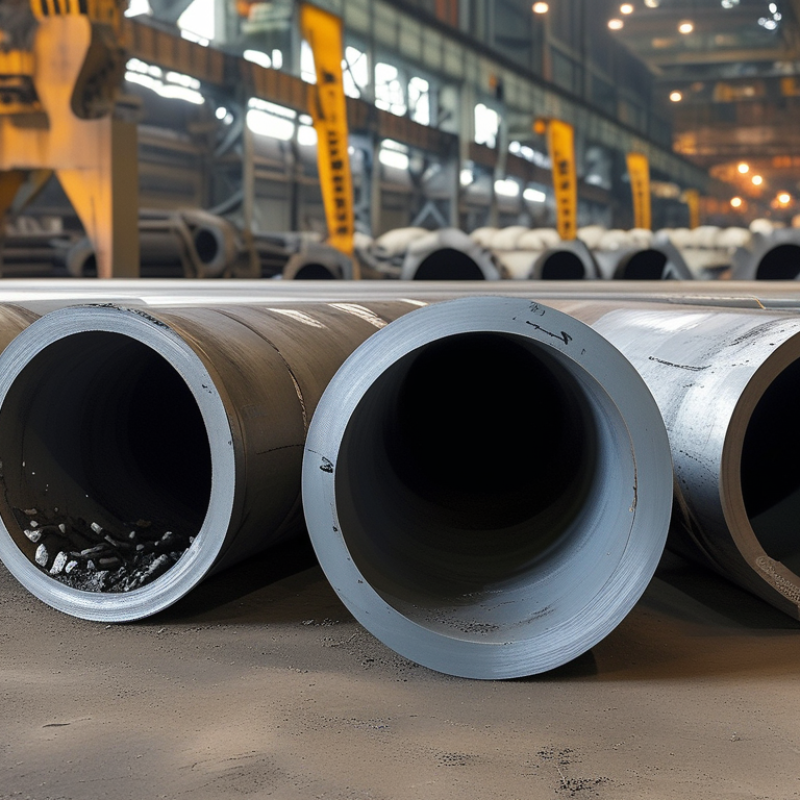
Definition and Role of a Top Carbon Seamless Pipe Manufacturer
A top carbon seamless pipe manufacturer is more than a factory with large furnaces. It is a technical partner that controls steel chemistry, piercing, rolling, heat treatment, testing, and documentation. Seamless pipe contains no welded seam, making process discipline especially important for pressure service. The World Steel Association reported 1.89 billion tonnes of crude steel production in 2023. That scale shows the industry’s capacity, but it does not prove product reliability.
The manufacturer’s role begins with correct material selection. Carbon grades must match pressure, temperature, corrosion exposure, and connection requirements. Production teams should verify chemistry through heat certificates and confirm dimensions with calibrated instruments. Hydrostatic testing, ultrasonic inspection, and tensile testing provide practical evidence. Applicable requirements may include ASTM, ASME, API, or EN standards, depending on the project. International trade data also shows how widely steel products move across borders, increasing the need for traceability and consistent export documentation.
Quality is never perfectly simple. A certificate can be accurate yet incomplete. Therefore, experienced manufacturers keep heat numbers connected to each pipe bundle, inspection record, and shipment document. The best teams also explain limitations honestly, including tolerances, coating needs, and delivery risks. That honesty matters. World Steel Association statistics show strong global steel output, but buyers still need process evidence, not production volume alone. A top supplier listens to site conditions, checks assumptions, and corrects mistakes before installation begins.
| Evaluation Dimension | Reference Data or Requirement | What a Top Manufacturer Should Provide | Importance for Global Buyers |
|---|---|---|---|
| Product Definition | Carbon seamless pipe is produced from a solid steel billet or round bar and formed without a longitudinal weld seam. | Clear product specifications covering outside diameter, wall thickness, length, steel grade, manufacturing process, and end finish. | Helps purchasers select pipe suitable for pressure, temperature, mechanical-load, and installation requirements. |
| Common Product Standards | ASTM A106 covers seamless carbon steel pipe for high-temperature service; ASTM A53 includes seamless and welded steel pipe; API 5L covers line pipe requirements. | Manufacturing, testing, marking, and documentation aligned with the standard specified in the purchase order. | Standards provide a common technical basis for international procurement, inspection, and acceptance. |
| Typical Carbon Steel Grades | Examples include ASTM A106 Grade B, ASTM A53 Grade B, and API 5L Grade B. Exact chemistry and mechanical limits depend on the applicable standard. | Grade selection based on design pressure, operating temperature, fluid type, welding needs, and applicable codes. | Correct grade selection reduces risks related to strength, toughness, corrosion, and service failure. |
| Manufacturing Route | Typical processes include billet heating, piercing, elongation, sizing, heat treatment, straightening, cutting, and finishing. | Controlled process parameters, traceability from billet to finished pipe, and documented heat-treatment records where required. | Process control supports dimensional consistency, mechanical performance, and repeatable quality across production lots. |
| Dimensional Control | Key measurements include outside diameter, wall thickness, length, ovality, straightness, and end squareness. | Calibrated measuring equipment, inspection records, and tolerances stated according to the selected product standard. | Accurate dimensions support fit-up, flange or threaded connections, fabrication, and field installation. |
| Mechanical Properties | Typical verification includes yield strength, tensile strength, and elongation; required values vary by grade and standard. | Heat or batch-level test results issued in a material test certificate when required by the contract. | Confirms that the pipe can withstand the specified design and operating loads. |
| Chemical Composition | Carbon, manganese, phosphorus, sulfur, and other specified elements are controlled according to the applicable grade. | Heat analysis and, where required, product analysis with traceable test results. | Supports weldability, strength, ductility, and compliance with project specifications. |
| Non-Destructive Testing | Hydrostatic testing and/or approved non-destructive examination may be required depending on the standard and purchase order. | Documented test procedures, calibrated equipment, qualified personnel, and test reports linked to pipe identification. | Improves confidence in pressure integrity and helps detect relevant discontinuities before shipment. |
| Surface and End Finish | Options may include plain ends, beveled ends, threaded ends, grooved ends, or protective coatings when specified. | End preparation, surface condition, caps, marking, and coating requirements matched to the installation method. | Reduces site modification, protects pipe ends, and improves installation efficiency. |
| Traceability | Traceability normally links each pipe or bundle to a heat number, grade, size, standard, and inspection record. | Permanent or durable marking and a complete document trail from raw material through final inspection. | Supports audits, claims management, regulatory review, and long-term asset documentation. |
| Quality Documentation | Common documents include commercial invoice, packing list, certificate of origin, material test certificate, inspection report, and test records. | Accurate, consistent, and shipment-specific documentation prepared in the buyer's required format. | Facilitates customs clearance, third-party inspection, payment processing, and project approval. |
| Typical Applications | Oil and gas transmission, steam and process piping, boilers, heat exchangers, structural supports, and general industrial service. | Application-specific recommendations based on pressure, temperature, fluid, joining method, and applicable design code. | Ensures the selected pipe is appropriate for the intended operating environment. |
| Export Packaging | Common measures include steel or textile bundling, end protection, moisture protection, and seaworthy packing. | Packaging designed for handling, container or break-bulk transport, storage, and destination-country requirements. | Minimizes damage, corrosion, identification loss, and delays during international transportation. |
| Role in Global Supply | A top manufacturer coordinates engineering, production, inspection, documentation, packaging, and delivery. | Acts as a technical and supply-chain partner rather than only a pipe seller. | Reduces procurement complexity, improves project predictability, and supports compliance across different markets. |