
China Top 10 Carbon Fiber Production Line Suppliers
China’s carbon fiber industry is expanding from basic filament production toward complete, automated manufacturing lines. This article introduces the China Top 10 Carbon fiber production line suppliers and examines their practical capabilities.
A reliable Carbon fiber production line supplier must support the full process, from PAN precursor preparation to oxidation, carbonization, surface treatment, sizing, drying, and winding. Each stage affects tensile strength, modulus, consistency, and production cost. Small tension changes can create uneven tow spreading. Poor oven control can damage the fiber surface. These details matter more than a polished showroom.
Dr. Suresh G. Advani, a respected composites researcher, has stated, “Composite performance begins with process control, not with the brochure.” His point remains useful when comparing Chinese suppliers. A serious evaluation should include pilot-line results, temperature uniformity, line speed, energy consumption, maintenance access, and batch traceability. Ask to inspect actual production records. Not only presentation samples.
The leading suppliers may offer complete lines, customized layouts, automation systems, and technical commissioning. Some also provide training for operators and support during scale-up. However, supplier rankings are never perfect. A company may perform strongly in standard tow production but struggle with high-modulus grades or recycled precursor systems. Regional service response can also vary considerably.
This guide therefore focuses on evidence, not promises. It considers engineering experience, installed capacity, quality control, export performance, and after-sales support. Readers should still verify references, factory conditions, and long-term operating data before signing a contract. A cheaper line may become expensive when downtime starts. That uncomfortable possibility deserves attention.
China’s Top 10 Carbon Fiber Line Suppliers: 2024 Capacity and Market Scope
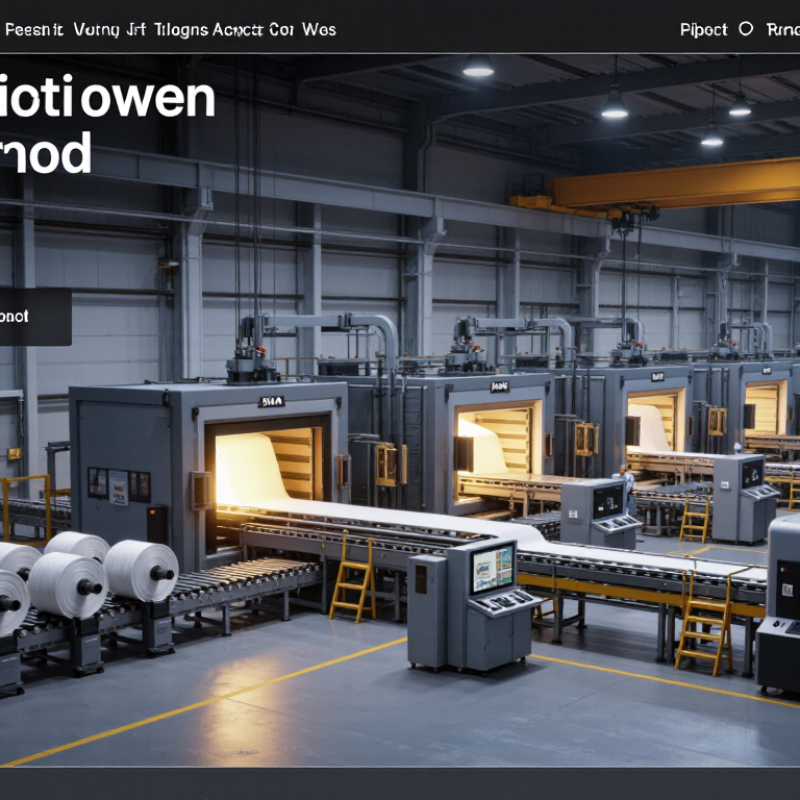
China’s top ten carbon fiber line suppliers in 2024 reflect a market moving from expansion toward disciplined capacity use. Their production lines typically cover precursor conversion, stabilization, carbonization, surface treatment, sizing, and winding. This integrated structure can reduce handling losses and improve batch consistency.
Published capacity varies widely. Some suppliers report several hundred tonnes annually, while larger facilities claim several thousand tonnes. These figures are nameplate capacities, not guaranteed output. Actual production depends on energy availability, equipment utilization, precursor quality, and customer qualification schedules. Numbers need verification.
Market scope is equally important. Suppliers serving aerospace and pressure-vessel projects usually emphasize high tensile strength, controlled filament spread, and strict traceability. Wind-energy and automotive buyers often focus on larger volumes, stable pricing, and faster delivery. Sporting goods and industrial users may accept broader specifications, but they still require consistent modulus and surface treatment.
A practical assessment should examine line width, tow size, furnace temperature control, laboratory testing, and maintenance records. Site audits reveal details that brochures miss. For example, a clean winding area and clearly labeled test samples suggest stronger process discipline. Not always, though.
Capacity alone does not prove competitiveness. A supplier may have impressive equipment but limited downstream experience. Another may produce less while offering better qualification support. China’s 2024 supplier landscape therefore deserves careful comparison, not a simple ranking based on installed tonnes.
China Top 10 Carbon Fiber Production Line Suppliers - China’s Top 10 Carbon Fiber Line Suppliers: 2024 Capacity and Market Scope
Anonymized 2024 market comparison of major Chinese carbon fiber production-line supplier profiles. Company names and brand identifiers are intentionally omitted.
| Rank | Supplier Profile | Estimated 2024 Carbon Fiber Capacity Supported | Typical Production Line Configuration | Commercial Tow Range | Main Process Capability | Primary Application Scope | Geographic Market Scope | 2024 Market Position |
|---|---|---|---|---|---|---|---|---|
| 1 | Supplier Profile 01 | 20,000–30,000 tonnes per year | PAN precursor, oxidation, carbonization, surface treatment and sizing lines; integrated large-scale plants | 12K24K48K | Standard-modulus industrial-grade carbon fiber with continuous high-throughput operation | Wind-turbine components, pressure vessels, automotive parts, sporting goods and infrastructure reinforcement | China, Asia-Pacific and selected export markets | Large integrated capacity and broad industrial customer coverage |
| 2 | Supplier Profile 02 | 15,000–25,000 tonnes per year | Integrated PAN-based carbon fiber lines with multiple carbonization furnaces and automated winding systems | 12K24K | Industrial-grade fiber focused on stable tensile strength, consistent sizing and process yield | Pressure vessels, cables, construction materials, rail transportation and general industrial composites | Domestic China with expanding regional exports | Strong high-volume industrial supply capability |
| 3 | Supplier Profile 03 | 10,000–20,000 tonnes per year | Modular precursor and carbonization lines designed for capacity expansion and product-grade flexibility | 3K6K12K | Standard- and intermediate-modulus grades for composite part manufacturers | Aerospace subcontracting, drones, sporting equipment, automotive and industrial machinery | China, East Asia, Europe and the Middle East | Balanced portfolio covering specialty and industrial demand |
| 4 | Supplier Profile 04 | 8,000–15,000 tonnes per year | Continuous PAN-based lines with dedicated high-temperature carbonization and surface-treatment sections | 6K12K24K | High-strength industrial carbon fiber with application-specific sizing options | Hydrogen and natural-gas storage, wind energy, marine structures and civil engineering | Primarily China with selected overseas project supply | Well positioned in energy and infrastructure applications |
| 5 | Supplier Profile 05 | 6,000–12,000 tonnes per year | Medium-scale production lines with flexible tow conversion, rewinding and quality-control modules | 3K6K12K | General-purpose and intermediate-performance carbon fiber | Sports equipment, automotive interiors, consumer products, industrial rollers and composite panels | Domestic China and neighboring Asian markets | Flexible production for diversified mid-volume orders |
| 6 | Supplier Profile 06 | 5,000–10,000 tonnes per year | Compact continuous lines with emphasis on process control, laboratory validation and pilot-to-commercial scale-up | 1K3K6K | Fine-tow, high-quality standard-modulus and selected intermediate-modulus products | Aerospace components, unmanned systems, precision sporting goods and specialty composites | China, Japan, South Korea and specialist export channels | Specialty-grade supplier profile with higher product customization |
| 7 | Supplier Profile 07 | 4,000–8,000 tonnes per year | Industrial carbonization lines with automated fiber spreading, sizing and package-forming equipment | 12K24K | Cost-efficient standard-modulus carbon fiber for high-volume composite processing | Wind-energy components, pressure vessels, construction reinforcement and transportation equipment | China and price-sensitive international markets | Competitive production economics for industrial buyers |
| 8 | Supplier Profile 08 | 3,000–7,000 tonnes per year | Multi-purpose lines supporting short production runs, specification changes and application testing | 1K3K12K | Application-specific surface treatment and sizing for thermoset and thermoplastic composites | Automotive lightweighting, consumer electronics, sporting goods and industrial tooling | China with limited export activity | Responsive supplier profile for customized and development-stage orders |
| 9 | Supplier Profile 09 | 2,000–5,000 tonnes per year | Pilot and commercial-scale lines with integrated testing laboratories and small-batch winding capability | 1K3K6K | Specialty carbon fiber, development grades and controlled small-lot production | Research institutions, aerospace development, robotics, medical equipment and advanced composites | China and technology-oriented overseas customers | Development-focused supplier profile with low-to-medium volume output |
| 10 | Supplier Profile 10 | 1,000–4,000 tonnes per year | Small-to-medium PAN-based lines with upgradeable oxidation, carbonization and finishing modules | 3K6K12K | Standard-modulus grades for regional industrial and composite-product manufacturers | Automotive aftermarket, sports products, industrial parts, building reinforcement and education markets | Regional China and selected Southeast Asian markets | Smaller-scale supplier profile with flexible delivery and customization |