
How to Choose a Power Pressing Machine for Your Business?

Choosing a Power Pressing Machine can shape your production speed, product quality, and daily operating costs. It is not simply a matter of selecting the largest model. A workshop making small electrical brackets needs different pressure, tooling, and stroke control than a factory forming thick steel panels. The right decision begins with your materials, required output, available floor space, and workers’ practical experience.

This guide explains the main factors buyers should examine before placing an order. These include pressing capacity, machine structure, operating speed, automation options, energy use, maintenance access, and supplier support. A reliable Power Pressing Machine should match the material thickness and forming process without excessive strain. Check rated capacity, shut height, slide adjustment, and die compatibility carefully. Small details matter. A poorly matched die can create uneven edges, wasted sheets, and unnecessary downtime.

Safety and long-term reliability also deserve close attention. Confirm that the machine includes suitable guarding, emergency stops, clear controls, and documented operating procedures. Ask the supplier for inspection records, installation guidance, training, and spare-parts availability. These details often reveal a supplier’s professionalism more clearly than glossy specifications. Price still matters, but the cheapest machine may cost more through repairs, rejected parts, or lost production.

Real purchasing decisions are rarely perfect. A machine can meet its stated capacity yet perform poorly in a demanding workshop. Buyers should test representative materials whenever possible. Review sample results, noise levels, vibration, and adjustment time. Careful evaluation creates a more dependable investment and supports consistent production as the business grows.
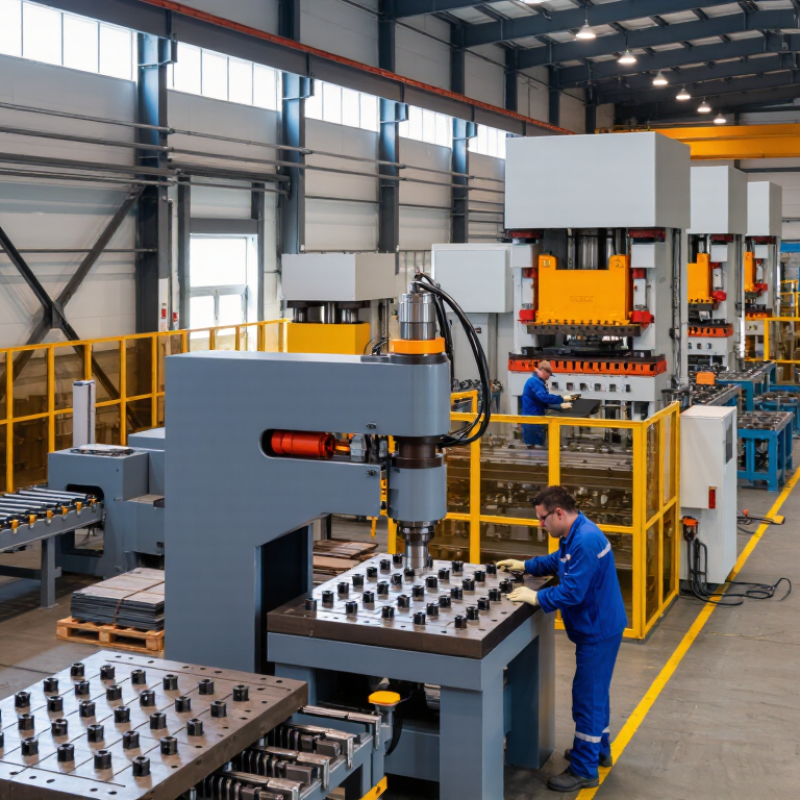
How to Choose a Power Pressing Machine for Your Business?

Define Your Production Needs and Pressing Requirements

How to Choose a Power Pressing Machine for Your Business?

Define Your Production Needs and Pressing Requirements

Choosing a power pressing machine starts with your actual production work, not the machine’s advertised capacity. List the materials, thicknesses, shapes, and daily quantities you handle. A machine pressing thin sheet metal needs different settings than one forming dense components. Measure your largest workpiece carefully. Bed size matters.

Calculate the required pressing force for each operation. Allow extra capacity for material variation, tooling weight, and future orders. However, buying the largest machine is not always wise. It may increase energy use, floor space, and maintenance costs. A smaller machine can be more efficient for light, repetitive work. That assumption can be wrong when production suddenly grows.

Review stroke length, pressing speed, adjustment range, and cycle time. Match these features with your operators’ workflow. For example, a short stroke may suit shallow forming, while deeper work requires more travel. Check whether the machine supports your existing dies and fixtures. Replacing compatible tooling can become an unexpected expense. Record your measurements.

Safety and consistency also define your requirements. Look for suitable guarding, emergency controls, stable operation, and clear adjustment procedures. Ask how accuracy changes during long production runs. Test samples using your actual material when possible. A single demonstration is not enough. Keep written records of force, speed, defects, and setup time. These details provide stronger evidence than general specifications.

Compare Machine Types, Tonnage, and Operating Methods

Choosing a power pressing machine starts with the workpiece, not the catalog. Mechanical presses suit fast, repeated stamping with consistent stroke timing. Hydraulic presses provide adjustable force and controlled movement for deeper forming. Servo-driven presses offer precise speed control, but their advanced systems may require stronger maintenance skills. I once selected a machine by speed alone. That assumption was wrong.

Tonnage must match the material, thickness, shape, and forming depth. Calculate the required force with a qualified engineer or the material supplier. Add a practical safety margin, but avoid buying excessive capacity. An oversized press can increase energy use and tooling costs. For example, thin sheet metal may need moderate force, while deep-drawn steel demands much more. Check the machine’s rated tonnage at the intended stroke position.

Operating method affects productivity and risk. Manual loading can work for low-volume orders and frequent size changes. Semi-automatic operation improves repeatability while keeping changeovers flexible. Fully automatic feeding suits stable production runs, but it needs reliable sensors and regular inspections. Keep both hands away from the die area. Use guards, emergency stops, and documented maintenance procedures. A technically correct choice can still fail if operators find the controls confusing. Ask workers to test the interface before purchase. Their feedback may expose problems that specifications hide.

How to Choose a Power Pressing Machine for Your Business? — Compare Machine Types, Tonnage, and Operating Methods
Machine Type Primary Operating Method Typical Tonnage Range Typical Speed Characteristics Best-Suited Operations Strengths Limitations Typical Selection Priority
Mechanical Press Motor-driven flywheel transfers energy through a crankshaft, eccentric mechanism, or toggle linkage. A clutch and brake control the slide motion. Approximately ’à 10–1,600 short tons, depending on the frame and application. Generally high production speed. The rated force is available near the bottom of the stroke, so the usable working range must be checked carefully. Blanking, piercing, stamping, forming, coining, and progressive-die production of sheet metal. High productivity, repeatable stroke motion, good energy efficiency during continuous production, and strong suitability for automated lines. Less flexible force control than a hydraulic press; overloads and improper die setup can damage tooling or the machine. Choose when cycle time, repeatability, and large production volumes are more important than variable stroke control.
Hydraulic Press One or more hydraulic cylinders generate force through pressurized fluid. Pressure and slide movement are controlled by valves and a hydraulic power unit. Approximately 10–10,000+ short tons for industrial applications. Usually slower than a mechanical press, but the slide can be controlled throughout the stroke and can dwell at the bottom. Deep drawing, compression molding, straightening, bending, hot forming, rubber molding, and heavy forming work. Full force can be available throughout the stroke; adjustable pressure, speed, stroke, and dwell time; suitable for complex or deep forming. Lower production speed in many applications, possible hydraulic-fluid leakage, heat generation, and greater maintenance requirements for the hydraulic system. Choose when controlled force, long stroke, deep drawing, or variable forming cycles are required.
Servo Mechanical Press Servo motors drive the slide directly through a mechanical transmission, allowing programmable motion profiles instead of a fixed crank cycle. Approximately 30–2,500 short tons, depending on the design and market segment. Variable. Speed can be reduced during forming and increased during return or non-forming portions of the cycle. Precision stamping, progressive dies, transfer presses, fine blanking, and parts requiring improved control of material flow. Programmable slide motion, reduced impact during forming, improved control of forming conditions, and potential energy savings during intermittent operation. Higher purchase cost, more complex controls, and greater dependence on electrical drives and maintenance expertise. Choose when process flexibility, forming quality, motion control, and energy management justify a higher investment.
Gap-Frame Press Usually mechanical or servo-driven; the open-sided C-frame provides access to the die area from three directions. Commonly approximately 5–250 short tons. Often medium to high speed, depending on drive type, stroke length, and tooling. Small and medium-sized blanking, piercing, bending, embossing, and general-purpose stamping. Good accessibility, simple loading and unloading, relatively compact footprint, and flexible tooling access. Lower resistance to frame deflection than a straight-side press; excessive off-center loading can reduce accuracy or cause wear. Choose for versatile production of smaller parts where die access and floor-space efficiency are important.
Straight-Side Press Usually mechanical, servo mechanical, or hydraulic, with a closed rigid frame supported by upright columns. Commonly approximately 100–4,000 short tons, with larger custom machines available. Medium to high speed for mechanical versions; hydraulic versions are generally slower but offer greater process control. Large dies, transfer stamping, progressive dies, automotive-size panels, and operations with high off-center or concentrated loads. High frame rigidity, better resistance to deflection, improved die alignment, and suitability for large tooling. Higher cost, larger footprint, heavier installation requirements, and less convenient side access than a gap-frame press. Choose when part size, die weight, press rigidity, or dimensional consistency demands a heavier structure.
Single-Action Press One slide performs the primary forming or stamping action; blank holders may be integrated into the die or operated separately. Approximately 10–2,500 short tons, depending on the application. Varies by mechanical or hydraulic design; commonly used for standard stamping and forming cycles. Blanking, piercing, bending, shallow drawing, and general sheet-metal forming. Simpler tooling and controls, lower initial complexity, and broad suitability for common presswork. Less independent control of the blank holder and forming sequence than a double-action press. Choose for conventional stamping jobs that do not require separate control of the punch and blank holder.
Double-Action Press Two independently controlled slides operate the blank holder and punch, commonly used for drawing operations. Approximately 100–2,500 short tons, with the drawing and blank-holder capacities specified separately. Generally slower than high-speed mechanical stamping presses because the forming sequence requires coordinated slide movement. Deep drawing, cup forming, large panels, and parts requiring controlled blank-holder pressure. Improved control of material flow, reduced risk of wrinkles during drawing, and suitability for large drawn components. More complex tooling, higher equipment cost, and greater setup and maintenance requirements. Choose when drawing depth, wrinkle control, and independent blank-holder action are critical.
Note: Tonnage and speed ranges are broad industry-typical values rather than fixed specifications. The required press capacity should be calculated from material strength, thickness, cutting or forming perimeter, tooling design, stroke position, safety factor, and the manufacturer’s rated capacity point.

Evaluate Material Compatibility, Speed, and Precision

How to Choose a Power Pressing Machine for Your Business?

Material compatibility should guide your decision, not the advertised tonnage alone. Identify the metals, thicknesses, and sheet sizes used in daily production. Mild steel, stainless steel, and aluminum respond differently under pressure. A die suitable for one material may mark or distort another. Ask the supplier for test results using your actual material and tooling. Small sample runs often reveal problems that brochures hide.

Speed matters when orders are large, but cycle speed must match safe feeding and part removal. Compare strokes per minute, adjustable settings, and recovery time between cycles. A machine running too quickly can increase misfeeds, tool wear, and rejected parts. Measure your current cycle time with a stopwatch. Then estimate the realistic output, rather than trusting the maximum figure. Faster is not always better.

Precision depends on frame stability, stroke control, and repeatable pressure. Check whether the machine maintains alignment after long production runs. Inspect sample parts with calipers and record dimensional variation. Ask about calibration procedures and maintenance access. In my experience, a slightly slower press often produces more consistent parts. I have also seen teams choose excessive capacity, then struggle with higher energy use and unnecessary setup time. That choice deserves a second look.

How to Choose a Power Pressing Machine for Your Business?

Evaluate material compatibility, production speed, and positioning precision before selecting a power press for your production line.

Mechanical Press

Typical speed: 60–180 strokes/min. Suitable for repetitive blanking, bending, and forming of mild steel, stainless steel, and aluminum.

Hydraulic Press

Typical speed: 10–40 strokes/min. Its adjustable force and dwell time support thicker or more demanding forming applications.

Servo Press

Typical speed: 30–120 strokes/min. Programmable motion profiles can improve repeatability, energy control, and forming precision.

The chart uses representative midpoints from common industrial operating ranges. Material compatibility is a practical screening score from 1 to 5, while repeatability is shown as typical positioning deviation in millimeters. Actual performance depends on press capacity, tooling, material grade, thickness, and process setup.

Assess Safety Features, Maintenance, and Energy Efficiency

Power pressing machine selection should begin with the operator’s daily reality, not the catalogue price. In a busy workshop, guarded access points, two-hand controls, emergency stops, and clear warning labels reduce avoidable injuries. Check whether the safety system remains active during setup, cleaning, and tool changes. A machine can appear secure while hiding a poorly designed reach zone. Ask an independent technician to verify stopping distance and control reliability before purchase.

Maintenance affects both safety and production. Choose a press with accessible lubrication points, replaceable wear parts, and readable service instructions. Record inspections, unusual vibration, oil leaks, and delayed stops. These small notes often reveal failures before they become expensive downtime. I have seen teams postpone simple adjustments, believing the machine was “still working.” That judgment was costly. Maintenance schedules should reflect actual workload, material thickness, and operating conditions, rather than copying a generic calendar.

Energy efficiency deserves practical measurement. Compare motor power, idle consumption, cycle time, and standby performance. Efficient operation is not only about lower rated wattage. A poorly matched press may require extra cycles, increasing energy use and operator fatigue. Request measured consumption data under realistic loads, then check performance during long shifts. Some calculations may be imperfect when materials vary. Recheck them after installation with monthly meter readings.

Calculate Total Cost, Space Needs, and Long-Term Business Value

Choosing a power pressing machine should begin with total cost, not the purchase price. Include tooling, delivery, installation, floor reinforcement, guarding, training, electricity, maintenance, and planned downtime. The U.S. Department of Energy reports that motor-driven systems consume more than 70% of industrial electricity. A machine with slightly higher efficiency may therefore reduce operating costs over several years. Request measured energy data at your expected load, not only the maximum rating.

Space also carries a hidden price. Measure the machine footprint, control-panel clearance, material flow, service access, and safe operator movement. Leave room for dies, pallets, and maintenance tools. A compact layout can improve productivity, but an overcrowded line creates handling delays and safety risks. ISO 12100 emphasizes risk assessment during machinery design, so accessibility and guarding should enter the budget early. A simple floor drawing can expose expensive mistakes before delivery.

Tips: Build a five-year cost model. Compare energy, labor, tooling life, maintenance, scrap, and output per hour. Ask suppliers for service response times and spare-parts availability. Check whether the press can handle your actual material thickness and batch size. I would also test sample parts before signing. Brochures are polished; production is less forgiving. The cheapest machine may lose value through inconsistent pressure, longer changeovers, or frequent stoppages. Review the assumptions every six months, because forecasts often look precise while remaining partly wrong.

WhatsApp