
How to Produce Trays for Global Buyers?

How to Produce Trays for Global Buyers? The answer begins with disciplined planning, not attractive samples alone. Buyers expect stable dimensions, clean surfaces, safe materials, and dependable delivery. A tray may look simple, yet small errors can affect stacking, sealing, transport, and product protection. Successful manufacturers study the buyer’s application before selecting a process.

When companies Produce Trays, they should confirm size, load requirements, material thickness, color, and packing conditions. Thermoforming suits many lightweight packaging projects. Injection molding may support stronger designs and repeated production. Paper-based or recycled options can serve buyers with specific sustainability goals. Each choice has trade-offs. Lower material use can reduce cost, but it may weaken stiffness. A polished finish can improve presentation, yet it may increase tooling or inspection demands.

Practical quality control should cover incoming materials, first samples, production dimensions, surface defects, and final packing. Measurements must match approved drawings, not personal assumptions. Drop tests, stacking checks, and temperature reviews can reveal problems before shipment. Documentation also matters, including material specifications, inspection records, and clear carton markings. Requirements vary by destination, so reliable suppliers verify current buyer and market expectations through qualified professionals. No production plan is flawless. A warped corner, unclear tolerance, or delayed sample can expose weak communication. Reviewing these failures honestly improves future orders. Global buyers usually remember consistency more than promises. Build trust through visible processes, accurate reports, and realistic timelines. That is how tray production becomes a repeatable international business rather than a one-time shipment.
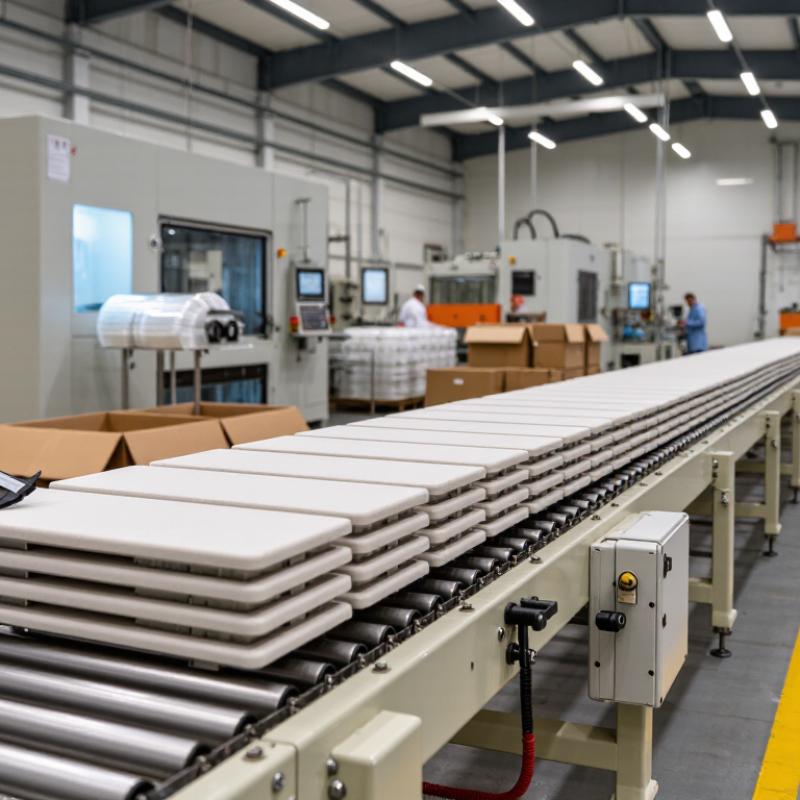
How to Produce Trays for Global Buyers?

Define Tray Requirements for Different Global Markets

How to Produce Trays for Global Buyers?

Define Tray Requirements for Different Global Markets

A tray is not a universal product. Its material, dimensions, barrier level, and stacking strength must match the destination market. Start with the product, not the mold. Fresh produce may need ventilation, while chilled meals require heat resistance and stable sealing. Exporters should also confirm contact-material requirements, labeling rules, and disposal instructions before production begins.

Regional logistics change the design. A tray traveling by sea may face vibration, humidity, and temperature shifts for several weeks. Add corner protection and test compression with the actual load. In retail warehouses, a two-millimeter height difference can disrupt automated stacking. We have seen attractive trays fail because their rims deform after refrigeration. Small details matter.

Sustainability now affects purchasing decisions. The OECD’s Global Plastics Outlook reports that only 9% of global plastic waste was recycled in 2019. This figure makes material selection difficult, not simple. Use recycled content where regulations and food-contact requirements permit it. Design mono-material trays when practical, and reduce unnecessary layers. Still, recyclability claims need evidence. A tray accepted in one market may lack collection infrastructure elsewhere. Test prototypes under real shipping conditions, then review the design with local distributors. Assumptions are expensive.

How to Produce Trays for Global Buyers?

Define tray requirements for different global markets by checking compatibility with commonly used pallet footprints.

Pallet footprints vary by market. European logistics commonly use 1,200 × 800 mm pallets, North American logistics commonly use 1,219 × 1,016 mm pallets, and other export lanes frequently use 1,100 × 1,100 mm or 1,165 × 1,165 mm pallets. Tray outer dimensions should be designed with handling clearance, load stability, stacking strength, and local packaging regulations in mind.

Select Materials, Designs, and Manufacturing Specifications

How to Produce Trays for Global Buyers?

Material selection should begin with the product, destination, and disposal route. Paperboard trays suit dry goods and offer efficient printing. Molded fiber works well for produce, bakery items, and lightweight protective packaging. Recycled PET provides strength and moisture resistance, but local recycling access must be verified. The United Nations Environment Programme reported in 2023 that plastic pollution could be reduced by 80% by 2040 through reuse, recycling, and material reduction. That target makes material claims more demanding.

Design should protect the product without adding unnecessary volume. Measure stacking height, corner pressure, ventilation, and filling-line speed. Rounded edges reduce tearing during automatic handling. A tray that nests too tightly may slow packing. A tray that nests too loosely wastes shipping space. It happens. Review samples under cold, humid, and vibration conditions, not only in a clean laboratory.

Manufacturing specifications should state dimensions, tolerance, material thickness, moisture limits, color standards, and inspection methods. ISO 18601 encourages life-cycle thinking in packaging design, while ISO 2859-1 supports sampling-based quality inspection. Buyers should request test records, food-contact declarations where applicable, and traceable batch codes. A practical control plan may check every production lot for warping, cracks, print alignment, and load performance. Do not rely on a recyclable label alone. In 2023, the Ellen MacArthur Foundation reported that participating organizations represented about 20% of global plastic packaging volume, yet progress remained uneven. Local infrastructure can defeat a technically recyclable tray.

Prepare Molds, Prototypes, and Quality Standards

How to Produce Trays for Global Buyers?

Prepare Molds, Prototypes, and Quality Standards

A reliable tray begins with a mold designed for its real use. Engineers check wall thickness, corner radii, draft angles, and stacking space. These details affect strength, appearance, and shipping efficiency. A mold should also allow steady material flow during production. Small errors can create warping, sharp edges, or uneven surfaces. We review technical drawings with buyers before cutting steel. That step prevents expensive corrections later.

Prototypes reveal problems that drawings cannot show. We test a sample with actual products, packaging, and handling conditions. Does it stack smoothly? Does it flex when lifted from one corner? These simple checks matter. One early prototype failed because its base was too flexible. It looked acceptable on a workbench. It performed poorly during repeated loading. We changed the rib structure and tested it again. The mistake was useful, but avoidable.

Quality standards must be measurable and documented. Inspection plans may include dimensions, weight, color, surface finish, load performance, and packing checks. We use calibrated tools and keep inspection records for each production batch. Buyers may also require material declarations or testing against applicable regional standards. Requirements differ between markets, so assumptions are risky. A sample can pass visual inspection and still miss a critical tolerance. Regular communication, retained samples, and clear acceptance limits create more reliable orders. Perfect results are never automatic.

Produce, Inspect, and Package Trays for Export

How to Produce Trays for Global Buyers?

Produce, Inspect, and Package Trays for Export

Export trays need more than an attractive sample. Start with the buyer’s product dimensions, weight, temperature, and stacking conditions. Select materials that resist moisture, compression, and deformation during long transport. Smithers forecasts the global packaging market will exceed 1.3 trillion dollars by 2028. That growth increases buyer expectations for stable quality and responsible material choices.

A reliable production line checks every critical stage. Measure tray length, width, depth, wall thickness, and sealing surfaces. Use calibrated tools, not visual judgment alone. Inspect material appearance, edge strength, cleanliness, and color consistency. For food-related trays, control foreign-particle risks and maintain traceable batch records. The OECD Global Plastics Outlook reports that packaging created about 40% of global plastic waste in 2019. Recycled content may help, but it must not weaken performance. This balance remains difficult.

Packaging for export should protect trays from crushing, dust, humidity, and shifting pallets. Use separators when surfaces can scratch. Mark cartons with quantity, batch number, orientation, and handling information. Test loaded cartons under compression and vibration conditions. UNEP’s Food Waste Index Report 2024 estimated 1.05 billion tonnes of food waste in 2022. Better trays can reduce product damage, but packaging alone cannot solve waste. A clean sample may still hide weak corners. No factory gets every batch perfect. Continuous inspection, honest records, and corrective action build trust with global buyers.

Manage Compliance, Shipping, and Buyer Delivery Requirements

How to Produce Trays for Global Buyers?

Manage Compliance, Shipping, and Buyer Delivery Requirements

Producing trays for global buyers requires more than stable molding and attractive packaging. Start by confirming the destination market, tray material, dimensions, load capacity, and intended use. A food-contact tray needs different documentation from an industrial handling tray. Keep material declarations, test reports, drawings, and batch records in one controlled file. Clear records help buyers review compliance without repeated questions.

Shipping details should be agreed before production begins. Confirm carton quantity, pallet height, stacking limits, labeling language, and delivery terms. A tray may pass inspection but still arrive damaged because cartons were too soft or pallets were overloaded. Use corner protection, moisture-resistant wrapping, and visible carton marks. Measure packed cartons carefully. Small errors can increase freight costs.

Tips: Ask buyers for a delivery checklist. Confirm the required documents, barcode format, delivery appointment process, and acceptable quantity tolerance. Send a pre-shipment sample when the order is large. It may feel slower, but it can prevent costly rework. A spreadsheet is useful, but it can hide changes. Review the latest buyer instructions with production and warehouse teams before loading. Mistakes still happen. The important part is tracing the cause, correcting the process, and recording what changed for the next shipment.

How to Produce Trays for Global Buyers? - Manage Compliance, Shipping, and Buyer Delivery Requirements
Practical production and export planning reference for food, medical, industrial, and retail trays. Final requirements depend on the destination market, material, end use, and buyer specification.
Management Area Key Requirement Production or Documentation Action Typical Evidence Delivery Risk Recommended Control Status
Product Design Confirm tray dimensions and tolerance Approve a technical drawing showing length, width, depth, wall thickness, stacking clearance, corner radius, and acceptable dimensional tolerances before tooling. Approved drawing and signed sample report Trays may not fit automated filling, sealing, or palletizing equipment. Use first-article inspection before mass production. Planned
Material Compliance Select material for the intended application Match the resin, paperboard, molded fiber, or other substrate to the required temperature range, mechanical load, moisture exposure, and contact conditions. Material specification and supplier declaration Warping, cracking, leakage, or unsuitable product contact performance. Validate material against the buyer's use case and processing conditions. Required
Food Contact Verify food-contact suitability where applicable Review applicable destination-market rules and obtain supporting test reports or declarations for the finished tray, inks, coatings, adhesives, and additives. Declaration of compliance and migration test report Customs hold, buyer rejection, or withdrawal from the intended application. Assess the finished article, not only the raw material. Required
Chemical Control Screen restricted substances Check the bill of materials, colorants, coatings, adhesives, and recycled content against current restricted-substance requirements requested by the destination market or buyer. Supplier declarations and laboratory screening Nonconformity caused by an additive, coating, ink, or recycled feedstock. Maintain an approved-material list and change-notification process. Required
Recycled Content Substantiate recycled-content claims Record the source and percentage of recycled material only when the claim can be supported by controlled production records or recognized chain-of-custody documentation. Batch records, supplier certificates, and claim review Incorrect environmental claims or buyer audit findings. Use precise claim wording and retain supporting records. Conditional
Recyclability Design for the destination recycling system Minimize incompatible materials, evaluate labels and coatings, and confirm whether the tray format is accepted by the relevant local collection and sorting infrastructure. Material composition sheet and recyclability assessment A tray may be technically recyclable but not accepted in the buyer's local system. Separate material components where practical and communicate disposal guidance accurately. Review
Labeling Prepare required product and packaging information Confirm the need for material identification, handling instructions, country-of-origin information, lot coding, and any buyer-specific marks. Artwork approval and labeling checklist Relabeling, delayed release, or rejection at the distribution center. Use destination-specific artwork with revision control. Planned
Quality Control Control critical-to-quality characteristics Inspect dimensions, weight, wall thickness, appearance, seal area, stacking performance, cleanliness, and functional performance using an agreed sampling plan. Inspection report and retained production samples Defects may be discovered only after the trays reach the buyer's line. Define acceptance criteria before production and inspect each lot. Required
Traceability Identify production lots Link raw materials, tooling, production date, machine, inspection results, and shipment quantity to a traceable lot code. Lot records and certificate of conformity Problems cannot be isolated quickly, increasing recall or replacement exposure. Keep records for the period required by the buyer and applicable rules. Required
Packaging Protect trays during storage and transport Use clean inner protection, stable stacks, moisture control where needed, corner protection, and outer cartons or pallets suitable for the chosen shipping mode. Packing specification and loading photographs Compression, deformation, contamination, or moisture damage. Perform compression, drop, vibration, or transit simulation tests as appropriate. Required
Palletization Optimize pallet dimensions and load stability Confirm pallet footprint, maximum height, stack pattern, gross weight, stretch wrapping, and whether the load can be handled by the buyer's equipment. Pallet diagram and packing list Unused container space, unstable loads, or additional handling charges. Approve a pallet pattern before booking freight. Planned
Shipping Select the correct transport mode and trade term Agree on the Incoterm, named place, cargo responsibility, insurance arrangement, transport mode, and document handover point. Purchase order, commercial invoice, and shipping instructions Unexpected charges or uncertainty over responsibility for loss and delay. Record the agreed term and named location on the commercial documents. Required
Customs Prepare accurate import information Provide a consistent product description, tariff classification support, quantity, net and gross weight, package count, origin, and customs value. Commercial invoice, packing list, and transport document Clearance delays, inspections, amended entries, or storage fees. Have the importer or customs broker review documents before dispatch. Required
Lead Time Build a realistic delivery schedule Separate tooling, approval, production, inspection, booking, transit, customs, and final-mile delivery time in the project schedule. Milestone plan and confirmed booking A short production estimate may omit port, customs, or buyer receiving time. Use a delivery window with contingency for peak seasons and port disruption. Planned
Buyer Delivery Match the receiving site's operating rules Confirm delivery appointment procedure, receiving hours, pallet restrictions, labeling format, advance shipping notice, unloading equipment, and delivery address. Buyer routing guide and delivery appointment confirmation Failed delivery, detention, rebooking, or refusal at the receiving site. Validate instructions before every shipment, especially for new sites. Required
Documents Send a complete document package Provide the invoice, packing list, transport document, certificates, inspection report, origin information, and any buyer-required compliance declarations before arrival. Document checklist and electronic document folder Goods arrive before the buyer can release or receive them. Use one controlled document version and obtain acknowledgement of receipt. Required
Post-Delivery Manage complaints and corrective actions Record the lot, defect type, quantity affected, photographs, containment action, root cause, corrective action, and verification result. Complaint report and corrective-action record Repeated defects, disputed responsibility, and loss of buyer confidence. Set response times and close actions using documented evidence. Ongoing
WhatsApp