
Top Jaw Stone Crusher Manufacturers Worldwide?

Choosing among the top Jaw Stone Crusher manufacturers worldwide requires more than comparing prices or production claims. A reliable supplier should understand quarry conditions, material hardness, output requirements, and local maintenance realities. Granite, basalt, and recycled concrete each demand different crushing solutions. The right manufacturer can recommend suitable jaw dimensions, motor capacity, liner materials, and discharge settings. These details influence productivity, energy use, and equipment lifespan.

Experience matters in demanding environments. Established manufacturers often provide application testing, factory documentation, installation guidance, operator training, and responsive spare-parts support. Look for evidence, not impressive wording. Independent certifications, verified customer references, transparent warranties, and documented service networks can reveal a company’s actual reliability. A machine running beside a dusty quarry wall tells a clearer story than a polished brochure.

Some comparisons remain imperfect.

Public information may be incomplete, and performance can change with feeding practices, moisture, and maintenance quality. That limitation deserves attention. This guide examines respected manufacturers through practical criteria, including engineering capability, manufacturing consistency, safety design, after-sales assistance, and total ownership cost. It also considers regional availability, because a technically excellent machine is less useful when critical parts require months to arrive. Readers should confirm specifications directly with manufacturers before making a purchase. Careful verification helps buyers select a Jaw Stone Crusher that fits real operating conditions, rather than choosing solely from rankings or marketing promises.
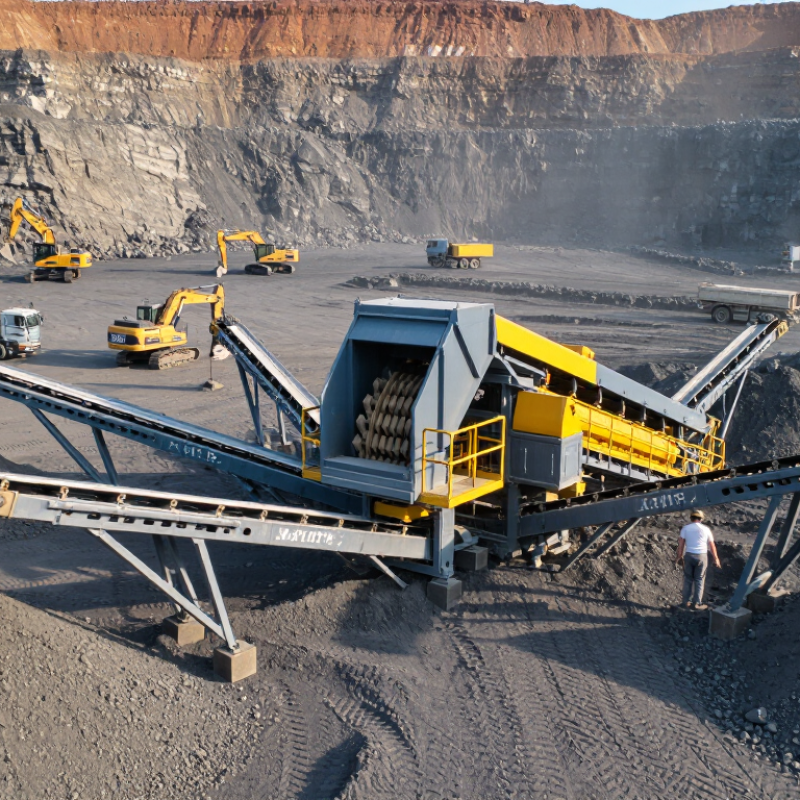
Top Jaw Stone Crusher Manufacturers Worldwide?

What Is a Jaw Stone Crusher and How Does It Work?

What Is a Jaw Stone Crusher and How Does It Work?

A jaw stone crusher reduces large rocks through controlled compression. It uses two jaw plates: one fixed and one moving. The moving jaw follows an elliptical path around an eccentric shaft. Rock enters through the upper feed opening and falls into the crushing chamber. Each cycle squeezes the material against the fixed jaw. Broken pieces move downward when the jaw releases pressure. The discharge gap controls the final product size.

In practical operation, feed size, rock hardness, moisture, and plate condition affect performance. A properly adjusted gap can produce consistent aggregate for road construction or concrete. Excessive fines may indicate unsuitable settings or worn jaw plates. I have found that operators often focus on motor power first. That can be a mistake. Chamber design and feed control usually matter just as much. Reliable manufacturers support these details with laboratory testing, field data, and clear maintenance instructions.

Tips: Keep the feed opening evenly loaded. Remove oversized stones before they enter the chamber. Check jaw plate wear regularly, especially near the lower section. Inspect the toggle plate, bearings, belts, and safety guards before operation. Never reach into a blocked crusher while equipment remains energized. Dust control also deserves attention. Wet material may improve dust conditions, but too much moisture can cause plugging. Small operating records help reveal problems, although records are sometimes ignored.

Top Jaw Stone Crusher Manufacturers Worldwide? — What Is a Jaw Stone Crusher and How Does It Work?

A jaw stone crusher uses a fixed jaw and a moving jaw to compress rock until it breaks into smaller pieces. The figures below show representative capacity ranges commonly associated with different jaw-crusher size classes; they are indicative industry values rather than company-specific data.

How to read the chart: Larger feed openings generally accept bigger rocks and provide higher hourly capacity. Actual output depends on rock hardness, feed gradation, discharge setting, moisture, and operating conditions.

Key Factors for Comparing Jaw Crusher Manufacturers Worldwide

Comparing jaw crusher manufacturers worldwide requires more than checking production capacity or online rankings. A reliable evaluation starts with verified experience. Review operating references from quarries with similar rock hardness, feed size, and daily output. Ask for test data, not broad performance promises. A useful supplier should explain jaw geometry, manganese wear rates, power demand, and expected maintenance intervals in clear terms.

Quality control matters at every stage. Check whether the manufacturer uses documented material inspections, dimensional testing, and controlled assembly procedures. Request records for frame welding, bearing installation, and factory run tests. Independent certifications can support credibility, but they should not replace technical evidence. Look closely at warranty terms, spare-parts availability, remote troubleshooting, and local service response times. Small delays can stop an entire crushing line.

Total cost often reveals more than the purchase price. Compare energy use, liner replacement frequency, installation requirements, and operator training. Visit an operating site when possible. Listen for abnormal vibration, inspect discharge consistency, and ask maintenance teams about real breakdown patterns. No comparison is perfect. A published capacity may change with moisture, rock shape, and feeding habits. I would also question unusually low quotations. They may reflect weaker materials, limited support, or overlooked transport costs. The best manufacturer is not always the largest; it is the one that provides measurable performance, honest limitations, and dependable support over years.

Top Jaw Stone Crusher Manufacturers Worldwide? - Key Factors for Comparing Jaw Crusher Manufacturers Worldwide

Practical comparison criteria and commonly observed industry benchmarks for jaw crusher selection
Comparison Factor Typical Industry Benchmark What to Compare Documents or Data to Request Why It Matters
Feed Opening Size Approximately 600 × 400 mm to 1,600 × 1,200 mm for common stationary and mobile primary jaw crushers Maximum lump size, required safety margin, and compatibility with the upstream blasting or feeding method General arrangement drawing, maximum feed-size specification, and installation layout Critical
Insufficient opening size can cause bridging, blockages, and reduced productivity.
Production Capacity Roughly 50–1,200 tonnes per hour, depending on model, feed gradation, material, and discharge setting Rated capacity at the actual closed-side setting rather than only the maximum catalog capacity Capacity curves, test results, and references using similar rock and operating conditions Critical
Capacity figures are highly dependent on material properties and operating settings.
Closed-Side Setting Range Common operating ranges are approximately 40–250 mm, varying by crusher size and design Required product size, percentage passing the target size, and adjustment method Product-size curves, setting adjustment procedure, and calibration details High
The setting directly affects product gradation, capacity, and wear rate.
Motor Power Approximately 75–400 kW for many primary jaw crusher configurations; larger units may require more Power requirement at the intended duty, starting method, voltage, and available electrical infrastructure Motor datasheet, connected-load schedule, starting-current information, and electrical diagram High
Correct power matching reduces overload risk and unexpected energy limitations.
Reduction Ratio Typically about 4:1 to 8:1 in primary jaw-crushing applications Feed size compared with the desired crusher discharge size and the need for secondary crushing Technical data sheet and material-specific performance test High
Jaw crushers are generally selected for robust primary size reduction rather than fine crushing.
Material Compatibility Suitable designs are available for hard, abrasive rock such as granite, basalt, and various ores Compressive strength, abrasiveness, moisture, clay content, and presence of tramp metal Wear-part recommendations, material testing, and references from comparable applications Critical
Material characteristics influence throughput, wear consumption, and maintenance frequency.
Jaw Plate Material Common options include manganese steel; composite or specialized alloys may be offered for specific duties Expected wear life, reversibility, tooth profile, thickness, and suitability for the feed material Material grade, hardness information, wear-life records, and replacement instructions High
Jaw plates are normal wear parts and have a direct effect on operating cost.
Adjustment and Release System Mechanical shim adjustment and hydraulic or spring-assisted overload-release systems are widely used Adjustment speed, protection against non-crushable objects, reset procedure, and operator access Hydraulic circuit diagram, operating manual, safety procedure, and response-time data High
Effective protection can limit damage caused by tramp iron or other non-crushable material.
Wear-Part Availability Standard wear parts should be available through a documented supply chain with defined lead times Local stock, interchangeability, delivery time, emergency supply, and part identification system Parts catalog, inventory plan, lead-time commitment, and recommended critical-spares list Critical
Delayed jaw plates or bearings can create extended production stoppages.
Maintenance Accessibility Designs commonly include removable guards, inspection points, lifting provisions, and accessible lubrication locations Jaw-plate replacement time, bearing access, lifting requirements, and routine inspection workload Maintenance manual, service clearances, lifting plan, and estimated replacement procedure High
Accessible equipment generally lowers maintenance downtime and improves safety.
Safety and Control Features Modern installations may include interlocks, emergency stops, guarding, overload monitoring, and remote condition alerts Compliance with applicable machinery regulations, isolation procedures, guarding, and control-system integration Risk assessment, conformity documentation, control philosophy, and safety-circuit drawings Critical
Safety systems protect personnel and help prevent avoidable equipment damage.
Energy and Operating Cost Actual energy use varies with rock properties, feed size, setting, chamber utilization, and operating rate Specific energy consumption, wear-part cost, lubrication cost, labor, and planned downtime Site-specific energy estimate, total-cost-of-ownership model, and operating references High
Purchase price alone does not represent the long-term cost of ownership.
Testing and Technical Support A qualified supplier should provide commissioning support, operating guidance, and documented performance data Availability of application engineers, remote support, field technicians, training, and response times Commissioning scope, service network, training plan, support contacts, and acceptance-test procedure High
Technical support can shorten commissioning time and improve stable production.
Warranty and Commercial Terms Equipment warranties commonly range from 12 to 24 months, subject to operating conditions and exclusions Coverage period, excluded wear parts, response obligations, payment terms, delivery terms, and spare-parts warranty Signed warranty terms, exclusions, delivery schedule, and service-level commitments Medium
Clear contractual terms reduce disputes and define responsibility after installation.

Leading Jaw Stone Crusher Manufacturers by Global Market Region

Regional leadership matters when evaluating top jaw stone crusher manufacturers worldwide. Asia-Pacific remains the largest equipment market, supported by road construction, urban expansion, and quarry investment. Fortune Business Insights valued the global stone crushing equipment market at approximately USD 6.39 billion in 2023. Its 2024 report projects continued growth through 2032. These figures include several crusher types, not jaw units alone.

Manufacturers across China and India often compete through broad production capacity, competitive pricing, and fast replacement-part supply. European manufacturers usually emphasize engineering precision, lower emissions, and safety integration. North American suppliers commonly provide modular plants for aggregates, mining, and recycling applications. In Latin America, regional assemblers and distributors can offer practical support where import delays affect project schedules.

The Middle East and Africa favor suppliers with rugged machines, remote-service capability, and dust-control options. A primary jaw crusher may face abrasive rock, temperature extremes, and inconsistent feeding. That makes feed opening, liner life, motor efficiency, and service access more important than catalog capacity alone. Grand View Research also identifies Asia-Pacific as the leading regional market for stone crushing equipment. Still, market reports use different definitions, so direct regional rankings can be imperfect. A manufacturer may appear strong globally while offering weak local maintenance. That detail deserves closer review.

How to Evaluate Crusher Quality, Capacity, and After-Sales Support

Top Jaw Stone Crusher Manufacturers Worldwide?

Evaluating a jaw crusher requires more than comparing prices or showroom photographs. Inspect the frame, jaw plates, flywheel, bearings, and discharge opening. Welds should look consistent, without visible cracks or rough repairs. Ask for material certificates and factory test records. A reliable manufacturer should explain how the crusher performs with hard granite, recycled concrete, or abrasive limestone. Real operating data matters more than polished claims.

Capacity must match your feed size, material hardness, moisture, and target output. A machine rated at 200 tons per hour may produce less under difficult conditions. Request test results using material similar to yours. Check power consumption, liner life, adjustment methods, and safety controls. After-sales support is equally important. Confirm spare-parts availability, response times, installation guidance, and technician training. I have seen excellent machines lose value because basic parts arrived too late. That weakness is easy to overlook.

Tips: Visit a working site when possible. Listen for abnormal vibration and inspect the product size. Ask current users about maintenance costs, not only performance. Review the warranty carefully. No checklist is perfect. Leave room for uncertainty, especially when laboratory tests do not reflect dusty, uneven field conditions. A serious supplier should admit these limits and help you plan realistic operating conditions.

Choosing the Right Jaw Crusher Manufacturer for Your Project

Choosing the right jaw crusher manufacturer starts with your material, not a catalog photograph. The 2024 U.S. Geological Survey Mineral Commodity Summaries reported about 1.5 billion metric tons of crushed stone production in the United States during 2023. That scale shows why small differences in uptime, feed control, and maintenance can affect project costs significantly.

Ask each manufacturer for verified capacity under your actual feed size, moisture, and rock hardness. Laboratory figures can look impressive. Site conditions are rarely so clean. Review the jaw profile, closed-side setting range, motor load, and liner life. A reliable supplier should explain test methods and provide references from comparable quarries or recycling operations. Request service response times and critical spare-parts availability before signing anything.

Do not choose on purchase price alone. A 2023 industry report from the International Energy Agency notes that energy efficiency remains important across heavy industry, making power consumption a practical comparison point. Compare tonnes per operating hour, not tonnes per hour on paper. Check guarding, access for liner replacement, noise controls, and dust-management compatibility. These details reveal engineering maturity. They also expose weak assumptions.

Experience still needs evidence. I would challenge optimistic wear-life estimates, because abrasive rock, poor feeding, and rushed maintenance can change them quickly. A manufacturer that admits operating limits may be more dependable than one promising universal performance. Ask for commissioning support, operator training, inspection records, and a transparent warranty process. The best fit is the supplier whose data survives your site conditions.

WhatsApp