
What Is an Oilfield Mud Pump and How Does It Work?

An Oilfield Mud Pump is the pressure engine behind rotary drilling. It moves drilling fluid from surface tanks into the wellbore. This fluid cools the bit, carries rock cuttings upward, and supports wellbore control. Without reliable circulation, drilling progress can slow quickly.

The principle is straightforward. A triplex or quintuplex pump uses pistons, liners, valves, and a crankshaft to create positive displacement. During the suction stroke, the pump draws mud through the inlet manifold. During the discharge stroke, it forces mud through the standpipe and drillstring. The fluid then exits through the bit nozzles and returns through the annulus. Pulsation dampeners help reduce pressure fluctuations. Small liner wear can still change flow accuracy.

The International Energy Agency’s Oil 2024 report forecasts global oil demand to rise by about 3.2 million barrels per day between 2023 and 2029. That outlook does not guarantee new drilling activity, but it shows why dependable drilling systems remain commercially important. Baker Hughes International Rig Count data also provides a widely used indicator of global drilling activity. API Specification 7K and API Recommended Practice 54 provide important guidance for drilling equipment and safe operations.

Real performance depends on mud density, viscosity, solids content, stroke rate, and well depth. A pump rated for high pressure may not deliver stable output with poorly maintained valves or damaged liners. The basic diagram is useful, but incomplete. Field inspections, pressure tests, maintenance records, and trained judgment matter more than brochure numbers. This article explains how an Oilfield Mud Pump works and why each component affects drilling reliability.
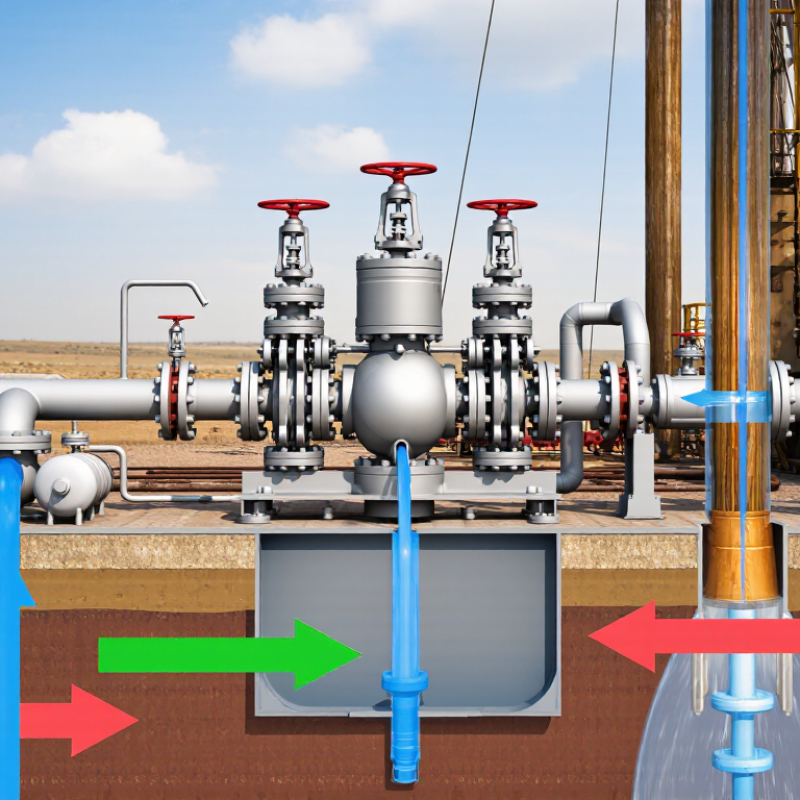
What Is an Oilfield Mud Pump and How Does It Work?

Oilfield Mud Pump: Definition, Purpose, and Role in Drilling

What Is an Oilfield Mud Pump and How Does It Work?

An oilfield mud pump is a high-pressure, positive-displacement pump used in drilling operations. It moves drilling fluid, commonly called mud, from surface tanks into the drillstring. The fluid then travels through the pipe and exits through nozzles in the drill bit.

The pump’s main purpose is circulation. Drilling mud cools the bit, carries rock cuttings back to the surface, and helps control underground pressure. It also supports the borehole wall in suitable formations.

Inside the pump, pistons or plungers draw fluid through suction valves and force it through discharge valves. The flow is pulsing, not perfectly smooth. Pulsation dampeners help reduce pressure variation.

A mud pump must deliver reliable pressure and volume for changing well conditions. Operators watch discharge pressure, stroke rate, liner condition, valve movement, and fluid leaks. Even a small seal failure can reduce circulation and create an avoidable maintenance problem. Field experience shows that pump performance depends on more than horsepower. Mud density, abrasive solids, temperature, and suction conditions all matter.

The pump does not drill the formation by itself. It supports the entire hydraulic system. If circulation becomes weak, cuttings may settle, bit cooling can decline, and pressure control becomes more difficult. A design may look efficient on paper, yet real performance can change quickly underground. That is why inspection records, measured data, and trained judgment remain essential.

Main Components and Their Functions

What Is an Oilfield Mud Pump and How Does It Work?

An oilfield mud pump is a reciprocating pump used to circulate drilling fluid through the well. It usually uses three pistons, although some designs use two. The power source turns a crankshaft inside the power end. Connecting rods convert rotation into piston movement. During each stroke, the fluid end draws mud through suction valves. The pistons then force it through discharge valves. This pressure carries cuttings upward and cools the drill bit. Field experience shows that stable flow matters as much as maximum pressure. No pump behaves perfectly.

Main Components and Their Functions

The power end contains the crankshaft, gears, bearings, and connecting rods. These parts transfer mechanical energy to the pistons. The fluid end handles drilling mud directly. Its liners guide piston movement and resist internal wear. Pistons create the pressure needed for circulation. Suction and discharge valves control one-way fluid movement. The suction manifold distributes incoming mud evenly. The discharge manifold directs pressurized mud toward the standpipe. A relief valve protects the system from dangerous pressure spikes. A pulsation dampener reduces flow surges. It is easy to overlook small leaks. They can reduce performance quickly.

Tips: Check valve seats, liners, and piston seals during routine inspections. Measure vibration and discharge pressure, not just pump speed. Watch for unusual knocking sounds. They often indicate valve or bearing problems. Keep suction lines full and free from air leaks. Maintenance records should include pressure, stroke rate, and repair findings. A clean inspection can reveal more than a rushed repair.

How a Mud Pump Circulates Drilling Fluid

What Is an Oilfield Mud Pump and How Does It Work?

How a Mud Pump Circulates Drilling Fluid

An oilfield mud pump is a high-pressure, positive-displacement pump. It moves drilling fluid continuously through the wellbore. The pump draws fluid from surface tanks and sends it through the suction line. Internal pistons then force the fluid into a discharge manifold.

From there, the fluid travels through the standpipe, rotary hose, and drillstring. It exits through small bit nozzles at high velocity. The flow cools the bit, carries rock cuttings upward, and supports wellbore stability. The mud returns through the annulus before reaching surface tanks again. This circulation loop repeats during drilling.

API Recommended Practice 13D emphasizes hydraulic modeling, rheology, and pressure-loss calculations. These factors directly affect pump performance. SPE hydraulic studies commonly examine circulation rates from roughly 500 to 1,500 gallons per minute, depending on hole size and drilling depth. Pump discharge pressures may reach several thousand psi. Actual values vary significantly.

Tips: Watch the pressure gauge and flow rate together. A pressure rise with reduced returns may indicate a restriction. A falling pressure can signal a washout or lost circulation. IADC drilling guidance also stresses regular liner, valve, and pulsation-damper inspections. Small maintenance errors become expensive quickly. The pump’s noise can help, but it should never replace measured data.

What Is an Oilfield Mud Pump and How Does It Work? - How a Mud Pump Circulates Drilling Fluid

Data Dimension Typical or Standard Information Role in Drilling-Fluid Circulation
Primary Equipment Type Positive-displacement reciprocating pump, most commonly triplex or quintuplex Moves a controlled volume of drilling fluid at high pressure through the well-circulation system.
Main Power Source Diesel-mechanical, diesel-electric, or electric drive system Supplies torque and speed to the crankshaft, which converts rotary motion into piston or plunger motion.
Pump Configuration Triplex: three cylinders; quintuplex: five cylinders Multiple cylinders provide high flow and reduce pressure pulsation compared with a single-cylinder pump.
Typical Flow Range Approximately 300–2,000 gal/min (1.1–7.6 m³/min), depending on pump size, liner diameter, and stroke rate Determines the circulation rate available for hole cleaning, cooling, and carrying drilled cuttings to the surface.
Typical Discharge Pressure Often about 3,000–7,500 psi (21–52 MPa) for high-pressure drilling systems; the actual rating depends on the pump design Provides the pressure needed to overcome friction and circulate fluid through the surface equipment, drill string, bit, and annulus.
Suction Manifold Low-pressure inlet piping connected to the active mud tanks Delivers drilling fluid from the surface tanks to the pump fluid end.
Fluid End Hydraulic section containing liners, pistons or plungers, suction valves, and discharge valves Performs the intake and discharge strokes that pressurize and move the drilling fluid.
Power End Crankshaft, connecting rods, crossheads, bearings, and lubrication system Transforms driver rotation into the reciprocating movement required by the fluid end.
Suction Stroke The piston moves away from the cylinder head, lowering pressure inside the liner The suction valve opens and drilling fluid enters the cylinder from the suction manifold.
Discharge Stroke The piston moves toward the cylinder head, increasing pressure inside the liner The suction valve closes, the discharge valve opens, and fluid is forced into the high-pressure discharge manifold.
Discharge Manifold High-pressure outlet piping leading to the standpipe and rotary hose Directs pressurized drilling fluid toward the top drive or swivel and into the drill string.
Flow Path Through the Well Mud tank → suction manifold → pump → standpipe → rotary hose → drill string → bit → annulus → solids-control equipment → mud tank Creates a continuous circulation loop that transports cuttings out of the well and returns the fluid for treatment.
Drill-Bit Function Fluid exits through bit nozzles at high velocity Cleans and cools the bit, removes rock fragments from the bottom, and helps maintain hydraulic cleaning.
Annulus Function Space between the drill string and the wellbore or casing Provides the return path for drilling fluid and suspended formation cuttings to the surface.
Pulsation Dampener Gas-charged chamber installed on or near the discharge side Reduces pressure fluctuations caused by reciprocating pistons and helps protect downstream equipment.
Flow and Pressure Control Controlled mainly through stroke rate, liner diameter, pump selection, and operating pressure Allows the drilling team to match hydraulic performance with well depth, hole size, mud properties, and bit requirements.
Solids-Control Equipment Shale shakers, desanders, desilters, centrifuges, and mud cleaners Separates drilled solids from the returning fluid before the mud is conditioned and recirculated.
Key Performance Relationship Higher flow generally improves hole cleaning, while higher pressure increases hydraulic power requirements Pump operation must balance flow rate, pressure, horsepower, equipment limits, and wellbore conditions.
Operational Safety Pressure relief devices, guards, rated hoses, routine inspections, and controlled shutdown procedures Helps prevent injuries, fluid releases, component failure, and damage caused by blocked or over-pressurized lines.

Note: Flow and pressure figures are typical industry ranges rather than universal limits. Actual performance depends on pump geometry, liner size, stroke rate, drilling-fluid properties, well design, and equipment ratings.

Pressure, Flow Rate, and Pumping Performance

What Is an Oilfield Mud Pump and How Does It Work?

An oilfield mud pump is a heavy-duty positive-displacement pump used to circulate drilling fluid through a well. It draws mud from the suction tank and forces it through the standpipe, drill pipe, bit, and annulus. Inside the fluid end, pistons move through liners while valves open and close in sequence. The motion creates repeated pressure pulses.

Pressure and flow rate are closely connected, but they are not the same measurement. Pump pressure reflects resistance from the bit nozzles, drillstring, formation, and annular flow path. Flow rate mainly depends on piston size, stroke length, strokes per minute, and volumetric efficiency. A simple field estimate is pump displacement multiplied by speed and corrected for leakage. Small errors matter. A worn valve can reduce actual flow while the gauge still shows familiar pressure.

Real pumping performance requires more than reading one gauge. Experienced crews compare standpipe pressure, strokes per minute, discharge pulsation, liner condition, and mud properties. Higher viscosity may increase pressure losses, especially in narrow passages. A blocked nozzle can raise pressure suddenly, while a damaged piston may cause unstable pressure and falling output. Watch the trends.

Calculated output and field output often disagree. That is normal, but it deserves investigation. Temperature, air entrainment, valve wear, and inaccurate stroke counting can distort results. Practical testing with calibrated instruments gives a more reliable picture than relying on theory alone. A pump may sound healthy and still deliver less mud than expected.

Common Mud Pump Types and Operating Considerations

An oilfield mud pump circulates drilling fluid through the drill string and back through the annulus. The fluid cools the bit, carries rock cuttings, and supports wellbore pressure. Duplex pumps use two pistons and usually offer simpler maintenance. Triplex pumps use three pistons, producing smoother flow and lower pulsation. Triplex designs now dominate demanding drilling programs because stable flow improves measurement quality.

Operating choices matter more than pump size alone. Engineers check flow rate, liner diameter, stroke length, discharge pressure, and fluid density. API Spec 7K provides equipment requirements for drilling and well-servicing systems, while API RP 54 addresses safe rig operations. A 5,000-psi working-pressure rating is common in many land applications, but pressure limits must match the complete fluid-end system.

Watch the small details.

Mud temperature, abrasive solids, and poor suction conditions can quickly damage valves and liners. The International Energy Agency’s Oil 2024 report projects global oil demand near 105 million barrels per day by 2030, keeping drilling efficiency under pressure. Yet higher capacity is not always better. Oversized pumps can waste power and increase maintenance costs. Field teams should record vibration, discharge pressure, liner wear, and pulsation trends during each shift. These records often reveal problems before a visible leak appears. One limitation remains: published performance data may assume clean fluid and ideal installation. Real wells rarely cooperate.

WhatsApp