7 Tips for Choosing an Eccentric Butterfly Valve?
Choosing the right eccentric butterfly valve is rarely a simple catalog decision. The correct model must match the pipeline’s pressure, temperature, media, flow direction, and operating frequency. A valve handling cooling water may need different materials than one controlling abrasive slurry or chemically aggressive fluid. Small details can determine whether the valve seals reliably or demands frequent maintenance.
This guide presents seven practical tips for evaluating an eccentric butterfly valve before purchase. It considers body construction, disc and seat materials, pressure ratings, shaft design, actuator sizing, installation space, and lifecycle support. Engineers should verify every selection against current datasheets, application conditions, and recognized industry requirements. Manufacturer claims matter, but field experience matters too. A valve that performs well in one plant may struggle in another.
Look beyond the price tag.
Even experienced teams can overlook torque changes caused by temperature, sediment, or infrequent operation. That oversight may lead to slow movement, incomplete closure, or unnecessary actuator wear. A careful review should include maintenance access, spare-part availability, testing records, and the supplier’s technical response. No single valve suits every service. That is an inconvenient truth. These seven tips provide a dependable starting point, while final approval should come from qualified professionals familiar with the specific system and its operating risks.
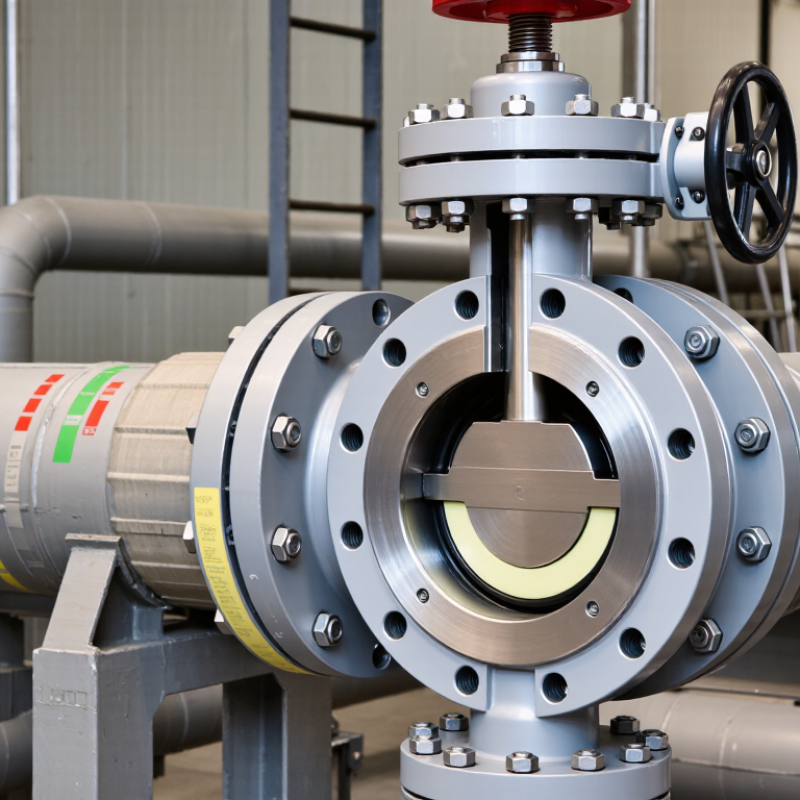
Define the Operating Conditions and Valve Performance Requirements
Choosing an eccentric butterfly valve starts with operating conditions, not the valve size. Record the fluid, temperature, pressure, solids content, flow range, and cycling frequency. A wastewater line carrying grit demands different materials and sealing arrangements than a clean-water line. Include startup surges and occasional vacuum conditions. They are easy to overlook.
The U.S. Department of Energy’s pumping-system sourcebook indicates that optimized systems may reduce pumping energy by 20–50%. That figure is not a guaranteed valve saving. I use it as a screening reference, then verify pressure drop and pump interaction on site. Specify required shutoff performance, allowable leakage, flow coefficient, control accuracy, and actuator response. API 609 and ISO 5211 provide useful framework for valve design and actuator mounting. However, compliance alone does not prove suitability.
Torque deserves special attention. Calculate breakaway, running, and emergency torque under the worst pressure differential. Add a documented safety margin, but avoid excessive oversizing. An oversized actuator can reduce control sensitivity and increase mechanical stress. I once focused too heavily on nominal diameter and underestimated abrasive particles. That choice looked acceptable on paper. Field inspection later showed accelerated seat wear. Define inspection intervals, test pressure, and maintenance access before approval. Small details matter.
Compare Eccentric Butterfly Valve Designs and Disc Configurations
7 Tips for Choosing an Eccentric Butterfly Valve
Compare Eccentric Butterfly Valve Designs and Disc Configurations
Choosing an eccentric butterfly valve starts with the operating conditions, not the catalog image. Single-offset designs reduce seat rubbing during opening. They suit moderate pressure and temperature service. Double-offset valves lift the disc away from the seat more effectively. This can lower wear in larger pipelines. Triple-offset designs create a cam-like movement. They are often selected for demanding thermal cycles and tight metal sealing.
Disc configuration also changes flow behavior. A streamlined disc can reduce pressure loss and turbulence. A thicker disc may provide greater mechanical strength, but it can restrict the bore. Disc edges need careful inspection. Rough machining or poor alignment may damage the seat after repeated cycling. In field checks, I look at shaft support, disc clearance, and the visible seat contact pattern. Small marks can reveal large alignment problems.
Seat material deserves equal attention. Resilient seats provide dependable shutoff in many water and utility applications. Metal seats tolerate higher temperatures and harsher cycling, but they require accurate machining. The valve body, shaft, and disc should match the fluid’s chemistry. Do not rely only on pressure class. Flow velocity, suspended particles, thermal expansion, and actuator torque also matter. A neat drawing can still mislead. I have seen valves selected correctly on paper but installed with insufficient downstream clearance. That mistake complicates maintenance and may prevent full disc movement.
Select Suitable Materials for the Body, Disc, Seat, and Shaft
Material selection is central to choosing an eccentric butterfly valve. The body must withstand pressure, temperature, corrosion, and installation conditions. Ductile iron may suit clean water systems, while stainless steel offers stronger corrosion resistance. For aggressive fluids, verify chemical compatibility instead of trusting material names alone. A material chart is not enough. Actual concentration and temperature can change performance.
The disc contacts the process fluid and often faces erosion. Stainless steel works well for many general applications, but special alloys may be necessary in harsh environments. The seat controls tight shutoff, so its material deserves careful attention. EPDM can perform well with water and some mild chemicals. NBR is often selected for oils. PTFE handles broader chemical exposure, but temperature limits and deformation must be checked. Small details matter.
The shaft should resist torque, wear, and corrosion. Stainless steel is common, yet the grade must match the fluid and operating cycle. Inspect the shaft-seat interface, not only the listed materials. A mismatched pair can create friction, leakage, or premature damage. In field assessments, I have seen valves fail because the body was correctly selected, but the seat was overlooked. Test it first. The best choice balances service data, maintenance experience, and verified supplier documentation. Some applications remain uncertain, and admitting that uncertainty is safer than guessing.
Evaluate Size, Pressure Rating, Actuation, and Control Compatibility
7 Tips for Choosing an Eccentric Butterfly Valve?
Selecting an eccentric butterfly valve starts with the line size, not the flange alone. Check the required flow rate, velocity, and pressure drop. The valve bore may restrict flow unnecessarily. For water systems, the UN World Water Development Report 2024 states that agriculture represents about 70% of global freshwater withdrawals. This makes efficient flow control especially important in large irrigation networks.
Confirm the pressure rating at the actual operating temperature. Do not rely only on the pipeline class. Review body strength, seat materials, shutoff pressure, and pressure direction. API 609 and EN 593 provide useful design references for butterfly valves. Actuator sizing also deserves attention. Calculate breakaway, running, and seating torque, then add a practical safety margin. Too much margin can create oversized equipment and slower response.
Actuation must match the service. Pneumatic units suit frequent cycling, while electric units can simplify remote control. For modulating duty, verify signal type, feedback, fail position, and response time. A 4–20 mA signal is common, but it is not automatically compatible. Check the controller, positioner, enclosure rating, and ISO 5211 mounting interface. The International Energy Agency reported that global energy investment is expected to exceed 3 trillion dollars in 2024. More automated infrastructure will increase control demands, though this does not excuse poor sizing. I still question one common assumption: bigger is rarely safer.
7 Tips for Choosing an Eccentric Butterfly Valve
Pressure rating is only one part of valve selection. Confirm the required size, pressure-temperature conditions, actuation torque, control signal, seat and disc materials, media compatibility, and applicable installation standards. The chart shows common nominal pressure designations; actual allowable pressure depends on temperature, materials, and the manufacturer’s certified data.
Verify Maintenance Needs, Standards, Supplier Quality, and Total Cost
Choosing an eccentric butterfly valve starts with the maintenance routine, not the catalogue price. Ask how often the seat, stem, bearings, and actuator require inspection. A valve facing abrasive slurry needs different protection than one handling clean water. Check torque records, access space, spare-part availability, and the supplier’s recommended service intervals. Small details matter: a blocked drain, seized fastener, or poorly aligned actuator can turn a ten-minute inspection into a shutdown.
Standards provide a useful quality filter. Confirm compliance with API 609 for butterfly valves, ASME B16.34 for pressure-containing design, and ISO 5208 for pressure-testing and leakage assessment. Request material certificates, dimensional drawings, test records, and traceability to the supplied valve. ISO 9001 certification supports process control, but it does not replace product testing. That distinction is easy to miss. Require clear evidence.
Total cost includes purchase, installation, energy, downtime, maintenance labor, and disposal. The U.S. Department of Energy’s Operations and Maintenance Best Practices guide reports that effective maintenance can reduce operating costs by 5–20%, while predictive approaches may outperform reactive maintenance substantially. Use that logic when comparing suppliers. A lower-priced valve may require higher actuator torque or frequent seat replacement. Ask for torque curves, cycle-life data, warranty terms, and local technical support. I would also test the supplier’s response before buying: send a detailed application sheet and measure how precisely they answer. A vague quotation is a warning sign. My own selection checklist is never perfect; field conditions often expose assumptions that looked reasonable on paper.