
10 Best Aluminum Composite Panel Manufacturers?
Choosing the right Aluminum Composite Panel Manufacturer can shape a project’s appearance, safety, and long-term maintenance costs. This guide examines ten respected manufacturers serving architectural, commercial, and industrial markets. It focuses on more than attractive catalogs or impressive claims.
Real project experience matters. A reliable supplier should provide consistent panel thickness, stable coating performance, accurate color matching, and clear technical documentation. We consider core materials, fire-performance testing, weather resistance, fabrication support, warranty terms, and production capacity. Site conditions also matter. A coastal façade faces salt air, while a city tower may endure strong wind, pollution, and daily temperature changes.
Details reveal quality. Check whether protective film remains smooth after delivery, whether panel edges stay flat after cutting, and whether technical teams answer practical installation questions. Certifications and independent test reports deserve careful review. Marketing language alone is not enough. Not every manufacturer fits every project.
This ranking is intended as a practical starting point, not an absolute verdict. Product availability, regional standards, and project budgets can change the order. Some companies may perform exceptionally well in one market but less effectively in another. That limitation is worth acknowledging. Readers should request current samples, verify documents, and compare completed façades before signing contracts. A small sample board can expose coating differences that a brochure hides. The best choice balances proven performance, responsive service, transparent pricing, and dependable delivery. Reliability is built over time.
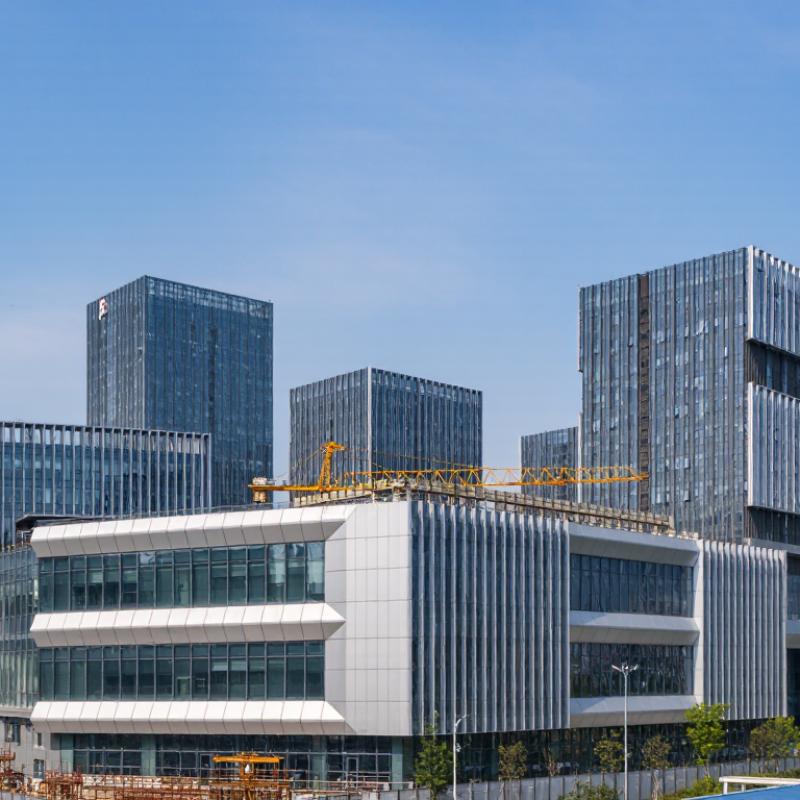
What Is an Aluminum Composite Panel?
An aluminum composite panel (ACP) is a flat building material made from two thin aluminum sheets and a central core. The layers are bonded under controlled heat and pressure. This structure keeps the panel light, stiff, and easy to handle. It is not solid aluminum. That distinction matters. Depending on the core, ACPs may support exterior cladding, interior walls, signs, and decorative ceilings.
In site work, installers value clean cuts, consistent surfaces, and predictable panel dimensions. A typical panel can be routed, folded, and fixed to a supporting frame. The finished surface may resemble stone, timber, or a smooth metallic coating. Yet appearance is only one performance factor. A qualified designer should check fire behavior, weather exposure, drainage, wind loads, and thermal movement. Core composition strongly affects safety and suitability. Local codes and project testing should guide the specification, not a sales brochure.
Good selection also requires checking coating thickness, bond quality, flatness, warranty terms, and installation guidance. Field inspections often reveal scratches, edge damage, or moisture problems caused by poor storage. Panels need dry, level support. A neat façade is not proof of good construction. Loose fixings and tight joints can create problems later. ACP is efficient, but it is not maintenance-free. Regular checks can reveal damaged coatings and open joints early. Suppliers should provide test evidence and clear technical data for the intended application. Some project decisions remain uncertain, so reviewing failures honestly is part of responsible specification.
10 Best Aluminum Composite Panel Manufacturers? - What Is an Aluminum Composite Panel?
A comparison of leading manufacturer capability profiles based on commonly specified aluminum composite panel requirements. Company names and brand identifiers are intentionally omitted.
| Rank | Manufacturer Profile | Primary Product Focus | Typical Panel Thickness | Aluminum Skin Thickness | Core Options | Typical Panel Width | Fire-Performance Availability | Surface Finish Options | Common Applications | Key Evaluation Point |
|---|---|---|---|---|---|---|---|---|---|---|
| 1 | Profile 01 Premium Exterior | High-performance architectural cladding | 4 mm | 0.50 mm | FR mineral core; standard polyethylene core | 1,220–1,575 mm | FR systems commonly tested to EN 13501-1 or ASTM E84, subject to assembly | PVDF, FEVE, anodized-look, metallic, solid colors | High-rise façades, commercial buildings, transportation facilities | Strong weather resistance, flatness, color stability, and documented fire testing |
| 2 | Profile 02 Fire-Rated Specialist | Fire-conscious façade and rainscreen systems | 4–6 mm | 0.50–0.70 mm | Mineral-filled fire-retardant core | 1,220–1,575 mm | Fire ratings depend on the complete wall assembly and test method | PVDF, powder coating, metallic, stone and wood effects | Hospitals, schools, public buildings, high-rise façades | Availability of project-specific fire-test reports and traceable batch records |
| 3 | Profile 03 Industrial Volume | Large-volume standard façade panels | 3–4 mm | 0.30–0.50 mm | Standard polyethylene; fire-retardant options | 1,220–1,575 mm | Product-level classifications vary by core and construction | PE, PVDF, solid, metallic, gloss and matte | Retail buildings, warehouses, offices, signage backers | Consistent production capacity, lead time, and dimensional tolerance |
| 4 | Profile 04 Customization | Decorative and project-specific panel solutions | 3–6 mm | 0.30–0.70 mm | Polyethylene, mineral core, honeycomb-compatible constructions | Up to approximately 1,575 mm | Available ratings depend on the selected core and tested assembly | Wood, stone, brushed metal, mirror, textured and custom colors | Feature walls, façades, interiors, columns, canopies | Color matching, small-batch flexibility, and fabrication support |
| 5 | Profile 05 Sustainable Focus | Low-impact and recyclable cladding products | 4 mm | 0.50 mm | Recyclable polyethylene; mineral-filled options | 1,220–1,575 mm | Fire-performance documentation must be checked for each product | PVDF, recycled-content finishes, matte and low-gloss surfaces | Green-certified buildings, offices, educational projects | Recycled aluminum content, environmental declarations, and end-of-life guidance |
| 6 | Profile 06 Interior Systems | Interior wall, ceiling, and decorative panels | 3–4 mm | 0.21–0.50 mm | Polyethylene; low-smoke or fire-retardant options | 1,000–1,575 mm | Interior fire and smoke requirements vary by local code | Digital print, solid colors, woodgrain, stone, high gloss and matte | Retail interiors, elevators, partitions, lobbies, kitchens | Cleanability, scratch resistance, indoor-air requirements, and easy fabrication |
| 7 | Profile 07 Fabrication Ready | Panels optimized for routing, folding, and cassette systems | 3–4 mm | 0.30–0.50 mm | Polyethylene and fire-retardant mineral core | 1,220–1,575 mm | Classification applies to the selected panel and installation system | PVDF, PE, brushed, anodized-look and textured finishes | Rainscreens, column covers, fascias, soffits and signage | Clean routing performance, protective film quality, and predictable folding behavior |
| 8 | Profile 08 Coating Technology | Long-life architectural coatings and color retention | 4 mm | 0.50 mm | Standard and fire-retardant core selections | 1,220–1,575 mm | Fire documentation is available only for tested product assemblies | PVDF, FEVE, high-durability powder coat, metallic and custom colors | Exterior façades, coastal projects, corporate buildings | Coating thickness, gloss retention, weathering data, and warranty conditions |
| 9 | Profile 09 Regional Supply | Fast-delivery panels for standard construction programs | 3–4 mm | 0.30–0.50 mm | Polyethylene; commonly stocked fire-retardant grades | 1,220–1,575 mm | Check local approvals, certificates, and installation requirements | Standard solid colors, metallic, matte and gloss | Commercial renovations, low-rise façades, signs and fit-outs | Local stock, technical assistance, minimum order quantity, and delivery reliability |
| 10 | Profile 10 Value Engineering | Cost-efficient panels for non-critical applications | 3–4 mm | 0.21–0.30 mm | Standard polyethylene; limited fire-retardant availability | 1,000–1,575 mm | Fire performance should never be assumed without test documentation | PE, basic PVDF, solid, gloss and matte finishes | Interior decoration, signage, temporary structures, low-rise projects | Total installed cost, substrate compatibility, warranty, and application limits |
Note: An aluminum composite panel generally consists of two aluminum sheets bonded to a central polymer or mineral-filled core. Actual thickness, fire classification, coating durability, warranty, and installation performance must be confirmed in the product technical data and project-specific test documentation.