China Top 10 Various Tools Suppliers for Global Buyers introduces manufacturers and exporters serving diverse international purchasing needs. The selection focuses on hand tools, power tools, garden equipment, measuring instruments, workshop products, and related accessories. Global buyers often need more than attractive pricing. They need stable quality, clear communication, dependable delivery, and documented compliance.
This guide examines supplier experience, manufacturing capabilities, product range, export history, and quality-control practices. It also considers practical details, including factory audits, sample approval, minimum order quantities, packaging strength, production lead times, and after-sales support. A reliable supplier should explain material grades, testing procedures, warranty terms, and applicable safety standards without vague promises. Certificates still require verification.
Details matter. A damaged carton can delay a container. An inconsistent screwdriver tip can create costly complaints. Buyers should compare production samples, inspection reports, payment conditions, and shipping records before signing contracts. Video meetings and third-party inspections can reveal useful information, although they cannot replace long-term performance data.
This overview aims to support informed sourcing decisions through a balanced, evidence-based approach. It does not assume that the largest factory is always the best partner. Smaller suppliers may offer flexibility, while larger producers may provide stronger capacity and broader certification coverage. A perfect supplier list does not exist. Market conditions change, and some information may need further confirmation. Readers should conduct independent due diligence before placing orders, especially when products require specific regional standards or professional use.
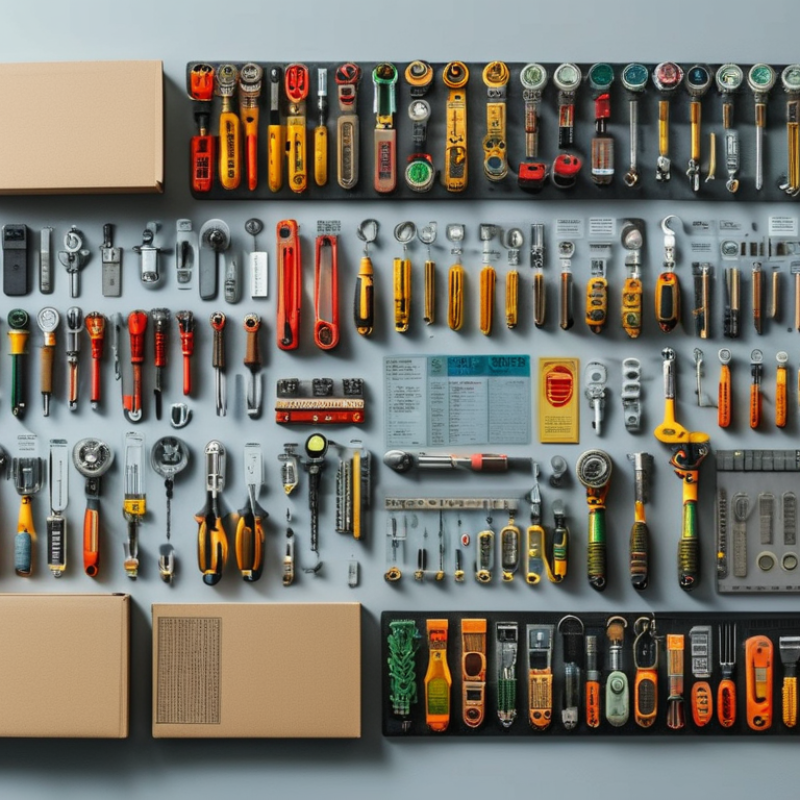
China’s various tools manufacturing industry serves global buyers across many product categories. Suppliers produce hand tools, cutting tools, measuring instruments, garden tools, and workshop accessories. Production often combines stamping, forging, machining, heat treatment, coating, and final assembly. A typical adjustable wrench may pass through several workstations before packing. Tool quality depends on every step.
Global buyers usually compare more than quoted price. Experienced sourcing teams inspect steel grades, hardness, dimensional tolerance, surface finish, and packaging strength. Factory audits should review calibration records, incoming material checks, sample approval, and corrective action logs. Export suppliers also manage carton markings, pallet plans, documentation, and destination requirements. Samples reveal practical issues. A handle may feel sharp, or a hinge may loosen after repeated use. Testing should match the tool’s real application, not only a neat laboratory claim.
China’s export network is broad, but quality consistency differs between suppliers. Some factories control critical processes, while others outsource plating, heat treatment, or packaging. Buyers should map these steps and request traceable batch records. Drawings, tolerances, inspection levels, and change approvals need clear written control. The industry is not flawless. Delays, mixed batches, and optimistic promises still occur. Even careful buyers can miss a small defect during a rushed inspection. Repeat orders should depend on measured performance, transparent records, and honest corrective discussions rather than catalog photos.
For global buyers comparing China’s top ten various tool suppliers, evidence matters more than polished catalogues. Start with factory capability. Ask for legal registration, production addresses, equipment lists, and recent audit records. A trading office may be useful, but it can weaken traceability. Request material certificates, hardness reports, calibration records, and inspection plans for each critical tool. The ISO Survey 2023 lists China as the largest national holder of ISO 9001 certificates, with more than one million recorded. Certification helps, yet it does not prove every batch is consistent. Require samples from normal production, not specially prepared pieces. Check dimensions with calibrated gauges, then repeat testing after delivery.
Reliability also includes communication and logistics. The World Bank’s Logistics Performance Index 2023 gave China a score of 3.7 out of 5 and ranked it 19th globally. That supports a strong logistics base, but port performance cannot fix weak packaging or unclear documents. Compare quotations using identical specifications, tolerances, packaging, minimum order quantities, and delivery terms. Ask how defects are contained, replaced, and documented. A serious supplier should share corrective-action reports without hiding uncomfortable details. Payment schedules should match inspection milestones and verified shipping documents. I would review three comparable export references while protecting confidential buyer information. Some evaluations still rely too heavily on low prices. That is a mistake. No checklist is perfect. A cheaper tool with inconsistent hardness can create downtime, rework, and avoidable safety concerns.
China’s Top 10 Various Tools Suppliers for Global Buyers should be judged by capability, not catalog size. A practical shortlist can cover cutting tools, measuring tools, fastening tools, gardening tools, pneumatic tools, woodworking tools, construction tools, automotive tools, insulated electrical tools, and tool storage. UN Comtrade data consistently places China among the world’s leading exporters of hand tools and interchangeable tools. Grand View Research also valued the global hand tools market at more than US$20 billion in 2023, showing strong demand for reliable sourcing. Yet product variety alone proves little.
Request factory audit records, material certificates, inspection reports, and sample test results. ISO 9001 certification can support process control, but it cannot replace product-level testing. For torque tools, verify calibration dates and accuracy ranges. For cutting tools, inspect hardness, edge consistency, and corrosion resistance. For insulated tools, request testing against applicable IEC or national standards. Practical audits often reveal uneven packaging, unclear tolerances, or weak traceability. Small details matter. A damaged carton can ruin a precision order. Buyers should compare total landed cost, including freight, tariffs, testing, replacement rates, and after-sales response. A low quotation may become expensive later. No shortlist is perfect, and supplier rankings deserve regular review as capacity, compliance records, and export performance change.
China’s top ten various tool suppliers differ sharply in product range, quality control, pricing, and export support. Some offer hand tools, power tools, measuring equipment, garden tools, and workshop storage under one supply program. Others focus on narrower categories, which may bring deeper technical knowledge and steadier production.
During supplier evaluations, buyers should request recent samples, inspection records, material specifications, and batch testing results. A polished sample proves little if production quality changes later. Look for consistent machining, clean edges, readable scales, secure packaging, and clear user instructions. Quality certifications can support trust, but independent inspection remains valuable.
Pricing should include tooling, packaging, spare parts, shipping, and import-related charges. The cheapest quotation is not always the lowest final cost. Ask for tiered prices at different quantities and confirm payment terms before ordering. Export services also deserve close comparison. Reliable suppliers usually provide accurate commercial invoices, packing lists, shipping documents, carton measurements, and responsive after-sales communication. They should explain lead times honestly, including delays caused by material shortages or peak seasons.
Small details matter.
Some suppliers respond quickly but lack technical depth. Others offer excellent engineering yet move slowly on documents. That trade-off can affect a buyer’s schedule. A careful comparison should record response time, sample accuracy, warranty handling, customization limits, and packaging performance. No supplier wins every category, and that is where many purchasing decisions need more reflection.
| Supplier Code | Main Product Range | Common Tool Categories | Typical Materials | Quality Positioning | Typical Export Price Level | Common MOQ Range | Typical Lead Time | Customization Capability | Export Services | Best Fit for Buyers | Overall Index |
|---|---|---|---|---|---|---|---|---|---|---|---|
| Supplier 01 | Broad hand-tool and workshop-tool portfolio | Wrenches, pliers, screwdrivers, sockets, tool sets | Carbon steel, chrome-vanadium steel, S2 alloy steel | Mid-to-high; commonly supports hardness and dimensional inspections | Mid-range | 100–500 sets or pieces | 30–60 days | OEM packaging, handle colors, set configuration, private labeling | Commercial invoice, packing list, certificate of origin, sea and air freight coordination | Importers requiring a wide catalog from one source | 8.8 |
| Supplier 02 | Professional mechanic and automotive tools | Socket sets, torque tools, pullers, workshop storage | Chrome-vanadium steel, chrome-molybdenum steel, sheet steel | High; suitable for professional workshop applications when specifications are confirmed | Mid-to-high | 50–300 sets | 35–70 days | Tool-set layout, foam trays, case design, markings and packaging | Pre-shipment inspection support, export documentation, palletization and consolidation | Automotive distributors and repair-network suppliers | 8.7 |
| Supplier 03 | Power-tool accessories and cutting tools | Drill bits, saw blades, grinding discs, hole saws | High-speed steel, carbide, diamond grit, abrasive composites | Mid-to-high; performance depends strongly on grade and application | Competitive mid-range | 500–5,000 pieces | 25–55 days | Grit selection, dimensions, arbor size, coating, labels and retail packaging | Batch packing, barcode labeling, carton marking and mixed-container loading | Hardware wholesalers and industrial consumable distributors | 8.5 |
| Supplier 04 | Construction and masonry tools | Trowels, levels, hammers, chisels, measuring tools | Carbon steel, stainless steel, aluminum alloy, fiberglass and wood | Mid-range; suitable for general construction and retail channels | Low-to-mid | 300–2,000 pieces | 30–60 days | Handle materials, tool dimensions, surface finish and packaging artwork | Container loading, export cartons, inspection coordination and document preparation | Building-material retailers and regional distributors | 8.1 |
| Supplier 05 | Garden and landscaping hand tools | Pruning shears, shovels, rakes, hoes, axes and hand cultivators | Carbon steel, stainless steel, aluminum alloy, hardwood and fiberglass | Mid-range; blade treatment and handle durability should be sampled | Low-to-mid | 300–1,500 pieces | 35–65 days | Blade shape, handle length, grip design, color and seasonal packaging | Seasonal production planning, carton labeling, mixed SKU loading and freight booking | Garden-center chains and seasonal promotion buyers | 8.0 |
| Supplier 06 | Electrical installation and electrician tools | Insulated pliers, cable cutters, crimpers, testers and stripping tools | Chrome-vanadium steel, insulated polymers, copper alloys and ABS | High for specified models; insulation and electrical safety testing are essential | Mid-range | 100–800 pieces | 35–70 days | Insulation color, grip design, tool dimensions, packaging and test labeling | Inspection reports, conformity-document coordination, export packing and logistics support | Electrical wholesalers and professional maintenance suppliers | 8.6 |
| Supplier 07 | Precision and measuring instruments | Calipers, micrometers, gauges, rulers and measuring tapes | Stainless steel, hardened steel, aluminum alloy and engineering plastics | Mid-to-high; calibration requirements should be agreed before purchase | Mid-to-high | 100–1,000 pieces | 30–60 days | Scale units, accuracy grades, casing, labeling and calibration certificates | Calibration-document support, protective packing, export paperwork and courier or freight service | Industrial distributors and OEM maintenance programs | 8.4 |
| Supplier 08 | Industrial cutting and machining tools | End mills, inserts, reamers, taps, dies and countersinks | Carbide, high-speed steel, powder metallurgy steel and coated alloys | High for engineered specifications; application testing is recommended | Mid-to-high | 100–2,000 pieces | 40–80 days | Diameter, flute geometry, coating, tolerance, shank and packaging | Technical drawing review, batch inspection, export documents and consolidated shipping | Machine-tool distributors and industrial production users | 8.3 |
| Supplier 09 | DIY, household and general-purpose tools | Basic tool kits, screwdrivers, utility knives, clamps and repair tools | Carbon steel, stainless steel, zinc alloy, polypropylene and ABS | Entry-to-mid; appropriate for consumer retail with clear specifications | Low | 500–5,000 pieces | 25–50 days | Retail packaging, color matching, set combinations, inserts and barcode labels | Retail-ready packing, carton optimization, container consolidation and export documentation | Online sellers, home-improvement stores and promotional buyers | 7.9 |
| Supplier 10 | Safety, utility and specialty maintenance tools | Non-sparking tools, insulated tools, pipe tools and maintenance kits | Special copper alloys, alloy steel, stainless steel and reinforced polymers | High for specified applications; material traceability and testing should be verified | Mid-to-high | 50–500 pieces | 40–85 days | Material grade, dimensions, surface treatment, kit contents and technical labeling | Technical document review, inspection coordination, export packing and project-based logistics | Industrial maintenance contractors and specialist distributors | 8.2 |
How to Select the Right Chinese Tool Supplier for Your Market
China remains a major source of hand tools, power tools, and workshop equipment. UN Comtrade data places China among the leading exporters under HS code 8205. However, export volume does not prove supplier suitability. Buyers should check product standards, factory capability, and market experience before negotiating price.
Ask for evidence. Request business licenses, recent test reports, material specifications, and production photographs. For regulated markets, confirm conformity with the required safety standards. A supplier should explain steel grades, hardness ranges, coating methods, and inspection procedures clearly. ISO’s 2023 Survey recorded more than one million valid ISO 9001 certificates worldwide, but certification alone cannot guarantee stable quality. Audit the actual production line when possible.
Sample testing needs practical detail. Measure handle comfort, torque performance, corrosion resistance, and packaging strength. Use the same test conditions for every supplier. The World Bank’s 2023 Logistics Performance Index gave China a score of 3.7 out of 5, showing strong logistics capability, but delivery still depends on port schedules and documentation accuracy. Ask for a realistic lead time, not an optimistic promise. A spreadsheet may look perfect, yet one loose head or damaged carton can expose weak control. I have seen buyers focus too heavily on unit price and regret ignoring replacement rates. Request a small trial order, define acceptable defect limits, and review communication speed before scaling purchases.
This buyer-oriented scorecard prioritizes the practical factors commonly used when comparing Chinese tool suppliers. Quality consistency, compliance documentation, production capability, logistics reliability, and total cost should be evaluated together rather than by unit price alone.