
Top Road Marking Machine Manufacturers in the World

Choosing the top Road Marking Machine manufacturers requires more than comparing brand popularity. A reliable evaluation examines field experience, application accuracy, equipment durability, technical support, and total operating cost. Contractors notice practical details quickly: a clean spray pattern, steady glass-bead distribution, simple pressure adjustment, and dependable performance beside dusty highways.

Dr. Paul Carlson, a pavement-marking researcher at the Texas Transportation Institute, stated, “Pavement markings are a critical component of the highway system.” His observation explains why machine quality matters beyond appearance. Consistent markings support driver guidance, nighttime visibility, work-zone control, and long-term road safety. Leading manufacturers, including Graco, HOFMANN, BORUM, and other established specialists, approach these needs through different technologies. Some focus on airless spraying. Others emphasize thermoplastic systems, automated control, or high-output road equipment.

This guide compares manufacturers through a practical and evidence-based lens. It considers product range, marking precision, maintenance access, operator usability, regional service networks, and proven performance across roads, airports, and municipalities. Independent testing and customer experience remain important. Marketing claims alone are not enough.

There is no universal winner. A compact contractor may need portability, while a highway agency may prioritize production capacity and sensor integration. Even respected machines can perform poorly when calibration, surface preparation, or operator training is neglected. That uncomfortable point deserves attention.

The rankings may also change as manufacturers improve electric platforms, digital controls, and low-emission systems. Readers should treat this overview as a starting point, not a final purchasing decision. Specification sheets can hide real maintenance costs. Field evidence often tells the clearer story.
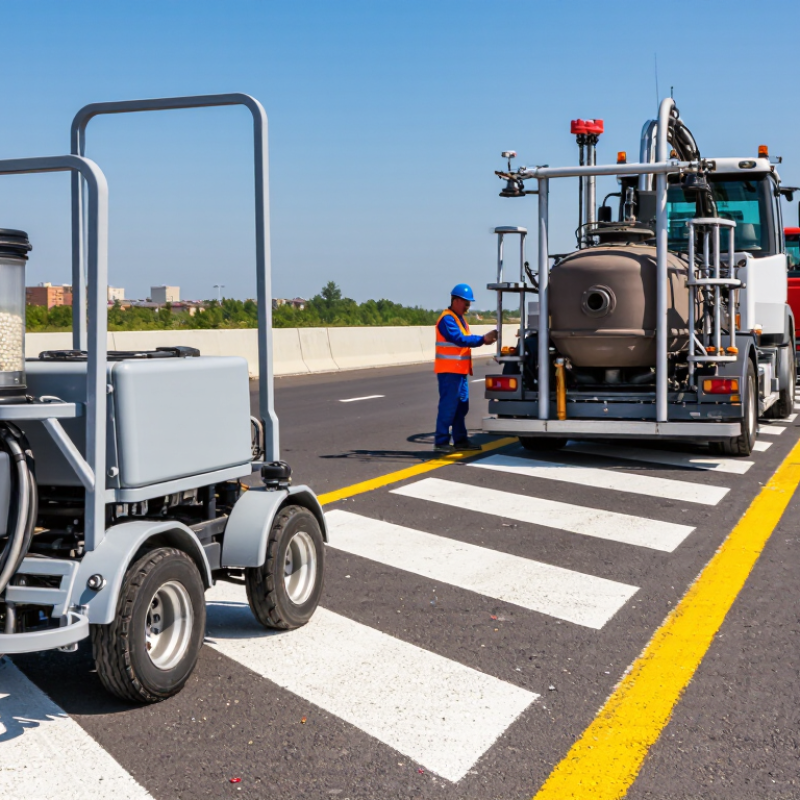
Top Road Marking Machine Manufacturers in the World

Road Marking Machines: Definition, Types, and Core Functions

Road marking machines apply controlled lines, symbols, and reflective materials to pavement. Their core functions include material heating, metering, spraying, extrusion, and glass-bead distribution. Common types include airless spray machines, thermoplastic applicators, two-component systems, and compact cold-paint units. Airless models suit fast lane work. Thermoplastic machines create thicker, more durable markings. Two-component equipment supports high-performance applications on busy roads.

The WHO Global Status Report on Road Safety 2023 estimates 1.19 million annual road deaths worldwide. It also records 20–50 million non-fatal injuries. Clear markings cannot prevent every crash, but poor visibility creates avoidable confusion.

Field performance depends on line width, bead coverage, pavement moisture, and curing time. A technically advanced machine can still produce weak lines on dusty asphalt. That assumption fails.

Operators must control pressure, travel speed, and material temperature together. In practice, a small speed change can create uneven edges or insufficient retroreflectivity.

Tips:

  • Check the pavement before setup.
  • Remove dust, oil, and loose aggregate.
  • Verify nozzle wear and bead flow before long runs.
  • Measure line thickness after curing, not immediately after application.
  • Keep a simple maintenance log, including temperature, pressure, and weather.
  • FHWA guidance emphasizes measurable pavement-marking performance, yet field conditions remain unpredictable.
  • Recheck completed lines at night when possible.
  • A bright daytime finish may look disappointing after dark.

Key Technologies Used in Modern Road Marking Equipment

Modern road marking equipment depends on precise control, not paint delivery alone. Leading manufacturers now combine airless spray systems, thermoplastic applicators, and digital monitoring tools. Airless pumps create sharp lines with consistent pressure, even during long work shifts. Thermoplastic systems heat materials evenly, reducing clogs and uneven edges. Some machines use dual-gun layouts for centerlines, arrows, and wider markings.

Control matters.

Machine vision cameras can detect existing lines, road edges, and surface gaps. Their software adjusts the spray path while the vehicle moves. This improves alignment on curves and uneven pavement. However, glare, dust, and worn asphalt can confuse optical sensors. Human inspection remains necessary. Reflective glass bead dispensers also require accurate timing and flow control. Poor timing weakens nighttime visibility. That small detail matters.

Electric and hybrid power systems are changing equipment design. They reduce engine noise around traffic and support cleaner urban operations. Battery telemetry can report temperature, charge level, and operating time. Remote diagnostics may identify pump pressure problems before a breakdown. Field inspections often reveal a less convenient truth: calibration can drift after vibration, heat, or careless cleaning. No sensor replaces trained judgment. Road surfaces vary more than laboratory tests suggest. A reliable machine therefore needs durable components, clear maintenance records, and operators who verify line width, thickness, and retroreflectivity during real work.

Key Technologies Used in Modern Road Marking Equipment

The chart compares representative application-temperature ranges for major road-marking material technologies. Thermoplastic systems require heating equipment, while waterborne, cold-plastic, MMA, and preformed marking systems are generally applied at much lower temperatures.

Criteria for Evaluating Global Road Marking Machine Manufacturers

Top Road Marking Machine Manufacturers in the World
Criteria for Evaluating Global Road Marking Machine Manufacturers

Evaluating global road marking machine manufacturers requires more than comparing purchase prices. Field performance should guide the assessment. A dependable machine produces consistent line width, even edges, and stable paint flow across changing surfaces. Reviewers should inspect spray patterns on asphalt, concrete, curves, and repaired pavement. Measure the details.

Technical design also matters. Assess pump pressure, nozzle adjustment, bead distribution, cleaning access, and control accuracy. A practical unit should maintain markings during long shifts without frequent stoppages. Operators value clear controls, low vibration, and simple calibration procedures. Poor hose design can waste valuable time.

Manufacturer reliability needs documented evidence. Examine test records, operator training, spare-part availability, warranty conditions, and service response times in different regions. Independent certifications can strengthen confidence, but certificates alone do not prove field durability. Data can mislead. Ask whether performance tests reflect local temperatures, humidity, traffic conditions, and paint types.

Lifecycle cost deserves careful attention. A cheaper machine may require more nozzle replacements, cleaning labor, or fuel. Conversely, advanced automation may add complexity that smaller contractors cannot maintain. Real evaluations should include a site demonstration, maintenance logs, and feedback from experienced operators. No machine excels everywhere. That limitation should remain visible when comparing manufacturers.

Leading Road Marking Machine Manufacturers by Region

Top Road Marking Machine Manufacturers in the World

Leading Road Marking Machine Manufacturers by Region

Road marking machine manufacturers differ by regional road conditions, labor costs, and maintenance habits. European manufacturers often focus on precise spray systems, thermoplastic application, and automated controls. Their machines commonly include heated hoses, digital pressure gauges, and adjustable bead dispensers. These details matter when lines must remain consistent across long highway sections.

North American manufacturers are known for practical ride-on equipment and high-output airless sprayers. Many designs support quick nozzle changes, large paint tanks, and simple field servicing. In Asia, manufacturers offer a broad mix of compact hand-push machines and heavy-duty truck-mounted systems. Competitive pricing helps contractors manage smaller municipal projects, although quality can vary between product lines. Buyers should inspect pump seals, frame welding, and calibration records rather than trust appearance.

Manufacturers serving the Middle East and Africa often prioritize dust protection, cooling performance, and rugged chassis construction. In Latin America, adaptable machines are valuable because roads may shift from urban concrete to uneven asphalt within one project. Regional expertise is useful, but it is not perfect. A machine built for European precision may struggle in extreme heat without suitable maintenance. Conversely, a robust machine may produce poor lines when its pressure control is too basic. Field trials, operator feedback, spare-parts access, and documented training provide more reliable evidence than factory claims. Small details count. A clogged bead line can weaken visibility before the equipment looks damaged.

Top Road Marking Machine Manufacturers in the World - Leading Road Marking Machine Manufacturers by Region

Region Primary Road-Marking Standards Common Marking Materials Machine Types Commonly Supplied Typical Application Areas Leading Supplier Profile Key Purchasing Requirements
North America U.S. MUTCD, including the 11th Edition published in 2023; Canadian transportation-agency specifications. Waterborne paint, solvent-based paint, thermoplastic, preformed markings and two-component materials. Ride-on and walk-behind sprayers, thermoplastic screed/extrusion machines, plural-component units and truck-mounted systems. Highways, urban roads, airports, parking facilities and pavement-maintenance projects. Established full-line equipment suppliers, specialist striping-equipment manufacturers and regional distributors. DOT compliance, glass-bead dispensing, lane-width accuracy, service coverage and compatibility with large work trucks.
Europe EN 1436 for road-marking performance, EN 1871 for road-marking materials and national road-authority specifications. Waterborne coatings, solvent-based coatings, hot-applied thermoplastic, cold plastic and reactive resin systems. Airless spray machines, hot-screed machines, cold-plastic extruders, pre-marking systems and automated road-marking vehicles. Motorways, urban cycle lanes, pedestrian crossings, industrial sites and airport runways. Engineering-focused manufacturers offering high-precision systems, low-emission solutions and modular equipment platforms. CE conformity, low VOC operation, accurate bead application, compact dimensions and compliance with national tender specifications.
China and East Asia China GB 5768 road-traffic signs and markings framework, supported by national and provincial highway specifications. Hot-melt thermoplastic, waterborne paint, two-component coatings and anti-skid surfacing materials. Push-type units, ride-on machines, thermoplastic preheaters, spray systems and truck-mounted highway equipment. Expressways, city streets, logistics parks, ports, tunnels and large infrastructure developments. Broad domestic production base with manufacturers ranging from value-oriented suppliers to advanced automated-equipment providers. Production capacity, customization, spare-parts availability, export documentation and performance in humid or high-temperature conditions.
India and South Asia Indian Roads Congress guidance, including IRC:35, together with Ministry of Road Transport and Highways specifications. Hot-applied thermoplastic, solvent-based paint, waterborne paint and cold-applied two-component materials. Manual and ride-on thermoplastic machines, airless sprayers, road-marking trolleys and truck-mounted systems. National highways, urban arterials, toll roads, industrial estates, airports and municipal streets. Cost-efficient domestic suppliers and project-oriented manufacturers supported by construction-equipment distributors. Robust construction, simple maintenance, local spare parts, fuel efficiency and performance under dust, heat and monsoon conditions.
Middle East National road-agency manuals, municipal specifications and project requirements influenced by international highway standards. Hot thermoplastic, solvent-based coatings, waterborne coatings and durable two-component systems. Truck-mounted thermoplastic units, airless sprayers, high-output ride-on systems and airport-grade marking equipment. Expressways, urban megaprojects, airports, ports, logistics zones and large parking developments. Import-led market served by international equipment suppliers, local distributors and project-contracting specialists. Heat resistance, dust protection, high productivity, corrosion resistance and dependable technical support.
Latin America Country-specific transport-agency manuals, including Brazil’s national traffic-signage guidance and local highway standards. Waterborne and solvent-based paints, hot thermoplastic and cold plastic materials. Walk-behind machines, ride-on sprayers, thermoplastic units and truck-mounted equipment for concession projects. Urban streets, toll highways, bus corridors, airports, industrial parks and road-resurfacing programs. Regional distributors, local fabricators and international suppliers with project-specific configurations. Ease of repair, flexible fuel options, availability of consumables and suitability for mixed urban and highway work.
Oceania Australia’s AS 1742.3 and Austroads guidance; New Zealand road-marking requirements and road-controlling-authority specifications. Waterborne paint, solvent-borne paint, hot thermoplastic and high-durability two-component materials. Compact spray units, ride-on machines, thermoplastic applicators and high-visibility airport or highway systems. Urban roads, remote highways, mining areas, airports, ports and local-government maintenance programs. Specialist distributors and durable-equipment suppliers focused on fleet reliability and remote-site support. Weather resistance, transportability, low downtime, remote servicing and conformity with state or territorial specifications.
Africa National road-authority specifications, Southern African standards where applicable and project-specific international requirements. Solvent-based and waterborne paints, hot thermoplastic and durable cold-plastic systems. Portable spray machines, walk-behind units, ride-on equipment and truck-mounted systems for highway contractors. National highways, urban upgrades, airports, mining operations, industrial areas and donor-funded infrastructure projects. Imported equipment brands represented by local agents, alongside regional fabricators and road-maintenance contractors. Simple controls, rugged construction, low operating cost, availability of parts and reliable operation in remote locations.

Note: Regional requirements vary by country, road authority, project contract and marking material. The table summarizes common market conditions and does not constitute a company ranking or certification list.

Product Comparisons, Applications, and Industry Trends

Top Road Marking Machine Manufacturers in the World

Product Comparisons, Applications, and Industry Trends

Road marking machines differ by power source, spray system, control method, and working width. Professional manufacturers usually offer walk-behind, ride-on, and truck-mounted models. Walk-behind units suit parking lots, school zones, and narrow urban roads. Ride-on machines reduce operator fatigue during long lane projects. Truck-mounted systems cover highways faster, but require higher investment and skilled maintenance.

Airless spray machines create sharp lines with strong output and relatively low material waste. Thermoplastic applicators produce durable markings for heavy traffic and harsh weather. Some systems combine bead dispensers, automatic guns, and digital distance controls.

Compare line accuracy, heating stability, cleaning access, and replacement-part availability. A low purchase price can become expensive when pumps clog or calibration drifts.

Recent industry trends focus on battery power, low-emission engines, and smarter job tracking. GPS guidance can reduce repeated measurements and improve spacing consistency. Reflective glass bead control is also becoming more precise. Safety features matter, including visibility lighting, emergency stops, and insulated material tanks. Field experience still exposes weaknesses that brochures often omit. Battery models may lose runtime in cold conditions. Digital controls can confuse crews without practical training. Buyers should test machines on real surfaces, measure output, and inspect results after drying. Thick coatings, rough asphalt, and frequent color changes reveal performance differences quickly.

WhatsApp