
Top Ice Hockey Tape Wholesale Suppliers Worldwide

Ice hockey tape looks like a minor purchase until a team runs short before a game. A roll has to wrap cleanly around a stick, hold through repeated puck contact, and arrive in time for the next practice. For retailers, clubs, and distributors, ice hockey tape wholesale sourcing is therefore about more than the lowest unit price. Consistent adhesive, dependable backing, pack sizes, and replenishment times matter too.

Participation data helps explain the demand, though it is not a direct measure of tape sales. The Sports & Fitness Industry Association’s 2024 Topline Participation Report estimated that about 2.1 million people in the United States played ice hockey in 2023. That figure describes one national market, not worldwide consumption. It does, however, show why buyers need to assess suppliers against real operating needs rather than assume that one product specification suits every team.

This guide compares leading suppliers and the practical details buyers should verify: product construction, order minimums, customization options, shipping coverage, and documentation. A sample roll can reveal how tape feels on a stick, but it cannot prove year-round stock reliability. That requires careful checking. Supplier claims also deserve scrutiny; glossy catalogs rarely show every limitation. The aim here is a grounded starting point for comparing worldwide options and asking better questions before placing a bulk order.
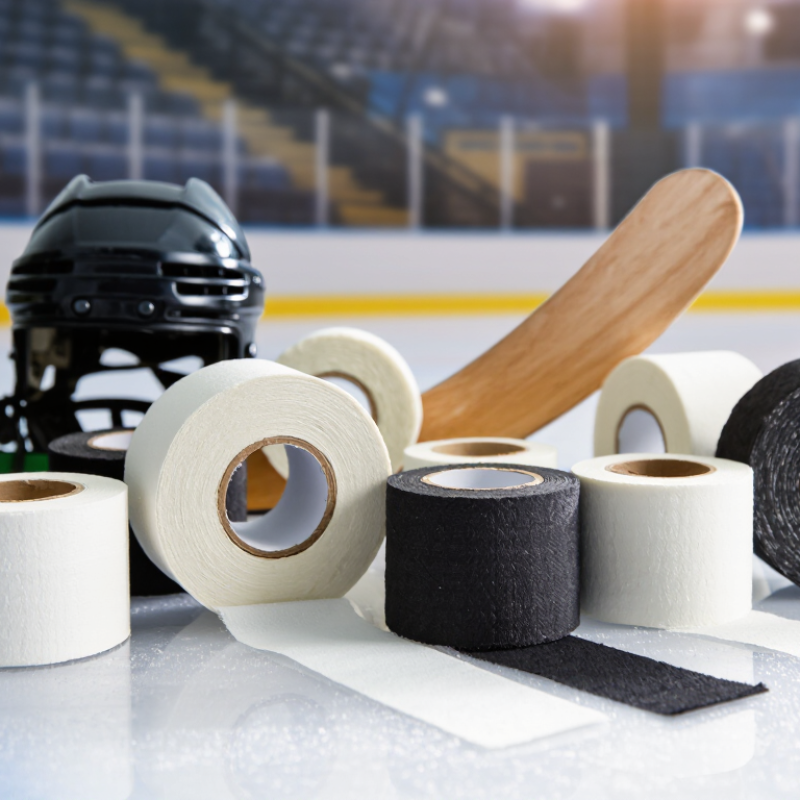
Top Ice Hockey Tape Wholesale Suppliers Worldwide

Ice Hockey Tape and Its Role in the Sport

Ice hockey tape is a small piece of equipment with a direct effect on stick handling. Wrapped around the blade, it adds texture where the puck meets the stick and helps protect the blade from abrasion. On the shaft, tape can improve grip, especially with gloves damp from snow or sweat. Feel matters. Too many layers may make the stick feel bulky and reduce a player’s touch.

The IIHF’s 2023 player survey gathered more than 15,000 responses across 22 countries, reflecting the sport’s varied playing environments. That range matters: rink conditions, practice frequency, and personal wrapping habits all affect tape wear. A player who takes repeated shots may fray the blade wrap quickly; another may notice moisture loosening its edges first. Small detail. Big consequence. Coaches and equipment staff can check for lifted seams and exposed blade surfaces before practice, then replace tape when grip or puck control changes. Wax may help limit water absorption, but it cannot restore worn adhesive. Tape is not a fix for a damaged stick. Players often keep wrapping habits that no longer suit them, so testing a slightly different coverage can be useful.

Top Ice Hockey Tape Wholesale Suppliers Worldwide - Ice Hockey Tape and Its Role in the Sport

The table below summarizes common ice hockey tape categories and practical wholesale sourcing considerations. Roll dimensions and constructions are typical examples; specifications vary by supplier.

Tape category Common construction Role in hockey Typical roll format Wholesale buying checks
Cloth stick tape Woven cotton or cotton-blend fabric with pressure-sensitive adhesive Applied to the blade for puck feel and surface protection; also used on stick handles for added grip. Common widths include about 24–25 mm; rolls are often around 18–25 m long. Confirm width, length, fabric weight, adhesive performance, color options, and consistency between production lots.
Clear shin guard tape Transparent plastic film, commonly polyethylene, with adhesive Helps hold shin guards and socks in position during play. Widths commonly range from about 19–25 mm; roll lengths vary by product. Check film thickness, clarity, unwind behavior, adhesion, and whether the tape tears or cuts as required.
Grip tape Textured cloth or synthetic material, sometimes with a tacky surface Wrapped around the stick shaft to provide a more secure hand grip. Widths and lengths differ by design; confirm roll dimensions against the intended handle-wrap pattern. Request samples to assess texture, tack, durability, residue, and comfort with hockey gloves.
Stretch sock tape Flexible film or elastic tape designed to stretch around equipment Used to secure hockey socks and help keep protective gear in place. Often supplied in narrow rolls; width, stretch, and length vary by specification. Verify stretch recovery, skin-contact suitability where relevant, adhesion, and ease of removal.
Water-resistant cloth tape Coated or treated woven fabric with pressure-sensitive adhesive Provides a cloth-tape option designed to better withstand moisture during use. Common stick-tape widths are approximately 24–25 mm; lengths depend on the roll specification. Ask for test details on moisture resistance, adhesive stability, fabric fraying, and storage conditions.

For bulk orders, compare samples, roll dimensions, case quantities, packaging, lead times, and applicable product-safety documentation before confirming a purchase.

Types and Specifications of Wholesale Hockey Tape

Wholesale hockey tape is commonly sold as cloth, clear stretch film, and grip tape. Cloth tape, often made from cotton or a cotton-polyester blend, is used on blades and may come in widths around 24–36 mm. Clear film is thinner and stretches around shin guards. Grip tape has a textured surface for stick handles. Specifications differ by supplier, so confirm roll length, core size, adhesive type, and carton quantity before ordering.

For bulk purchases, request a sample roll and check how it behaves on a cold, dry stick. Look for even unwinding, clean tearing, and adhesive that holds without leaving excessive residue. Some listings give width but omit thickness or length. That makes price comparisons less reliable. There is no perfect specification for every player; blade shape, weather, and personal preference all matter.

Tips: Compare the stated measurements with a ruler, and test the tape during a practice session. Store cartons away from moisture and direct heat. A small trial order can reveal details a product sheet misses.

How to Evaluate Ice Hockey Tape Suppliers

Evaluating an ice hockey tape supplier takes more than comparing prices per roll. Ask for samples and test them on a stick blade in cold, dry conditions. Check whether the cloth tears cleanly, wraps without bunching, and stays secure through repeated puck contact. Feel the unwind tension, too. A roll that pulls too tightly can slow down taping work.

Adhesive matters. After a practice, inspect whether the tape has lifted at the edges or left heavy residue. Test more than one roll from the same shipment; consistency can vary between batches. Ask suppliers how they monitor roll width, length, adhesive application, and packaging. Clear answers and written specifications are more useful than broad quality claims. Still, no test is perfect.

Also evaluate practical service. Confirm minimum order quantities, production lead times, sample availability, and how the supplier handles defects. Request recent inspection records when available, and check that labels match the delivered product. A low quote may not help if cartons arrive late or vary in quality. Small trials reveal a lot. Keep notes on each sample, including temperature, tape tension, and how easily it comes off after use. Some results will be subjective, and that is worth admitting.

Leading Wholesale Suppliers by Region

North America remains a key region for wholesale ice hockey tape, supported by a large player base and established rink networks. The IIHF’s 2023 Survey of Players reported roughly 1.4 million registered players worldwide, with Canada and the United States among the largest national markets. Regional distributors can often replenish common cloth and grip tapes quickly, but winter demand may strain stock. Ask for case-pack sizes and recent fill-rate records, not just a catalogue.

Europe offers a broad network of clubs and national associations, while demand varies considerably between countries. Suppliers near major transport hubs may serve multiple markets, though customs and delivery times still need checking. In Asia-Pacific, local distributors can reduce freight delays for growing hockey communities. The IIHF survey helps show where organized participation exists; it does not measure tape sales, so buyer interviews and order history remain essential. No single region is best. I would not assume low unit cost means low landed cost.

Tips: Request samples from two production lots. Check adhesive residue on a cold stick, roll consistency, and edge fraying after repeated use. Compare total landed cost, minimum order quantity, and lead time in writing. A small trial order can reveal problems that a polished specification sheet misses.

Ordering, Shipping, and Quality Assurance Practices

Wholesale ice hockey tape orders work best when specifications are clear before pricing begins. State the required width, roll length, backing material, color, and carton quantity. If tape will be used in cold arenas, ask suppliers how adhesive performance is checked at low temperatures. Request samples from the same production grade offered for bulk orders; a sample from a different batch may not represent the shipment. Small details matter.

Confirm production time, dispatch date, shipping method, and delivery terms in writing. Ask how rolls are packed to prevent crushed edges, moisture exposure, or loose cartons during transit. For larger orders, clarify how partial shipments and delays will be handled. Keep the purchase order, approved sample details, and packing list together. A spreadsheet can still miss a changed roll length or carton count, so compare documents before goods leave the warehouse. That can happen.

Quality assurance should include checks for consistent width, clean cutting, secure winding, and dependable adhesion. Ask for batch identification and inspection records, then agree on a practical process for reporting defects with photos and carton labels. On arrival, inspect several cartons rather than only the top layer. Store rolls in a dry area away from heat and direct sunlight. No checklist catches everything, but clear records make problems easier to trace and resolve.

Top Ice Hockey Tape Wholesale Suppliers Worldwide

Indicative ordering, shipping, and quality assurance planning windows

These ranges are illustrative planning estimates, not verified industry averages or supplier-specific commitments. Confirm lead times, shipping schedules, inspection criteria, and documentation requirements with each supplier. Quality checks may include tape dimensions, adhesion, packaging, and pre-shipment sample approval.

WhatsApp