Why Choose a Car Engine Air Filter for Better Performance?
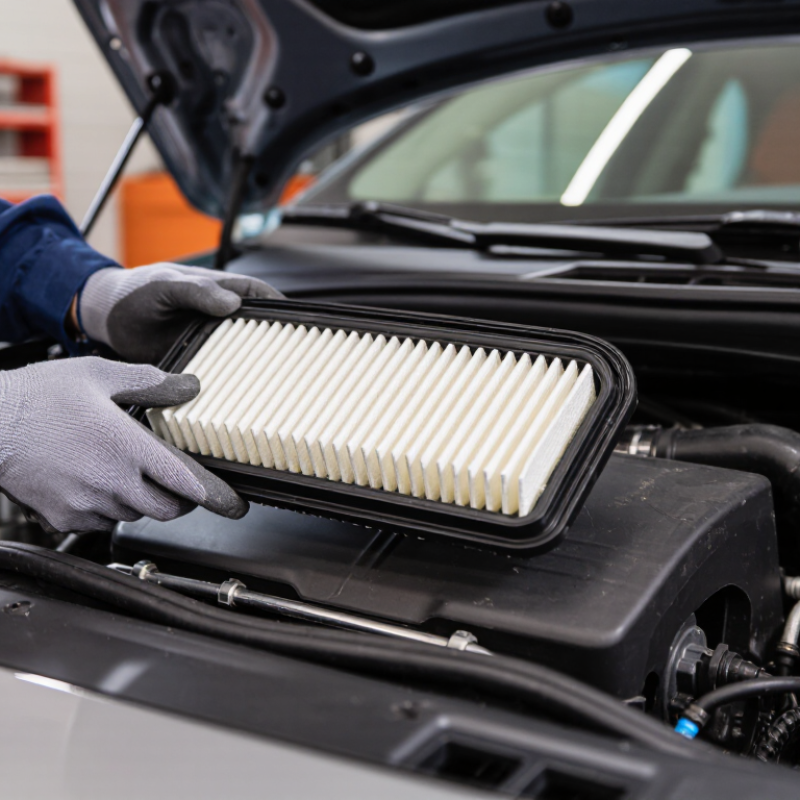
A car engine air filter is a small component with a demanding responsibility. It screens dust, pollen, sand, and other particles before they reach the engine’s intake system. Clean air supports efficient combustion, stable acceleration, and consistent engine response. When the filter becomes clogged, the engine may work harder to draw air through restricted material.
The difference can appear during ordinary driving. You may notice slower throttle response, uneven idling, or slightly higher fuel consumption. In workshop inspections, a neglected filter often looks gray, flattened, or packed with fine road dust. That visual evidence matters more than vague performance claims. However, replacing a filter is not a guaranteed horsepower upgrade. It cannot repair faulty sensors, worn spark plugs, or deeper mechanical problems.
Choose carefully. Vehicle manufacturers specify filter dimensions, filtration standards, and replacement intervals for good reasons. A reputable car engine air filter should fit the housing securely, seal around its edges, and trap contaminants without unnecessarily restricting airflow. Quality materials also help maintain dependable performance across dusty roads, heavy traffic, and changing weather.
Small detail, real impact.
A practical inspection should consider driving conditions, not only mileage. Cars used on unpaved roads may need earlier checks than vehicles driven mainly on clean highways. I have also seen owners replace filters too often, treating every dark mark as failure. That approach wastes money and ignores the manufacturer’s guidance. The better decision combines visible condition, service history, local air quality, and professional judgment. This balanced approach makes the car engine air filter part of a sensible maintenance plan, rather than a quick marketing promise.
Engine Airflow Basics: The 14.7:1 Stoichiometric Air–Fuel Ratio
Why Choose a Car Engine Air Filter for Better Performance?
A gasoline engine needs roughly 14.7 parts of air for one part of fuel by mass. This is the stoichiometric air–fuel ratio, widely referenced in SAE engine literature and technical combustion models. At this point, oxygen and fuel can burn almost completely. Too little air creates a rich mixture. Too much air creates a lean mixture.
The filter sits at the entrance to this process. A loaded filter increases intake restriction, especially when dust coats its pleats. The U.S. Environmental Protection Agency’s MOVES technical framework treats intake conditions as important inputs for emission and fuel-use modeling. Small pressure losses matter more at high engine speed. I have seen this during routine servicing: the filter looked acceptable from above, yet its underside was dark and packed.
Clean airflow helps sensors and engine controls stay closer to their intended targets. It does not create unlimited horsepower. That claim deserves skepticism. The U.S. Department of Energy notes that maintenance affects fuel economy, but results vary with driving style, vehicle condition, and operating temperature. A quality filter must balance airflow with particle capture. Excessive openness can admit abrasive dust, while excessive restriction can weaken response. The 14.7:1 target is useful, but real engines constantly adjust around it. Grazing the ideal ratio is not the same as holding it.
Performance Effects: Why Excess Restriction Can Reduce Available Airflow
Why Choose a Car Engine Air Filter for Better Performance?
Performance Effects: Why Excess Restriction Can Reduce Available Airflow
A clean engine air filter helps maintain steady airflow into the intake system. When dirt fills the filter media, air must pass through smaller gaps. This increases pressure drop before the engine. The result can be slower throttle response, weaker acceleration, and reduced efficiency. Turbocharged engines may show the problem more clearly under heavy load. The turbo works harder to reach its target airflow. That extra effort can raise intake temperatures and reduce consistency.
A high-quality filter should balance airflow with effective particle capture. More airflow alone is not always better. A poorly fitted filter can allow dust around the sealing edge. That dust may reach sensitive airflow sensors or engine components. In workshop inspections, the most useful clue is often the filter’s condition, not its appearance. Some filters look clean but remain restricted internally. I have also seen drivers replace filters too early, then overlook a damaged housing or blocked intake duct. That is an easy mistake.
Tips: Inspect the filter against a bright light. Check its sealing edges and intake duct. Follow the vehicle’s service guidance, especially after dusty driving. If performance changes suddenly, ask a qualified technician to measure intake restriction and scan for related faults.
Service Planning: Compare OEM Replacement Intervals of 12,000–30,000 Miles
Why Choose a Car Engine Air Filter for Better Performance?
A clean engine air filter supports steady airflow, smoother acceleration, and consistent fuel delivery. Replacement planning matters because original equipment schedules often range from 12,000 to 30,000 miles. The correct interval depends on the vehicle, engine design, and driving environment. A commuter on clean highways may reach 30,000 miles. A vehicle driven through construction dust may need service much sooner. Always check the owner’s manual before setting a fixed date.
In workshop inspections, a dark filter is not automatically dangerous, but heavy dust between pleats deserves attention. I once delayed a replacement because the filter looked usable from above. The underside was much dirtier. That judgment was not ideal. A restricted filter can reduce airflow and make the engine work harder, especially during acceleration. Short trips, gravel roads, pollen-heavy areas, and frequent idling can shorten the service interval. Inspecting around 12,000 miles is practical, even when replacement is not yet required.
Tips: Write the mileage on the filter housing after installation. Check the filter in bright light, without tearing the material. Keep the intake box sealed and free from leaves. Do not clean a disposable paper filter with compressed air. It may damage the fibers. If fuel economy changes suddenly, inspect the filter alongside tire pressure, sensors, and other maintenance items. A filter rarely explains every performance problem.
Why Choose a Car Engine Air Filter for Better Performance?
Service-planning reference: typical replacement intervals range from 12,000 to 30,000 miles depending on driving conditions.
Cleaner intake air helps the engine maintain consistent airflow, combustion efficiency, and throttle response. Replace the filter sooner in dusty, off-road, or heavy-traffic conditions, and always confirm the exact interval in the vehicle service manual.