China Best Cutting Tools Supplier for Global Buyers?

Choosing the China best cutting tools supplier for global buyers requires more than comparing prices. It requires evidence.

A reliable supplier should understand carbide grades, coating performance, edge preparation, tool geometry, and machining conditions. These details affect tool life, surface finish, vibration, and production cost. A drill that performs well on aluminum may fail quickly in hardened steel. The difference is practical, not theoretical.

Dr. Wilfried König, a respected machining researcher, once observed, “The cutting tool is the heart of the machine.” This view remains relevant for manufacturers evaluating Chinese suppliers. Experienced buyers should examine factory capabilities, inspection records, material certificates, and application support. They should also request samples and test cutting tools under real production conditions. A polished catalog is not enough.

Look closely at tolerances. Ask how batches are controlled. Check whether the supplier can maintain stable performance across repeated orders. Packaging, export experience, technical communication, and delivery reliability matter too. A low quotation can become expensive when tools arrive late or produce inconsistent parts.

No supplier is perfect. Even strong factories may need time to adjust a tool for unusual materials or machines. That weakness deserves attention, not concealment. Open communication often reveals more than promotional claims. The best partnership develops through measured trials, honest feedback, and continuous improvement. For global buyers, China can offer competitive cutting tools, but confidence should come from verified performance, not assumptions.

China Best Cutting Tools Supplier for Global Buyers?

What Defines a Reliable China Cutting Tools Supplier?

A reliable China cutting tools supplier is defined by more than a low quotation. Global buyers need consistent performance, clear communication, and evidence behind every technical claim. The supplier should explain tool materials, coating options, hardness ranges, and recommended cutting conditions in practical terms. Vague promises are warning signs.

Traceability matters. Each batch should connect to inspection records, material certificates, and production dates. A capable quality team checks dimensions, edge geometry, runout, and surface finish before shipment. Sample testing should happen under realistic machining conditions, not only in a showroom. Small details matter, such as protective packaging that prevents chipped edges during transport.

Communication also reveals reliability. A dependable supplier confirms drawings, tolerances, quantities, and delivery expectations before production begins. Technical questions should receive precise answers, supported by drawings or test data. One missed measurement can cause costly downtime. That sounds simple.

No supplier is flawless. Even experienced factories may face coating variation, delayed raw materials, or unclear customer drawings. What matters is how openly they report problems and correct them. Buyers should review sample results, audit available records, and request a documented response process. Price remains important, but unstable quality can erase the original saving quickly. A strong supplier keeps improving inspection methods instead of treating every complaint as the buyer’s mistake.

Key Cutting Tool Categories and Their Industrial Applications

China Best Cutting Tools Supplier for Global Buyers?

Key Cutting Tool Categories and Their Industrial Applications

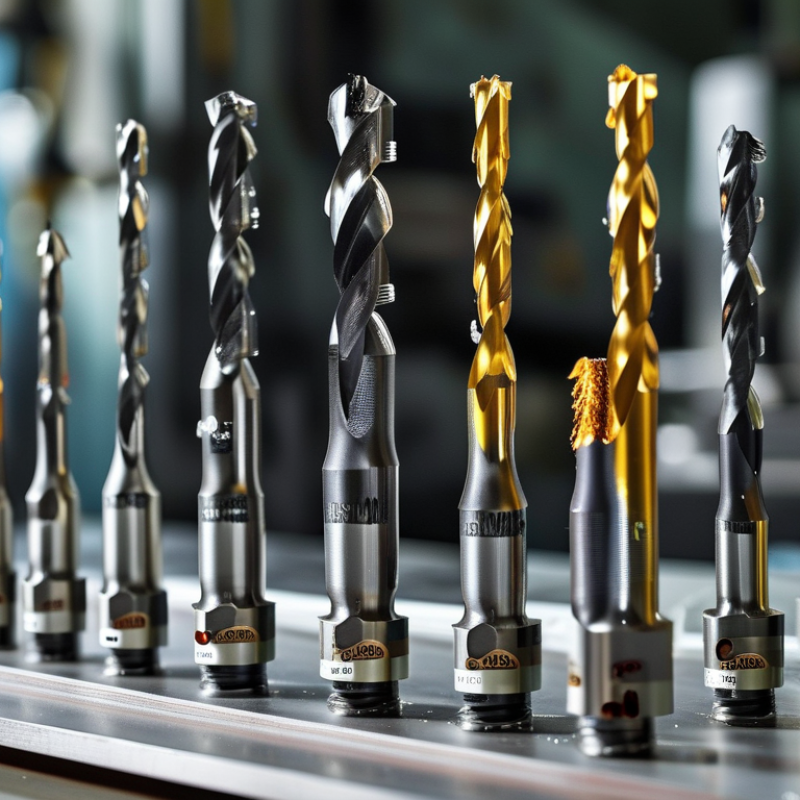
Cutting tools should be selected by operation, workpiece, and production volume. Solid carbide end mills suit milling aluminum, steel, and hardened components. Indexable turning inserts support repeated work on shafts, rings, and automotive parts. Drills create accurate holes, while reamers improve hole size and surface finish. Taps and thread mills produce internal threads for machinery and hydraulic assemblies. Grinding wheels handle final finishing when dimensional control becomes critical.

According to Grand View Research, the global cutting tools market was valued at approximately USD 21.3 billion in 2023. The report projects continued growth through 2030, supported by automotive, aerospace, and general manufacturing demand. These figures show opportunity, but market growth does not guarantee tool quality. Buyers should verify coating performance, substrate composition, dimensional consistency, and batch traceability. ISO 13399-based tool data can also improve digital planning and inventory control.

Tips: Match tool geometry with material hardness and cutting speed. Request test samples before large orders. Check inspection records, not only product photos. A supplier may offer attractive pricing, yet inconsistent runout can increase scrap and machine downtime. That weakness is easy to overlook. In practice, coolant compatibility and operator skill also affect results, so a perfect catalog specification may still need shop-floor testing. Reports from the International Trade Centre and industry machinery surveys indicate that export capability and manufacturing demand vary by region, making delivery reliability and technical communication important purchasing factors.

How to Evaluate Quality, Materials, and Manufacturing Standards

Choosing a cutting-tool supplier requires more than comparing prices. Quality begins with measurable evidence: dimensional reports, hardness readings, coating thickness, and documented tool-life tests. ISO 3685 provides a recognized framework for assessing tool life during turning tests. ISO’s 2022 Survey recorded 1,265,216 ISO 9001 certificates worldwide, but certification alone cannot prove cutting performance. Ask for lot traceability. Then inspect it.

Material selection should match the workpiece, cutting speed, coolant, and machine rigidity. Cemented carbide grades need consistent tungsten-carbide grain size and cobalt distribution. High-speed steel demands controlled alloy chemistry and heat treatment. For coated tools, request coating composition, adhesion results, and test conditions, not just a coating name.

Steel production remains highly energy intensive, according to the IEA’s Energy Technology Perspectives 2023. That pressure makes stable tool life financially important.

Manufacturing standards should cover incoming inspection, grinding accuracy, edge preparation, and final packaging. ISO 9001 controls can support consistency, while ISO 14001 evidence may show disciplined environmental management. Request capability data, such as Cpk for critical dimensions, plus sample inspection records. Do not accept vague claims. Suppliers may present perfect samples while ordinary batches vary. A small trial remains wiser than a large first order. Measure burrs, surface finish, edge wear, and actual pieces per tool. The uncomfortable part is admitting that our own test setup may be inconsistent. Without controlled speeds, feeds, and coolant, supplier comparisons can mislead.

Comparing Pricing, Customization, and Production Capabilities

For global buyers, the best Chinese cutting tool supplier is rarely the one offering the lowest price. In practical sourcing, price must be read beside material grade, coating, tolerance, packaging, and order quantity. A quotation for carbide tools may exclude inspection reports, trial samples, or export packing. That gap becomes expensive. Ask for a line-by-line quotation. It exposes assumptions early.

Customization changes the calculation. A supplier may adjust diameter, flute geometry, shank size, coating, or edge preparation. Small changes can require new drawings and dedicated grinding programs. Request a technical review before approving samples. Provide workpiece material, machine model, cutting speed, and coolant conditions. Without these details, “custom” can mean only a modified dimension. Sample testing should record tool life, surface finish, and dimensional consistency. Real data matters.

Production capability needs evidence, not polished photographs. Check equipment lists, in-process inspection, batch traceability, and final inspection records. Ask how the factory handles worn wheels, rejected lots, and urgent changes. Capacity claims can be optimistic. I have seen suppliers promise short lead times, then outsource heat treatment or coating. That may still work, but control becomes less clear. A staged order is safer: samples, pilot batch, then regular production. Confirm lead times in writing, and leave room for revisions. Suppliers are not perfect. Buyers are not either.

China Best Cutting Tools Supplier for Global Buyers?

Comparing typical industrial procurement benchmarks for pricing, customization, and production capability. Values are planning references, not supplier quotations.

Standard catalog tools generally offer the lowest price and shortest lead time. Customized and OEM production usually require higher budgets and longer development cycles, but they provide greater flexibility for specialized materials, geometries, coatings, and batch requirements.

Export Services, Certifications, and Long-Term Buyer Support

China Best Cutting Tools Supplier for Global Buyers?

Choosing a cutting tools supplier requires more than comparing unit prices. Export experience matters when orders cross borders, currencies, and technical standards. A reliable supplier should provide commercial invoices, packing lists, certificates of origin, and accurate HS codes. Small document errors can delay customs clearance.

Certifications should match the buyer’s market and application. ISO 9001 supports consistent production control, while material certificates verify carbide, steel, or coating specifications. Inspection reports should show measured diameter, length, runout, and tolerance values. For regulated markets, compliance documents may include RoHS or REACH declarations. Ask for current documents. Old files create uncertainty.

Long-term support becomes visible after delivery. Experienced teams can review drawings, recommend suitable geometries, and arrange sample testing before mass production. Clear packaging protects edges during ocean or air transport. A practical supplier also explains lead times honestly and reports delays early. Not every shipment is perfect. That honesty matters. Replacement procedures should be written, not promised casually. Technical support can include tool-life feedback, cutting parameter suggestions, and batch traceability. Buyers should still verify performance on their own machines, because material, coolant, and operator habits change results. Good cooperation grows through records, measured improvements, and patient communication.

China Best Cutting Tools Supplier for Global Buyers? - Export Services, Certifications, and Long-Term Buyer Support
Evaluation Dimension Verifiable Supplier Evidence Relevance to Global Buyers Practical Benchmark or Requirement
Product Range Product specifications should identify tool type, cutting diameter, shank diameter, overall length, flute count, coating, substrate, and applicable workpiece materials. A clearly structured range makes it easier to match tools with milling, drilling, turning, reaming, or other machining applications. Require consistent technical data sheets and a documented product classification system.
Carbide and Tool Materials Common cutting-tool materials include carbide, high-speed steel, cermet, ceramic, and polycrystalline diamond, depending on the application. The correct substrate affects wear resistance, cutting speed, heat management, and tool life. Material grade, hardness range, grain characteristics, and recommended cutting parameters should be disclosed where applicable.
Coating Technology Common physical vapor deposition coating families include titanium nitride, titanium carbonitride, aluminum titanium nitride, and aluminum chromium nitride. Coating selection influences resistance to abrasion, oxidation, heat, and built-up edge formation. Ask for coating type, nominal coating purpose, suitable workpiece materials, and recommended speed and feed ranges.
Quality Management ISO 9001 certification demonstrates that an organization operates a documented quality management system subject to certification audits. Documented processes can improve consistency in purchasing, production, inspection, corrective action, and record keeping. Verify the certificate scope, issuing body, validity period, and whether the stated production activities are covered.
Environmental Management ISO 14001 addresses environmental management systems, including environmental objectives, compliance evaluation, and continual improvement. This can support buyers with environmental reporting, supplier-risk reviews, and responsible procurement requirements. Confirm that the certificate applies to the relevant manufacturing site and is currently valid.
Product Compliance Compliance requirements depend on the destination market and product category. Buyers may need declarations, restricted-substance information, or safety documentation. Early compliance review reduces customs delays, documentation gaps, and regulatory risk. Define the destination country, applicable regulations, labeling rules, packaging requirements, and document language before order confirmation.
Inspection and Traceability Useful records may include incoming-material inspection, dimensional inspection, coating checks, batch numbers, inspection reports, and nonconformance records. Traceability supports root-cause analysis, repeat orders, warranty assessment, and consistent quality across batches. Require lot identification and agreed inspection criteria for critical dimensions and performance characteristics.
Sample and Trial Support A professional export supplier should be able to provide samples, technical drawings, application recommendations, and trial-order documentation. Testing before volume purchasing helps validate tool life, surface finish, dimensional accuracy, and compatibility with the buyer’s machines. Agree on sample specifications, test conditions, acceptance criteria, and how trial results will be recorded.
Customization Capability Typical custom requirements may include special diameters, non-standard lengths, flute geometries, coatings, shank formats, packaging, or private technical labeling. Customized tools can address difficult materials, restricted machine access, or specialized production processes. Require an approved drawing, revision control, prototype approval, and written confirmation of tolerances.
Export Documentation Common documents include a commercial invoice, packing list, transport document, certificate of origin when required, and product or compliance documents where applicable. Complete and accurate paperwork supports customs clearance, payment processing, import records, and internal receiving procedures. Confirm document formats, consignee details, tariff classification responsibility, and document submission timing.
Packaging and Protection Cutting tools should be protected against edge damage, corrosion, impact, and movement during international transportation. Suitable packaging helps preserve cutting-edge integrity and reduces losses caused by moisture or handling damage. Specify individual protection, corrosion prevention, carton strength, labeling, quantity per package, and pallet requirements.
International Logistics Export arrangements may include courier, air freight, sea freight, or multimodal transport, depending on urgency, shipment size, and destination. Multiple transport options allow buyers to balance delivery speed, freight cost, customs handling, and inventory risk. Request a written shipping quotation showing trade terms, transport mode, insurance responsibility, and estimated transit time.
Lead-Time Management Lead time should distinguish between standard stocked items, made-to-order products, custom tools, and repeat production orders. Clear lead-time categories improve production planning and reduce unexpected shortages. Use order acknowledgments with confirmed quantities, production milestones, expected dispatch date, and delay-notification procedures.
Communication and Technical Support Support should cover quotation clarification, tool selection, cutting-parameter guidance, drawing review, order status, and complaint handling. Accessible technical communication helps buyers reduce setup errors and respond faster to machining problems. Define response contacts, communication channels, escalation procedures, and the information required for technical troubleshooting.
Warranty and Claims Handling A written policy should define covered defects, evidence requirements, claim deadlines, replacement or credit options, and exclusions related to misuse. Transparent claims procedures reduce commercial uncertainty and support fair resolution of quality disputes. Agree on inspection evidence, sample retention, responsibility for freight, and corrective-action reporting.
Long-Term Supply Support Long-term support may include archived drawings, repeat-order records, consistent specifications, forecast planning, and notification of material or process changes. Stable documentation and change control help maintain machining results across multiple purchasing cycles. Require revision control, advance notice of significant changes, approved substitutes, and periodic supplier-performance reviews.
Commercial Transparency Quotations should clearly state product specifications, quantities, tooling charges, packaging, payment terms, delivery terms, validity period, and applicable taxes or freight charges. Transparent pricing makes supplier comparisons more accurate and reduces disputes after purchase orders are issued. Compare equivalent specifications and total landed cost rather than unit price alone.
Note: Certification, compliance, lead-time, and service availability should be verified for the specific manufacturing site, product, destination market, and purchase contract.
WhatsApp