China Top Hardware Tools Manufacturers for Global Buyers?

China remains a major sourcing base for buyers seeking dependable hardware tools at competitive prices. Its manufacturing network covers hand tools, power-tool accessories, measuring equipment, garden tools, and industrial hardware. However, factory scale does not automatically guarantee product quality. A polished website can hide inconsistent steel grades, weak packaging, or limited after-sales support.

Paul Sellers, a widely respected woodworking tool educator, offers a practical reminder: “A tool is only as good as the person using it.” The idea also applies to purchasing. Buyers need the right supplier for specific applications, not simply the lowest quotation. A professional manufacturer should explain material specifications, production capacity, quality-control procedures, and testing methods clearly. Factory audits, sample evaluations, and production inspections remain valuable. They reveal details that online catalogs cannot show.

This guide examines China’s top hardware tools manufacturers from a global buyer’s perspective. It considers product durability, machining accuracy, certification readiness, export experience, customization, and communication quality. A supplier producing excellent pliers may not understand the demands of precision measuring tools. That distinction matters. So does consistency across large orders.

The assessment is not flawless. Supplier capabilities change, and public information can become outdated. Some manufacturers excel in private-label production but offer limited technical support. Others provide impressive engineering yet require higher minimum order quantities. Buyers should verify every important claim independently, request current samples, and define acceptance standards before signing contracts. Reliable sourcing begins with evidence, not promises. Small details matter.
China Top Hardware Tools Manufacturers for Global Buyers?

China’s Role in the Global Hardware Tools Manufacturing Industry

China’s role in global hardware tools manufacturing extends far beyond low-cost production.

Grand View Research estimates that the global hand tools market reached about US$23.7 billion in 2023. It also projects steady growth through 2030. Chinese factories support this expansion through large-scale forging, casting, machining, heat treatment, and surface finishing.

UN Comtrade data consistently places China among the leading exporters of hand tools and metalworking tools. Its advantage comes from dense supplier networks. Steel mills, precision-machining workshops, packaging producers, and testing laboratories often operate within the same industrial regions. This structure can shorten sourcing cycles and reduce transport between production stages. Buyers can also request tolerances, hardness levels, corrosion tests, and batch inspections before shipment.

The system is not perfect. Quality may vary between factories using similar drawings. A lower quotation can hide weaker steel, unstable calibration, or limited traceability. The International Organization for Standardization stresses documented quality systems and repeatable measurement practices. Global buyers should therefore review material certificates, inspection records, sample performance, and corrective-action procedures. Digital production tracking is improving, but smaller workshops may still rely heavily on manual records. That gap deserves attention. Reliable manufacturing is built through evidence, not promises.

Main Types of Hardware Tools Made by Chinese Manufacturers

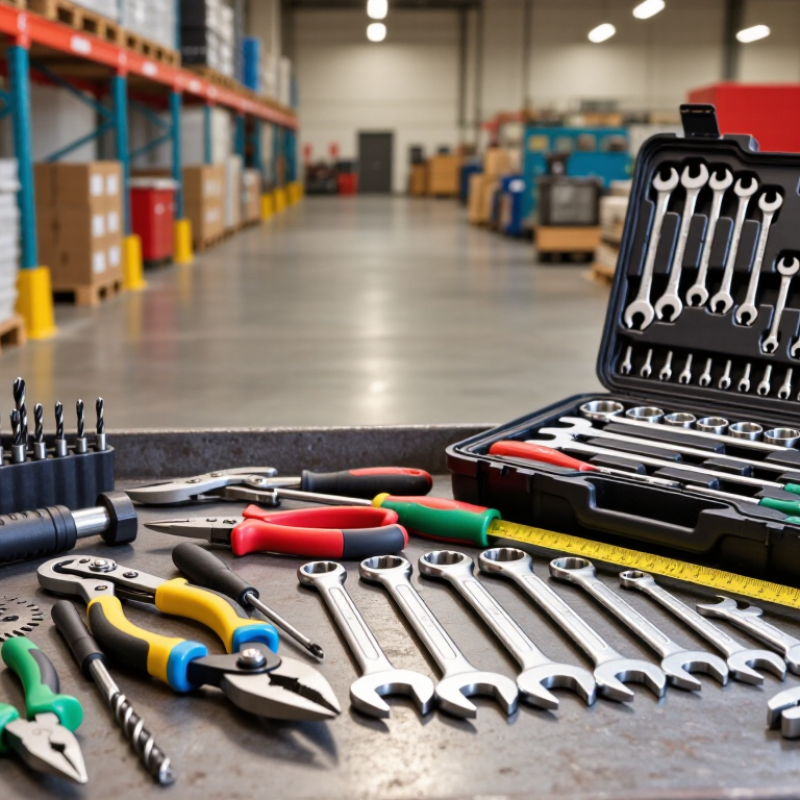
China’s hardware tool makers supply several practical categories for global buyers. Hand tools include pliers, screwdrivers, wrenches, hammers, cutters, and socket sets. Grand View Research forecasts steady global hand-tool growth through 2030, supported by construction, repair, and industrial maintenance demand. China remains a major exporter in HS 8203 categories, according to International Trade Centre Trade Map data.

Power tools form another large group. Cordless drills, impact drivers, grinders, saws, and rotary hammers are widely produced in Chinese factories. Mordor Intelligence projects continued growth in the global power-tools market through 2029. Buyers should check battery-cell documentation, motor temperature, torque consistency, and charger compatibility. A polished sample proves little.

Pneumatic tools, measuring tools, and garden tools also have strong manufacturing depth. Air wrenches and nailers need stable pressure testing. Calipers, levels, and laser measures require repeatable calibration. Pruning shears and cutting tools need hardness checks around the working edge. ISO 9001 systems can improve traceability, but certification alone cannot guarantee every shipment. One practical review may reveal uneven plating, rough threads, or unclear packaging instructions. That is inconvenient, yet useful. Request inspection records, material certificates, test samples, and carton-drop results before approving production.

How to Evaluate China’s Hardware Tool Manufacturers

Evaluating China’s hardware tool manufacturers requires more than comparing website prices. A reliable buyer checks factory capability, process control, and evidence of consistent performance. Ask for a current business license, production address, and clear product specifications. Then compare those details with export documents and inspection records. A polished catalog proves little.

Request samples from the same production line, not specially prepared pieces. Test grip comfort, coating adhesion, jaw alignment, torque, and wear after repeated use. Ask about material grades, heat treatment, dimensional tolerances, and packaging strength. For insulated tools, verify insulation performance through qualified testing. For precision products, measure key dimensions with calibrated equipment. Small details matter. Record defects, even minor ones, because they may reveal weak process control.

Assess communication through a detailed quotation. It should state the minimum order quantity, lead time, tooling fees, warranty terms, spare parts, and shipping responsibilities. Arrange a factory visit or live video audit to observe incoming inspection and final packing. Request references from buyers in comparable markets, while protecting confidential information. Reliable manufacturers acknowledge limitations instead of promising everything. A failed sample should trigger questions, not be hidden. Approve specifications in writing, repeat testing before mass production, and review the first shipment carefully. Mistakes can still happen; the important issue is whether the manufacturer responds with evidence and corrective action.

Quality Standards and Certifications for International Buyers

For global buyers, a Chinese hardware tools manufacturer should show more than a polished factory tour. ISO 9001 certification indicates a controlled quality management system, but it does not certify every wrench, drill bit, or cutting blade. ISO’s 2022 Survey recorded 1,265,216 ISO 9001 certificates worldwide. It also reported 529,853 ISO 14001 certificates, reflecting growing attention to environmental controls.

Ask for the certificate number, scope, issuing body, and expiration date. Then confirm them through the certification body’s public database. A practical audit should trace one batch from incoming steel to final packaging. Check hardness records, dimensional tolerances, coating thickness, and carton labels. Small details matter. A missing calibration sticker can weaken confidence in an otherwise capable factory.

Testing should match the product and destination market. Laboratories accredited to ISO/IEC 17025 can provide more credible mechanical, electrical, and chemical test results. For powered tools, buyers should review applicable safety, electromagnetic compatibility, and restricted-substance requirements. CE marking, where relevant, is generally a conformity declaration, not a universal quality certificate. That distinction is often misunderstood. Certificates can also become outdated while production methods quietly change. Recheck samples after tooling changes, not only during supplier selection. No document replaces independent inspection, although inspection alone can miss long-term material failures.

The Process of Sourcing Hardware Tools from China

Sourcing hardware tools from China starts with a clear product brief. Specify dimensions, steel grade, hardness, surface finish, packaging, and expected service life. A vague request produces vague quotations. It also makes factory comparisons unreliable. I once accepted a lower price before checking the handle material. That assumption was wrong.

Shortlist manufacturers through audited records, production photos, technical certificates, and export experience. Ask for samples from the same production line, not showroom pieces. Check jaw alignment, cutting edges, grip comfort, and rust protection under practical conditions. Request a detailed quotation covering tooling, packaging, inspection, shipping terms, and payment stages. Keep every requirement in one signed specification.

Independent inspection can verify dimensions, appearance, function, and carton quantity before shipment. For electrical or specialized tools, confirm applicable safety standards in the destination market. Do not rely only on a supplier’s certificate. Verify its validity and testing scope. A small pilot order can reveal packing damage, inconsistent finishing, or slow communication. It costs more per unit, but it reduces expensive surprises.

Build a quality agreement with acceptable defect limits and corrective-action procedures. Maintain written records of samples, approvals, inspections, and revisions. Factory visits may provide useful evidence, but they are not proof of continuous quality. Production can change after approval. Regular communication remains necessary. Be realistic about delays during material shortages or holiday periods. Good sourcing is controlled, documented, and repeatedly checked.

WhatsApp