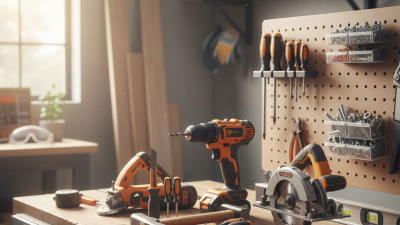
What Are the Top Equipment Tools Manufacturers in China?

Choosing among China’s equipment tools manufacturers takes more than comparing prices or polished catalog photos. Buyers need to know what each factory actually makes, how consistently it produces parts, and whether its products fit the intended workload. A drill press may look sturdy on a showroom floor, yet spindle runout, vibration, and service access matter more after months of daily use. Small details count.

Manufacturing quality expert Joseph M. Juran offered a useful standard: “Quality is fitness for use.” Though he was not a toolmaker, that principle helps frame this comparison. The manufacturers worth examining should demonstrate relevant production experience, clear specifications, dependable quality checks, and responsive after-sales support. Look for practical evidence: machining tolerances, test records, warranty terms, spare-parts availability, and realistic delivery estimates. Certifications can help, but they do not replace product-level checks or direct questions to the supplier. Claims deserve verification.

This guide compares manufacturers by product range, production capability, quality practices, export experience, and customer support. It also considers whether a company specializes in hand tools, power tools, workshop machinery, or industrial equipment, since those categories require different expertise. No shortlist is perfect. Public information may be incomplete, and factory capabilities can change. Treat rankings as a starting point, then request current documentation, samples, and references before making a purchasing decision.
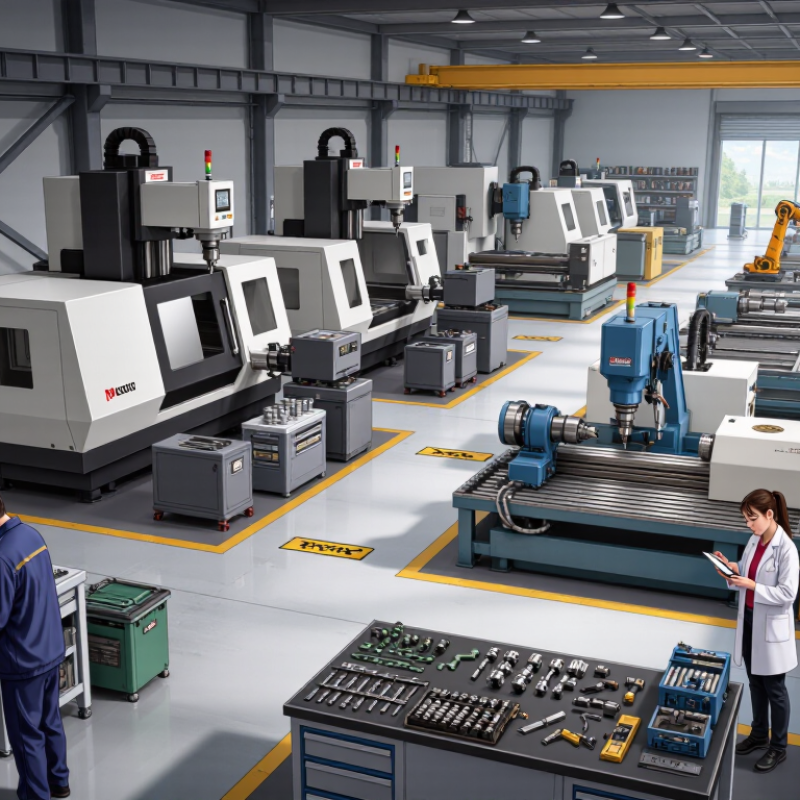
What Are the Top Equipment Tools Manufacturers in China?

What Equipment and Tool Manufacturers Produce in China

China’s equipment and tool manufacturers produce a broad mix of industrial products: CNC machine tools, metal-cutting equipment, pumps, compressors, construction machinery, agricultural machines, power tools, and factory automation systems. Some also make inspection instruments, cutting inserts, bearings, and replacement parts. A workshop may source a compact drill press and its measuring tools from different factories, even when both appear under “machinery” in a supplier directory.

The scale is substantial. The China Machinery Industry Federation reported that the machinery sector recorded about

RMB 31.8 trillion in operating revenue in 2023, a year-on-year increase of 6.8%.

This figure covers a wide sector, not just toolmaking, so it should not be read as a measure of any individual product category. Product labels also vary between suppliers—an awkward detail that can make comparisons less straightforward. A detailed drawing, material specification, and sample inspection reveal more than a broad catalog.

Tips: Ask for rated capacity, tolerances, test records, and spare-parts availability. Compare the same specifications across quotations. A polished product photo proves little. I would also confirm who handles calibration and after-sales support; these details are easy to overlook when price dominates the discussion.

How China’s Equipment Manufacturing Industry Is Organized

What Are the Top Equipment Tools Manufacturers in China?

How China’s Equipment Manufacturing Industry Is Organized

China’s equipment industry is a connected supply chain, not one uniform sector. It spans component suppliers, machinery producers, system integrators, and industrial users. The National Bureau of Statistics groups equipment manufacturing across areas such as general and special-purpose machinery, electrical machinery, transport equipment, and instrumentation. This structure helps explain why manufacturers can specialize in one stage while serving several industries.

Scale is significant. The National Bureau of Statistics reported that equipment manufacturing value added grew 7.7% in 2024 and made up 34.6% of the value added of industrial enterprises above designated size. These figures describe a broad industrial category, not the performance of every producer. In practice, a factory may depend on outside suppliers for motors, controls, or precision parts, then combine them into a complete production line. The neat categories can hide complicated supplier relationships. That is worth remembering.

Tips: When evaluating a manufacturer, check which stage it handles, what equipment it produces, and whether it can support installation and maintenance. Ask for specifications and production references. Paper claims are not the whole story.

Which Chinese Manufacturers Lead Each Product Category

China’s equipment market has no single leader across every product category. In construction machinery, domestic manufacturers are prominent in excavators, loaders, cranes, and road-building equipment. Buyers often value broad model ranges, accessible replacement parts, and competitive operating costs. Machine-tool producers are active in CNC lathes, milling systems, and metal-forming equipment. Precision and automation can vary considerably between models.

Power-tool manufacturers serve both professional workshops and household users, with cordless range and battery life shaping product choices. Agricultural equipment makers focus on tractors, harvesters, and implements; suitability depends on local crops and field conditions. Material-handling producers supply forklifts, pallet stackers, and warehouse systems. For these machines, service response and parts availability can matter as much as the purchase price. This category map is useful, but it is not a definitive ranking. Quality may differ even within one manufacturer’s product range.

Tips: Compare the exact model, not just the category. Ask for operating-hour data, warranty terms, spare-parts lead times, and a live demonstration. Inspect welds, controls, and service access in person. A glossy brochure tells only part of the story.

How Leading Manufacturers Compare in Technology and Scale

Comparing equipment tool manufacturers in China requires more than reading catalog specifications. Technology shows up in repeatability, changeover time, and how quickly a machine flags a fault. On a shop floor, inspect control cabinets, sensor placement, guarded work zones, and the finish on moving parts. Small details matter. A stable spindle or well-calibrated measuring system can reduce rework, but only when operators know how to maintain it. Ask for sample inspection records and a live demonstration using the intended material. A polished showroom tells only part of the story.

Scale is visible in production capacity, supplier depth, and service coverage, yet bigger output does not automatically mean a better fit. Not always. A manufacturer with several assembly lines may deliver repeat orders faster, while a smaller factory may adapt tooling more closely to a custom process. Compare lead times against actual delivery records, not estimates alone. Check whether spare parts are stocked locally and whether technicians can explain fault recovery in plain language. This is where comparisons get messy. Public figures rarely reveal overtime, subcontracting, or quality variation between batches. Treat those gaps as questions, not accusations, and verify them with a pilot order, clear acceptance criteria, and follow-up checks.

What Buyers Should Evaluate When Choosing a Manufacturer

When comparing equipment tool manufacturers in China, buyers should look beyond catalog photos and quoted prices. A polished catalog is not proof. Ask for drawings, material specifications, tolerance ranges, and inspection records for the exact model under consideration. If possible, review a production sample and measure key features, such as fit, finish, and repeatability. Ask how defects are recorded and what happens when a batch fails inspection. Specific answers matter more than broad claims about quality.

Factory capacity should match the order, not just the sales pitch. Check whether critical processes happen in-house or depend on subcontractors, and confirm who monitors those steps. Request realistic production and shipping schedules, plus details about spare parts, maintenance documents, and technical support after delivery. Ask for evidence. A video call from the workshop can help, but it cannot replace independent verification when the purchase carries significant risk. Communication deserves scrutiny too: Are specification changes documented, and do answers stay consistent across conversations? I would leave some uncertainty in any remote assessment; even a careful checklist can miss problems that appear only during regular use.

What Are the Top Equipment Tools Manufacturers in China? — What Buyers Should Evaluate When Choosing a Manufacturer

Evaluation Dimension What to Evaluate Evidence to Request Buyer Check
Product fit and range Whether the manufacturer makes the required equipment type, capacity, configuration, and compatible accessories. Current product specifications, configuration drawings, operating limits, and a written list of included and optional items. Do the specifications match the intended application?
Manufacturing capability Whether the supplier has the production processes, equipment, and capacity needed for the requested product and order volume. A facility overview, process flow, production-capacity details, and a live or third-party factory audit where appropriate. Is the seller the manufacturer, a trading company, or both?
Quality management How incoming materials, production steps, finished products, and nonconforming items are controlled. Quality procedures, inspection records, traceability examples, and valid quality-system certificates within their stated scope. Are inspection criteria agreed before production?
Testing and performance Whether performance claims are supported by relevant tests under stated operating conditions. Test methods, acceptance criteria, calibration details where applicable, and sample or pre-shipment test reports. Can the buyer witness or independently verify key tests?
Materials and components Whether materials and critical components are suitable for the required duty, environment, and expected service conditions. Material specifications, component lists, supplier documentation, and certificates or test records when relevant. Are substitutions disclosed and approved in advance?
Safety and compliance Applicable safety, electrical, environmental, and import requirements for the destination market and intended use. Relevant declarations, test reports, technical files, labels, and manuals. Requirements vary by product and destination. Are documents valid for this exact model and market?
Customization and engineering The supplier’s ability to assess technical requirements, document design changes, and manage approvals before production. A requirements review, approved drawings, change-control process, and a clear record of deviations from the standard model. Who approves design changes and bears related costs?
Lead time and delivery The production schedule, order milestones, packaging plan, and shipping responsibilities under the agreed delivery terms. A written schedule, milestone updates, packing details, and a quotation that identifies the delivery term and named place. Are production time and transit time stated separately?
Warranty and after-sales support Warranty coverage, exclusions, response process, spare-parts availability, and access to technical assistance. Written warranty terms, service contacts, recommended spare-parts list, and support arrangements for the destination region. Who pays for parts, labor, and shipping during a claim?
Quotation and total cost The full cost of ownership, including equipment, tooling, packaging, freight, duties, installation, training, and maintenance where applicable. An itemized quotation, payment terms, scope exclusions, and a comparison based on equivalent specifications and delivery terms. Are low-price offers missing required scope or service?
Communication and documentation Clarity and consistency in technical answers, order records, manuals, drawings, and commercial documents. A named project contact, written technical responses, agreed document language, and a controlled version of final specifications. Are commitments recorded in the contract or purchase order?
Supplier verification Whether the supplier’s legal identity, business scope, facility, and claimed credentials can be independently checked. Business registration details, certificate verification, references where available, and an on-site or independent inspection for higher-risk orders. Do the contracting entity and payment beneficiary match the agreed transaction?

Use this framework to compare manufacturers against the same technical requirements. Certification, testing, and import requirements depend on the equipment type and destination market.

WhatsApp