
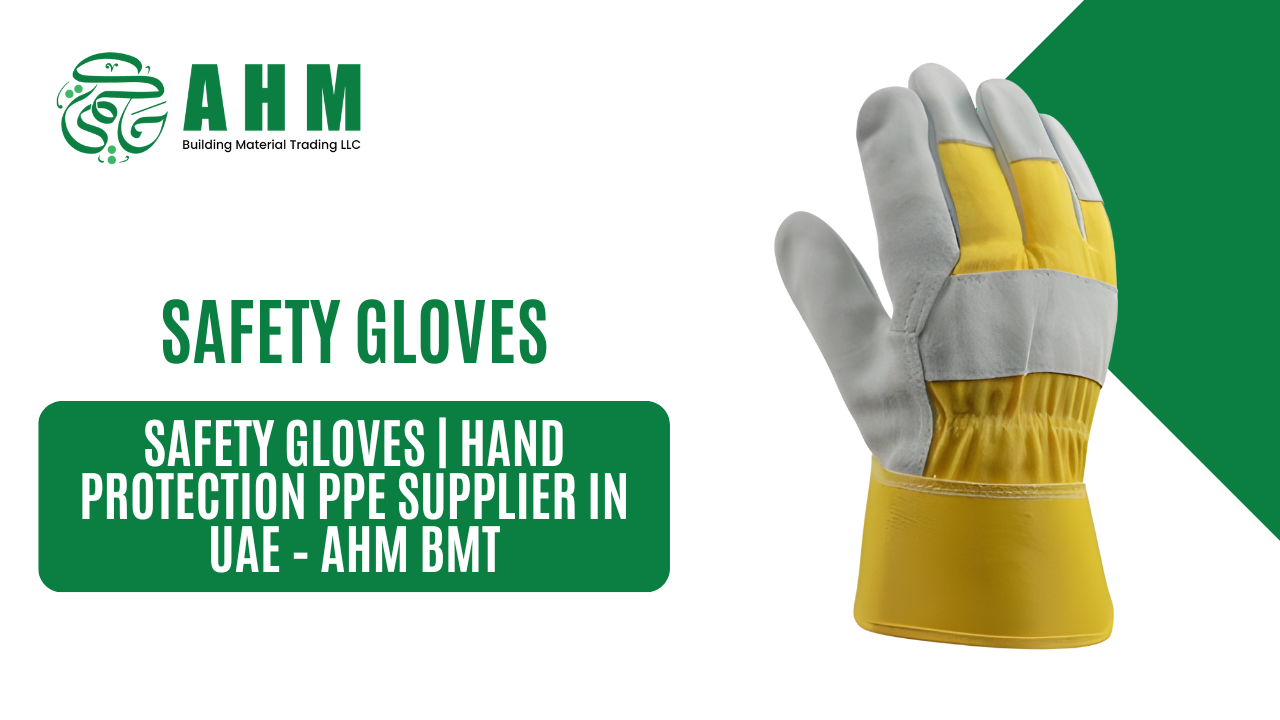
Introduction to Safety Gloves
In every sector – from construction to healthcare – guarding hands from injuries, chemical, temperature, and harmful contaminants is a top priority. That is where safety gloves are a critical element of Personal Protective Equipment (PPE). Safety gloves not only serve to protect the hands of workers from possible harm but also contribute to efficiency, hygiene, and regulation compliance with international safety standards.
AHM BMT is a premier supplier of industrial products for the UAE, and we have a great range of safety gloves aimed at protecting against various hazards in the workplace. Product like Warning Tape Red and White can create healthy environments for safety where Safety Gloves can be used.
What are Safety Gloves?
Safety Gloves are to protect the hands from injury while minimizing exposure. These are physical hand coverings made from special formulated products to limit exposure to cuts, abrasions, thermal, harmful chemicals, and other possible hazards you may see on the task at hand. Safety Gloves are typically made from synthetic or some type of plastic / rubber material or substance to cover the hand which gives flexibility, strength, and resistance based on the task that is going to be performed.
Importance of Using Safety Gloves
- Prevents direct contact with sharp or dangerous materials
- Reduces the risk of cuts, punctures, and burns
- Maintains hygiene in sensitive work environments
- Enhances gripping and handling of tools
- Completes regulatory compliance for workplace safety
From using a heavy tool in construction like a 2mm Tile Spacer, to handling chemicals while working in manufacturing; safety gloves are required for safety.
Safety Gloves Categorization and Uses
Different jobs require different types of protection. Following are the most common Safety Gloves in current use:
Cut Protection Safety Gloves
To protect hands from sharp metal, glass or edges of equipment.
Best Uses:
- Metal fabrication
- Construction
- Cutting tools
- Glass industry
Details:
- Extra strong fibers (ie: Kevlar)
- Abrasion and tearing resistant
- Better grip on rough surfaces
For example, workers using ropes or other tension-type tools (such as nylon ropes) will greatly reduce injuries with the use of cut resistant gloves.
Chemical Safety Gloves
Where there is a risk of exposure to corrosive chemicals, solvents, paints, or oils.
Chemical safety gloves are common in:
- Chemical factories
- Cleaning
- Laboratories
- Paint shops
Nitrile gloves are acceptable when working with products like solutions supplied from Paint Suppliers in UAE with chemical resistance.
Pros:
- Extra protection from chemical burns
- Non-absorbing and oil resistant
- Safe for skin and prevents contamination
Heat Resistant Safety Gloves
Protects against high temperature and radiant heat.
Applicable in:
- Welding activities.
- Foundries.
- Automotive production.
- Metal casting.
Pros:
- Fireproof.
- Insulated linings.
- Can handle hot materials in the operator’s hand safely.
Electrical Safety Gloves
Electrical safety gloves are made from insulating rubber to protect against shock.
Commonly used in:
- Electrical installations.
- Utility maintenance.
- Attending work on panels and switchboards.
The gloves must also meet voltage classification requirements to be considered certified hand protection for your hands.
General-purpose Utility Work Gloves
These gloves can be worn for activities that do not require a high amount of hand protection (low risk) like:
- Warehousing.
- Packaging.
- Gardening.
- Using tools around the house.
These gloves will provide decent grip on materials, comfort, and prevent hand development from abrasions and cuts due to using too many tools (e.g. Teflon Tape for plumbing & sealing).
Key Features & Benefits of Safety Gloves
Hand Protection Guarantee
Safety gloves are designed to protect our hands from cuts, burns, chemical, electrical shock, impact force, and human infection.
Better Grip / Handling
Safety gloves typically have a textured palm for slip-resistance that help operators with better control of tools & machine handling.
Increased productivity
Workers are more confident and can do the work faster if their hands are protected.
Improved Hygiene Compliance
Safety gloves will eliminate the chance of cross-contamination when operating with food, medicines, or anything sterile.
Inexpensive Workplace Safety
Safety gloves will reduce down time and medical incurred costs during any incident.
Industries that Utilize Safety Gloves
Construction Industry
Workers handle heavy and abrasive materials daily. Gloves provide layers of protection from tools and debris as well as pertaining to impact injuries.
Safety gloves paired with standard site items like Warning Tape Red and White for marking off areas, reduces risk and increases compliance.
Manufacturing & Industrial Plants
Workers are protected from hot surfaces, machinery, and contact with hazardous chemicals.
Oil & Gas and Petrochemicals
Workers are protected from harsh chemicals and slippery conditions.
Healthcare & Laboratory
Eliminates contamination when handling materials and promotes sterile handling.
Food Production & Packaging
Ensures food safety complies with health regulations.
Automotive & Mechanical Workshops
Workers are constantly handling sharp items and greasy components, necessitating grip and abrasion protective measures.
How to Select The Right Safety Gloves
Different tasks require different protective glove properties. Consider the following:
Assess Workplace Hazards
Determine the main hazard:
- Sharp edges → Use cut-resistant gloves
- Heat → Use thermal gloves
- Electrical electrical hazards → Use rubber insulated gloves
- Chemicals → Use nitrile gloves or neoprene gloves
Choose Appropriate Material
Latex, nitrile, leather, Kevlar, neoprene – each one has a different purpose.
Select The Right Size / Fit
Workers are probably eager to get moving, but it is essential to get the fit of the gloves right. Too loose, and they may slip off, too tight may restrict movement.
Grip & Dexterity
It is important to ensure your grip and dexterity is sufficient for handling slippery surfaces, especially when painting or performing mechanical work.
Certifications and Standards
Certification to comply with industrial PPE safety standards.
Proper Safety Gloves – Maintenance and Care
To maximize longevity performance:
Cleaning
Use mild soap and avoid abrasives.
Proper Storage
Store in a dry, cool area away from sunlight.
Regular Inspection
Replace immediately if:
- Torn
- Hardened
- Contaminated
- Punctured
A pair of well-kept safety gloves provide rated hand protection to your workers for the duration of use.
Safety Gloves in Modern Workplace Safety Strategies
Today’s organizations emphasize safety through the implementation of advanced PPE strategies:
- Smart PPE technologies
- Worker safety audits
- Risk assessments based on site hazards
Gloves are just one type of PPE that works along with other protections like warning tape, safety shoes, ropes, durable construction materials and excess tile spacers and nylon rope. These components ensure complete protection in a work ecosystem.
Why Choose AHM BMT For Safety Gloves
AHM BMT has a trusted, established position as a PPE supplier, providing durability, comfort and assurance.
Why AHM BMT Is Unique
- Premium quality safety materials
- Vast selection of products available
- Dependable industrial and commercial use
- Lower pricing on volume purchases
- Fast shipping within UAE
Important Industrial Products Supplementing Safety Gloves Within the Work Area:
These will work collectively to fulfill a complete organizational safety and work product for your industrial application.
Conclusion
The hands are the most common and most susceptible part of the human body to injury on the job. Properly outfitting your workforce with adequate safety gloves—not only keeps your workers safe from an injury, but also improves productivity, morale, and compliance.
When you have confidence in the safety products you choose, you can ensure every worker has properly protected hands with AHM BMT products.
- Embrace safety.
- Embrace reliability.
- Embrace AHM BMT: Your industrial safety partner.
FAQs on Safety Gloves
Q1. How often do you replace safety gloves?
Replace them as soon as they are damaged, contaminated, or show signs of wear in terms of use.
Q2. What is the best glove for working with paint or chemicals?
Chemical-resistant nitrile gloves. This is most applicable when using cleaning liquids or paints.
Q3. Are there gloves that provide protection against heat as well as cutting?
Yes. There are a number of industrial gloves available that combine multiple resistance properties to provide specialized tasks.
Q4. Do safety gloves provide better performance while working?
Yes. Greater grip, comfort, and injury protection all contribute to a quicker, lower-injury working environment.