How to Choose Equipment Tools for Global Buyers in 2026?

Choosing equipment tools for global buyers in 2026 requires more than comparing prices online. It demands practical judgment, technical knowledge, and evidence from reliable suppliers. A tool that performs well in a factory in Germany may fail in a humid workshop in Indonesia. Voltage, climate, operator training, spare parts, and transport conditions can change the buying decision.

This guide explores how buyers can evaluate equipment tools with greater confidence. It considers measurable details, including load capacity, energy use, material quality, safety features, maintenance intervals, and warranty coverage. Product certifications should be checked against the destination market, not accepted from a brochure alone. Supplier audits, video inspections, sample orders, and verified customer feedback can reveal important weaknesses before a large purchase. Ask for test reports.

Total cost matters more than the initial quotation. A cheaper machine may require costly adapters, specialist repairs, or frequent replacement parts. Reliable suppliers should explain service response times, documentation, training, and available components. Buyers should also confirm shipping terms, import responsibilities, packaging quality, and installation requirements with qualified professionals.

No checklist is perfect. Real conditions often expose assumptions. I have seen buyers focus on purchase price while overlooking a missing local technician or a two-month parts delay. That mistake can stop production. A careful decision combines supplier evidence, field experience, independent technical advice, and honest risk assessment. This approach helps global buyers choose equipment tools that remain useful, compliant, maintainable, and financially sensible throughout 2026.

How to Choose Equipment Tools for Global Buyers in 2026?

Define Equipment Needs, Work Conditions, and Buyer Requirements

How to Choose Equipment Tools for Global Buyers in 2026?

Defining equipment needs starts with the work, not the catalog. Record material type, load range, operating hours, floor conditions, temperature, dust, and available power. A tool used outdoors in freezing weather needs different seals and controls. Confirm measurements on site. Small errors can cause expensive downtime.

Energy use also deserves careful attention. The International Energy Agency reported that industry consumed about 37% of global final energy in 2022. Therefore, compare output per kilowatt-hour, not purchase price alone. The World Economic Forum’s Future of Jobs Report 2025 expects 39% of workers’ core skills to change by 2030.

Select equipment with clear controls, remote diagnostics, and practical operator training. However, digital features are not always useful. Poor connectivity can turn a smart tool into a costly headache.

Tips: Build a buyer requirement sheet with capacity, safety features, service access, spare-part lead time, certification needs, and total ownership cost. Ask for test records under conditions similar to your site. Request translated manuals when teams work across languages. Do not accept impressive laboratory figures without field evidence. A spreadsheet helps, but it can still miss humidity, operator habits, and local repair skills. Recheck those assumptions before ordering.

Compare Tool Types, Technical Specifications, and Intended Applications

How to Choose Equipment Tools for Global Buyers in 2026?

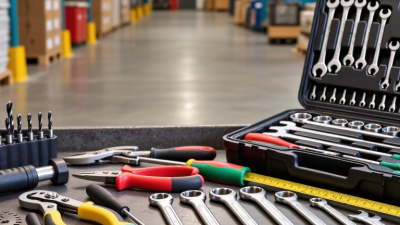
Global buyers should compare tool types against the actual worksite, not attractive catalog images.

Hand tools suit low-volume maintenance and offer simple control. Electric tools improve speed during repetitive assembly. Pneumatic tools provide steady output, but they need clean air and reliable compressors. Battery-powered tools support remote work, although runtime may fall in cold or dusty conditions.

Technical specifications require practical interpretation. Check torque range, speed, chuck size, voltage, battery capacity, and duty cycle.

For cutting tools, review blade diameter, cutting depth, vibration, and material compatibility. For lifting equipment, confirm rated load, safety factor, control method, and inspection access.

IP ratings matter in wet environments. However, an IP rating does not replace proper storage or cleaning. It is only one part of reliability.

Intended application should guide every comparison. A precision assembly line may need low torque deviation and digital adjustment. A construction site may value impact resistance, long cables, and quick maintenance. Agricultural users often need corrosion-resistant surfaces and sealed controls.

Ask for test records, operating limits, spare-part availability, and user instructions in suitable languages.

I have seen buyers choose higher power and later face damaged fasteners. More power is not always better.

A small mismatch in voltage, fitting size, or working angle can create daily delays. Check local electrical requirements before ordering, and leave room for uncertain conditions.

Evaluate Quality, Safety Standards, Certifications, and Supplier Reliability

How to Choose Equipment Tools for Global Buyers in 2026?

Quality should be tested, not assumed from polished photographs. Ask for material grades, load limits, inspection records, and batch traceability. During sourcing audits, I compare samples with drawings and measure critical parts before approving production. Small gaps can become costly failures.

Safety deserves stronger evidence. The International Labour Organization reported nearly 2.93 million work-related deaths and 395 million non-fatal injuries worldwide in 2019. Therefore, buyers should check risk assessments, guarding, emergency stops, user instructions, and relevant regional standards. A certificate helps, but it does not replace functional testing. Check the certificate number with the issuing body. Documents can be outdated.

Supplier reliability requires measurable proof. The ISO Survey 2023 recorded about 1.26 million ISO 9001 certificates worldwide, showing broad adoption of quality systems. Yet certification alone cannot predict delivery performance. Request recent on-time delivery data, corrective-action records, spare-parts availability, and references from comparable markets. Review how quickly the supplier reports defects.

Ask difficult questions.

A factory may pass a desk review but fail during peak production. This is where my judgment can be imperfect. I now prefer staged orders, independent inspections, and payment linked to verified milestones. Trade compliance, packaging strength, and after-sales response should be tested before scaling. A reliable supplier welcomes evidence, not vague promises.

How to Choose Equipment Tools for Global Buyers in 2026?

Recommended evaluation weighting for quality, safety, certifications, and supplier reliability

Quality management and machine safety should receive the highest priority, supported by recognized frameworks such as ISO 9001, ISO 12100, ISO 13849-1, IEC 60204-1, and ISO 45001. Buyers should also verify delivery performance, spare-parts availability, technical support, and documented after-sales service before selecting a supplier.

Calculate Total Costs, Import Requirements, Warranty, and After-Sales Support

For global equipment buyers in 2026, the purchase price is only the visible layer. Calculate landed cost before comparing suppliers: unit price, inland transport, export packing, ocean or air freight, insurance, customs duty, VAT, broker fees, installation, and local training. The WTO estimated that full Trade Facilitation Agreement implementation could reduce global trade costs by 14.3%. However, savings depend on accurate HS classification and complete documents. Ask for commercial invoices, packing lists, certificates of origin, safety certificates, and correct technical specifications. One missing document can delay a shipment for weeks.

Import rules differ by destination. Check voltage, emissions, labeling, testing, and operator-safety requirements with the customs authority or a qualified broker. The World Bank’s Logistics Performance Index 2023 measures customs, infrastructure, tracking, and delivery speed; these factors affect real project costs, not just delivery dates. Sea freight still carries most global merchandise trade by volume, according to UNCTAD’s Review of Maritime Transport 2024. Build a contingency margin for port congestion and currency movement. My own purchasing reviews often underestimate inland delivery.

Warranty language deserves equal attention. Confirm coverage period, excluded parts, labor responsibility, return procedures, and response times. Request a spare-parts list with prices and availability. After-sales support should include remote diagnosis, manuals, training, and named service contacts. A low-cost tool becomes expensive when one replacement component requires six weeks. Data matters. Keep service tickets, inspection photos, serial numbers, and delivery records. Promises are not evidence. Even a careful checklist can miss something. Recheck it before payment.

How to Choose Equipment Tools for Global Buyers in 2026? - Calculate Total Costs, Import Requirements, Warranty, and After-Sales Support
Equipment Category Typical 2026 Purchase Price
(USD)
Estimated Freight & Insurance
(USD)
Illustrative Duty Rate Estimated Local Charges
(USD)
Estimated Landed Cost Before VAT/GST
(USD)
Key Import Requirements Recommended Warranty Benchmark After-Sales Support Checklist
Industrial Air Compressor
(15–30 kW)
$18,000 $1,445 5% planning assumption $800 $21,217.25 Commercial invoice, packing list, bill of lading, certificate of origin, electrical specifications, pressure-equipment documentation where applicable, and tariff classification. At least 12 months for the complete unit; longer coverage for the air-end or motor is preferable. Remote troubleshooting, spare filters and seals, service manual, commissioning guidance, and access to replacement parts for at least 5 years.
Vertical CNC Machining Center $65,000 $3,650 4% planning assumption $2,500 $73,896.00 Commercial invoice, packing list, bill of lading, country-of-origin documents, electrical safety information, machine dimensions and weight, and any required import or industrial-equipment permits. At least 12 months or a defined operating-hour limit, including major mechanical and electrical components. Installation and leveling procedure, operator training, software backup, diagnostic support, calibration guidance, and guaranteed response times.
Electric Pallet Stacker
(1.2–1.6 tonne)
$7,500 $720 6% planning assumption $450 $9,163.20 Commercial invoice, packing list, battery specifications, charger details, safety labels, operating manual, and conformity documents required by the destination market. 12 months for the vehicle and battery-related components, subject to specified charging and maintenance conditions. Battery-care instructions, spare wheels and forks, technician training, parts availability, and a documented preventive-maintenance schedule.
Diesel Generator Set
(50–100 kVA)
$22,000 $1,855 8% planning assumption $1,100 $26,863.40 Commercial invoice, packing list, bill of lading, engine and emissions data, fuel-system information, electrical ratings, noise data, and local electrical or emissions approvals where required. 12 months or 1,000 operating hours is a common commercial benchmark; confirm which limit applies first. Load-bank testing, commissioning, maintenance schedule, emergency support, consumables list, fault-code support, and access to critical engine parts.
Fiber Laser Cutting Machine
(1.5–3 kW)
$90,000 $5,220 3% planning assumption $3,200 $101,276.60 Commercial invoice, packing list, bill of lading, laser safety documentation, electrical specifications, machine weight and dimensions, software details, and destination-country conformity documentation. At least 12 months for the machine; verify separate coverage periods for the laser source, cutting head, chiller, and control system. Installation supervision, optical alignment instructions, software updates, remote diagnostics, consumables planning, and trained service personnel in the destination region.
Industrial Water Pump
(15–30 kW)
$12,000 $930 5% planning assumption $650 $14,226.50 Commercial invoice, packing list, bill of lading, pump performance curve, motor data, materials declaration, country-of-origin documents, and any local electrical or environmental requirements. 12 months for manufacturing defects, with clearly defined exclusions for dry running, unsuitable fluids, cavitation, and incorrect installation. Installation drawings, alignment instructions, seal and bearing replacement guidance, spare-parts list, troubleshooting support, and service training.
Calculation basis: Estimated landed cost before VAT/GST = purchase price + freight and insurance + illustrative import duty + local charges. The figures are planning estimates in USD and are not quotations. Actual duty, taxes, customs fees, certifications, port charges, inland transport, and inspection costs depend on the destination country, HS classification, customs valuation, Incoterm, origin, and current regulations. Buyers should verify the applicable tariff and import requirements with the destination customs authority or a licensed customs broker before ordering.

Confirm Compatibility, Test Performance, and Finalize the Purchase Decision

Global equipment buying in 2026 requires more than comparing prices. Confirm compatibility before discussing discounts. Check voltage, frequency, dimensions, connection types, software support, and operating temperature. A machine may fit the workshop but fail with the existing power system. I have seen buyers overlook cable length and mounting space. Those small details caused expensive installation delays.

Test performance with real operating conditions. Request sample data, a live demonstration, and measurable acceptance criteria. Check output speed, accuracy, noise, energy use, and safety functions. Ask for a trial using your actual materials, not only standard samples. Record results in a simple comparison sheet. Independent inspection can verify key claims. Still, testing is never perfect. Your staff may use the equipment differently after delivery.

Tips: Prepare a compatibility checklist before contacting suppliers. Photograph the installation area, including sockets and access doors. Confirm manuals, training, maintenance intervals, spare parts, and response times in writing. Ask whether performance changes at higher workloads. Keep one technical question unresolved until the supplier answers clearly. A low price can hide adaptation costs. Review the full ownership cost, including transport, setup, calibration, and downtime. Then compare suppliers against the same requirements, not against attractive promises.

WhatsApp