For global buyers, choosing the right cutting tools involves more than comparing online prices. A carbide end mill, diamond blade, or industrial saw can affect production speed, surface quality, and material waste. Product names often hide important differences. Coating, geometry, hardness, runout, and machine compatibility all influence actual performance. This guide examines ten widely used cutting tools across metalworking, woodworking, construction, and general manufacturing. It focuses on practical purchasing decisions, not impressive catalog language.
Each tool is evaluated through a buyer’s lens: material type, workload, tolerance, service life, and replacement access. We also consider supplier documentation, sample testing, packaging, traceability, and technical communication. These details matter when a shipment crosses borders and a delayed replacement stops production. Experienced users understand that the cheapest tool may cost more after frequent changes or damaged workpieces. Still, no ranking fits every factory. A tool that performs well on stainless steel may disappoint on hardened alloy or abrasive composite. Performance varies.
Readers will find clear comparisons, recommended applications, limitations, and questions to ask before ordering. We avoid treating laboratory claims as universal promises. Actual results depend on spindle condition, feed rate, coolant, operator skill, and maintenance. Small tests help. The guide encourages buyers to verify technical data with qualified suppliers and test limited quantities before larger commitments. Some recommendations may require further review in specific workshops. With careful evaluation, global purchasers can select safer, more consistent cutting tools and base sourcing decisions on evidence rather than assumptions.
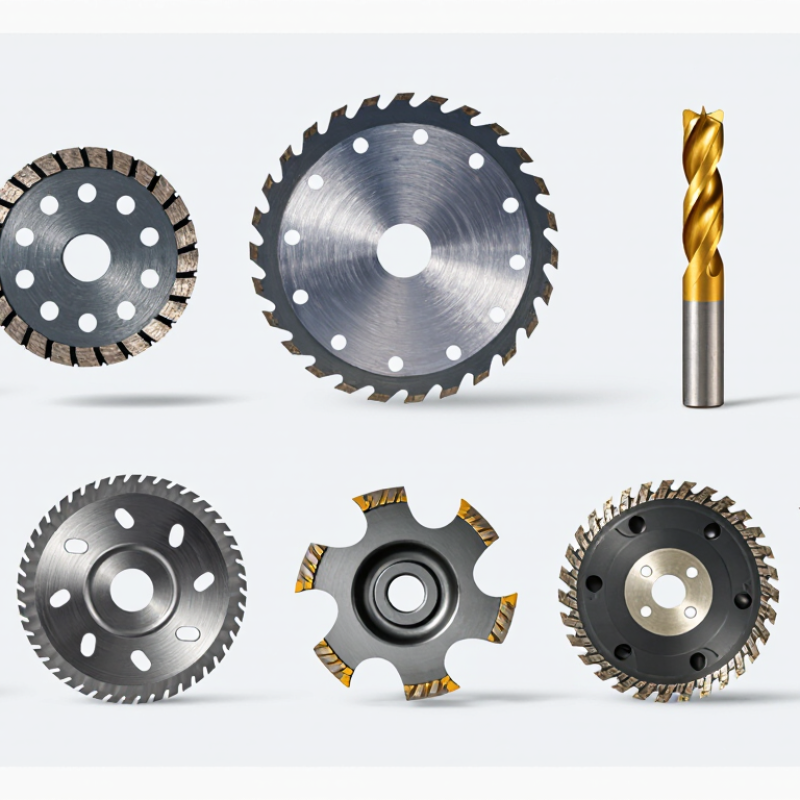
For global buyers, the top 10 cutting tools should cover three operations: turning, milling, and drilling. Turning needs four essentials: an external turning tool, facing tool, grooving tool, and threading tool. Milling requires a face mill, shoulder mill, and solid end mill. Drilling completes the set with a twist drill, indexable drill, and reamer. This practical range supports ISO 513 workpiece groups, including P steel, M stainless steel, K cast iron, N nonferrous metals, S heat-resistant alloys, and H hardened materials.
Tool geometry matters as much as tool type. Positive rake edges often reduce cutting forces in aluminum and stainless steel. Stronger negative geometries can withstand interrupted cuts in cast iron.
Carbide suits many P, M, and K applications, while polycrystalline diamond can improve N-group finishing. Ceramic or cubic boron nitride may suit selected S or H materials.
The ranking is useful, but not absolute. A reamer can deliver excellent holes, yet it cannot correct poor drilling alignment. That limitation deserves more attention.
Tips: Check ISO group, hardness, coolant access, and machine rigidity before ordering. Request cutting data and tolerance evidence. Test one tool under real production conditions. Record tool life, surface finish, vibration, and chip shape. Small errors become expensive quickly.
What Are the Top 10 Cutting Tools for Global Buyers?
ISO 513:2012 offers a practical starting point for comparing cutting-tool materials. The standard classifies hard cutting materials by chemical composition and performance, not by marketing language. In workshops, the ten most useful tool types include HSS drills, HSS taps, carbide end mills, carbide inserts, ceramic inserts, silicon-nitride tools, cermet inserts, PCD cutters, CBN inserts, and diamond tools. Each responds differently to heat, impact, and workpiece hardness.
HSS remains dependable for interrupted cuts, small batches, and manual machines. Carbide usually supports higher cutting speeds, but it can fail suddenly under vibration. USGS Mineral Commodity Summaries 2024 reported about 81,000 metric tons of global tungsten mine production in 2023. That figure matters because tungsten carbide depends heavily on tungsten supply. Ceramic tools tolerate extreme heat, yet they dislike sudden impact. Cermets can produce clean finishes on stable steel-cutting operations. Details matter.
PCD suits aluminum and abrasive nonferrous materials, while CBN performs well on hardened steel. Diamond tools are highly effective on nonferrous materials but are unsuitable for ordinary steel at elevated temperatures. The World Steel Association recorded approximately 1.89 billion tonnes of crude steel production in 2023, keeping steel machining central to global tool selection. A buyer should verify ISO 513 classification, coating, edge geometry, coolant conditions, and machine rigidity. I have seen “long-life” tools fail early because the fixture moved slightly. Material choice is only part of the decision. Even experienced buyers sometimes overvalue catalog speed data and undervalue real cutting stability.
| No. | Cutting Tool | Primary Tool Material | ISO 513 Classification | Typical Workpiece Materials | Typical Cutting Speed | Key Advantages | Main Limitations | Common Buyer Application |
|---|---|---|---|---|---|---|---|---|
| 1 | HSS Twist Drill | High-Speed Steel | Outside ISO 513 scope HSS is classified separately from ISO 513 hard cutting materials. |
Low-carbon steel, alloy steel, aluminum, brass, plastics | 20–40 m/min in carbon steel | Low purchase cost; tough cutting edge; easy to resharpen; suitable for general-purpose drilling | Lower wear resistance and productivity than carbide; loses hardness at excessive temperature | Maintenance shops, job shops, low-to-medium production drilling |
| 2 | HSS Tap | High-Speed Steel | Outside ISO 513 scope | Carbon steel, stainless steel, cast iron, aluminum alloys | 5–15 m/min in steel | Good toughness and thread-forming reliability; available for many thread geometries | Slower than carbide tapping; susceptible to wear in abrasive or hardened materials | General internal threading and intermittent production work |
| 3 | Coated Carbide Turning Insert | Coated Cemented Carbide | HC Coated hardmetal |
Carbon steel, alloy steel, stainless steel, cast iron | 120–300 m/min in steel | High productivity; good wear resistance; interchangeable inserts reduce setup time | Less tolerant of severe impact than HSS; performance depends on grade, coating, and edge geometry | High-volume external and internal turning |
| 4 | Solid Carbide End Mill | Cemented Carbide | HW uncoated hardmetal or HC coated hardmetal | Steel, stainless steel, cast iron, titanium alloys, aluminum alloys | 80–250 m/min in steel; higher in aluminum | High rigidity; excellent dimensional accuracy; supports high-speed milling and complex profiles | Higher cost; sensitive to runout, vibration, and improper tool holding | CNC slotting, pocketing, contouring, and die/mold machining |
| 5 | Indexable Carbide Milling Cutter | Coated Cemented Carbide | HC Coated hardmetal |
Steel, cast iron, stainless steel, non-ferrous alloys | 100–250 m/min in steel | Replaceable inserts; economical for large diameters; suitable for roughing and face milling | Lower detail capability than solid end mills; insert seating and runout affect surface finish | Face milling, shoulder milling, and high-material-removal operations |
| 6 | Carbide Step Drill | Cemented Carbide | HW uncoated hardmetal or HC coated hardmetal | Aluminum, cast iron, mild steel, stainless steel | 60–150 m/min, depending on diameter and workpiece | Accurate hole sizing; multiple diameters in one tool; good wear resistance | More brittle than HSS; requires stable fixturing and controlled entry | Automotive components, sheet-metal assemblies, and multi-diameter holes |
| 7 | Alumina Ceramic Turning Insert | Oxide Ceramic | CA Alumina-based ceramic |
Gray cast iron, hardened steel under stable conditions, heat-resistant alloys | 300–800 m/min in cast iron | Very high hot hardness; excellent resistance to crater wear and high-temperature softening | Brittle; poor resistance to interrupted cuts, vibration, and unstable setups | Continuous high-speed finishing and semi-finishing of cast iron |
| 8 | Mixed Ceramic Finishing Insert | Mixed Ceramic | CM Mixed-oxide ceramic |
Hardened steels, alloy steels, cast iron | 150–400 m/min in hardened steel | High hardness and thermal stability; effective alternative to grinding for some hard-turning operations | Requires rigid machines and continuous cuts; edge chipping can occur under impact | Hard turning, precision finishing, and reduced-grinding process chains |
| 9 | Silicon-Nitride Ceramic Insert | Silicon-Nitride Ceramic | CN Silicon-nitride-based ceramic |
Gray cast iron, compacted graphite iron, selected heat-resistant alloys | 300–1,000 m/min in cast iron | Strong thermal-shock resistance; high productivity in cast-iron machining | Generally unsuitable for many steels because of chemical wear; needs compatible cutting conditions | High-speed turning and milling of cast-iron components |
| 10 | PCD Finishing Tool | Polycrystalline Diamond | DP Polycrystalline diamond |
Aluminum alloys, copper alloys, graphite, carbon-fiber-reinforced plastics, wood composites | 500–2,000 m/min, depending on workpiece and tool diameter | Exceptional wear resistance; excellent surface finish; maintains accuracy in abrasive non-ferrous materials | Not suitable for most ferrous materials at normal cutting temperatures; high initial cost; brittle edge | Precision finishing of non-ferrous and abrasive composite components |
Note: Cutting-speed ranges are indicative starting ranges for common industrial conditions. Actual values depend on tool diameter, grade, coating, workpiece hardness, machine rigidity, coolant, feed per tooth, depth of cut, and tool geometry. ISO 513 primarily classifies hard cutting materials; HSS is shown for practical comparison but is not an ISO 513 hard-material designation.
Comparing cutting tools requires more than catalog speed. Typical carbide end mills run around 80–250 m/min and hold about ±0.02 mm in stable milling. HSS end mills often run at 20–60 m/min, with lower tool cost but shorter cycle efficiency. Indexable face mills can remove material fastest, while solid carbide drills usually deliver better hole consistency. HSS drills cost less per unit, but tool life often varies sharply with coolant and workpiece hardness.
Reamers can achieve roughly ±0.005–0.015 mm hole tolerance at moderate speeds. Taps are economical for common threads, while thread mills offer greater flexibility and easier correction. Turning inserts support high production rates, and ceramic inserts can exceed 300 m/min in suitable heat-resistant alloys. Their tool life may collapse after one unstable cut. These figures are practical ranges, not guarantees. ISO 3685 recommends controlled tool-life testing, and the U.S. Cutting Tool Institute’s 2024 consumption reporting reinforces application-based selection rather than unit-price comparison.
For cost per part, a carbide end mill may outperform HSS after several batches, despite a higher purchase price. A reamer can cost more per hole but reduce rejected parts. Thread milling usually has a higher cycle cost, yet one tool can cover several diameters. Turning inserts often offer the lowest repeatable cost in high-volume work. Ceramic tools remain risky for interrupted cuts. I would question any comparison that ignores setup time, scrap, coolant, and operator adjustment. Tool life is rarely perfectly predictable.
Global buyers comparing the top ten cutting tools should test performance, not just catalog claims. ISO 8688-1 and ISO 8688-2 provide structured tool-life methods for face and end milling. They help buyers compare tools under controlled cutting conditions.
Track four wear metrics:
Measure the edge after fixed cutting intervals, using the same workpiece, coolant, speed, feed, and axial depth. A microscope, calibrated scale, and clear image records improve reliability. Small differences matter.
Tool life is usually reported against a defined wear limit, not a vague “long-lasting” promise. In practice, edge chipping can appear before flank wear reaches its limit. That is where ISO results may need operational judgment. The best tool on paper can fail during interrupted cuts.
Market reports show why disciplined testing matters. Grand View Research forecasts the global cutting-tools market to expand at about 6% annually through 2030. Fortune Business Insights gives a lower long-term growth estimate, near 5%, showing that market forecasts are not identical. Buyers should question both the forecast and the test setup.
Record cutting time, material removal, surface finish, and rejected parts. A tool lasting 30 minutes may outperform a 45-minute tool if it reduces rework. That conclusion is easy to miss. Test evidence should support the purchasing decision, not decorate it.
Global buyers often compare ten core cutting tools: drills, end mills, face mills, reamers, taps, turning tools, boring bars, countersinks, saws, and thread mills. Each tool needs clear geometry, application data, and measurable tolerances. ISO 13399 helps buyers exchange cutting-tool data in a consistent digital format. It supports details such as diameter, cutting length, insert geometry, and tool orientation. However, data consistency does not prove production quality.
ISO 2768 provides general tolerances when individual drawings lack specific limits. Buyers should still confirm critical dimensions directly. Use five quality checks: verify material certificates, measure diameter and runout, inspect edge condition, confirm hardness or coating data, and test sample performance. A calibrated micrometer and optical inspection can reveal small problems before shipment. Packaging also matters. Damaged edges can ruin an otherwise compliant tool. In one purchasing review, the catalog data looked correct, but the delivered shank tolerance needed clarification.
Tips: Request a controlled inspection report with each batch. Match its measurements to the purchase drawing. Ask suppliers to identify the measurement equipment and calibration date. Keep one sample for incoming inspection. Do not rely on photographs alone. ISO references improve communication, but they cannot replace practical testing. No checklist is flawless. Buyers should record failed checks and revise future specifications.
Representative cutting-edge counts for common industrial tool configurations. Actual flute or insert counts may vary by diameter, material, and machining application.
For global purchasing, verify the tool’s ISO 13399 identification data, drawing tolerances under ISO 2768 where applicable, and five quality checks: material grade, geometry, dimensions, coating or surface condition, and batch traceability. The values shown are representative industry configurations, not company or brand performance data.