Choosing the right construction tools can determine whether a project stays on schedule or loses valuable hours. Global buyers face more than price differences. They must compare performance, safety, durability, warranty support, and local compatibility.
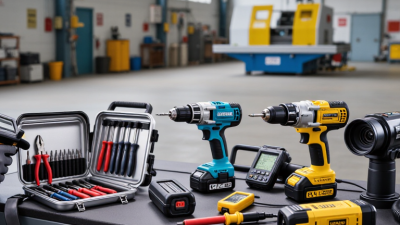
A cordless drill may look attractive, but battery availability matters on a remote jobsite. A laser level should remain accurate after transport across rough roads. Dust extractors need suitable filters for the materials being cut. These details often separate dependable equipment from disappointing purchases. Experienced buyers usually check torque ratings, duty cycles, replacement parts, and supplier response times before placing an order.
Standards matter too. Confirm that each tool meets the safety requirements applicable in its destination market. Review voltage, plug type, manuals, inspection records, and warranty terms. Ask suppliers for clear test reports and product specifications. Do not rely only on polished product photos.
No guide is perfect.
Project conditions can change quickly. A tool that performs well on a dry indoor renovation may struggle outdoors in heat, moisture, or heavy dust. Buyers should test a small order when possible. Keep records of delivery quality and field performance. That evidence supports better decisions later.
This guide examines practical choices for global buyers. It focuses on trusted categories, realistic operating needs, and total ownership costs. The cheapest option may become expensive after one motor failure or delayed spare-parts shipment. Careful selection protects workers, budgets, and project timelines. It also builds stronger supplier relationships over time.
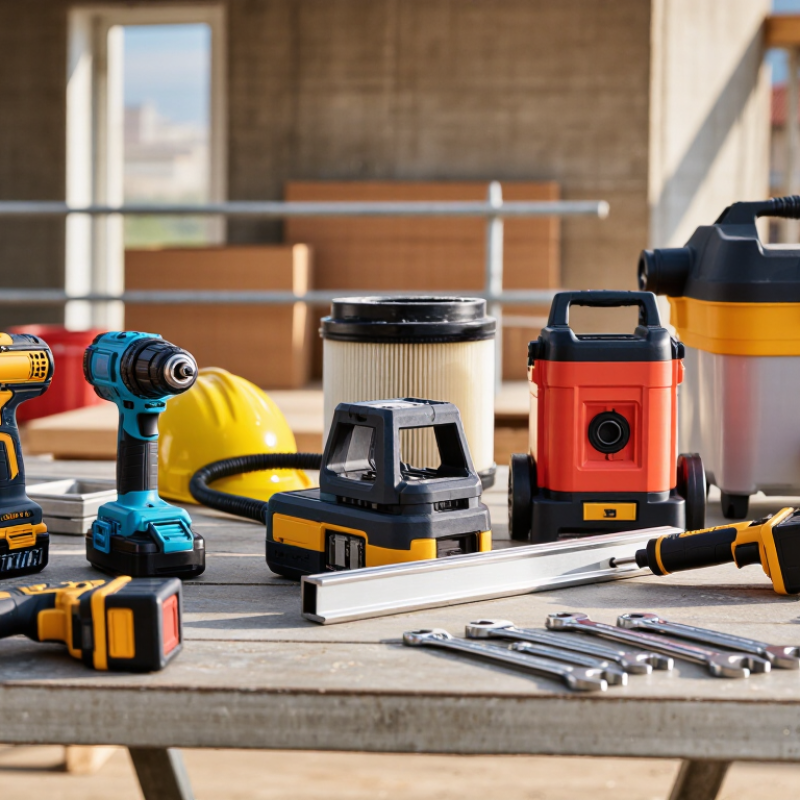
Construction tool selection should begin with the task, not the machine’s size.
Excavators suit digging, trenching, and controlled demolition. Choose their operating weight, bucket capacity, and reach according to soil conditions and site access. A compact excavator works well in narrow urban spaces, while a larger unit handles deep foundations more efficiently.
Match the machine.
Cranes require more careful planning because lifting risks increase with distance and height. Review the load chart, maximum radius, lifting height, and ground-bearing capacity before purchase. A mobile crane supports changing sites, while a tower crane serves long-term vertical construction. Wind exposure, transport limits, and setup time also affect the decision.
Measure twice.
Loaders are valuable for moving aggregates, soil, and construction waste. Wheel loaders perform well on firm surfaces and larger stockpiles. Skid-steer or compact loaders offer better maneuverability around tight work zones. Check rated payload, bucket options, tire or track suitability, and operator visibility.
Field experience shows that buying excess capacity can raise fuel and maintenance costs without improving output. However, choosing too small a machine causes delays and premature wear.
That balance is easy to underestimate.
Local service access, spare-part availability, operator training, and climate conditions deserve equal attention. A technically suitable tool may still perform poorly when support is distant or instructions are unclear.
Global buyers should compare construction tools by real output, not advertised power alone. A high-power machine may struggle with unstable voltage, dense soil, or limited site access. Check rated power, working capacity, duty cycle, and operating temperature. For example, a compact mixer producing 0.5 cubic meters per batch may outperform a larger unit on a narrow urban site. Field trials matter. Request test data using comparable materials, not ideal laboratory conditions.
Total ownership cost includes purchase price, freight, duties, energy, maintenance, spare parts, training, and downtime. Estimate fuel or electricity use across a normal workday. Then price scheduled service and likely wear items over three years. A cheaper tool can become expensive when replacement parts arrive slowly. Yet, my own estimates are never perfect. Weather, operator habits, and local service quality can change the result. Use low, expected, and high cost scenarios.
Tips: Measure the actual work area before choosing capacity. Confirm power compatibility and required safety certifications for the destination. Ask for parts diagrams, service intervals, and warranty terms in writing. Compare noise, weight, and transport requirements too. A tool that fits the budget but needs two workers to move may reduce productivity. Keep records during the first month; real usage often challenges the original spreadsheet.
Top Construction Tools for Global Buyers: What Should You Buy?
Construction equipment decisions now affect energy demand, operating costs, and project credibility. The UNEP Global Status Report for Buildings and Construction 2022 reported that buildings and construction consumed 34% of global energy demand in 2021. The sector also produced approximately 37% of global energy and process-related carbon dioxide emissions. These figures make equipment selection more than a productivity issue.
Buyers should compare electric excavators, battery-powered hand tools, efficient compressors, and low-idle machinery. Select equipment that matches the actual workload, not the largest available model. Smaller machines often consume less energy on urban sites. Check battery replacement costs, charging conditions, service access, and local electricity reliability. The International Energy Agency reports that global electricity demand continues to rise, so electrification is not automatically low-carbon everywhere. The power source matters.
Tips: Request verified energy-use data before purchasing. Measure fuel or electricity use during real site trials. Prioritize repairable equipment and available spare parts. Review total operating cost over five years, not only the purchase price. Keep a written record of noise, downtime, and maintenance hours. My own checklist still underestimates transport emissions and battery disposal risks. That needs more attention. The GlobalABC roadmap also stresses efficiency, material circularity, and stronger building-sector policies. A practical buyer should therefore ask suppliers for lifecycle information, independent test results, and clear emissions assumptions before signing an order.
The buildings and construction sector accounted for 34% of global energy demand and approximately 37% of global energy- and process-related CO₂ emissions in 2022. For buyers, this supports prioritizing energy-efficient equipment, electric or battery-powered tools where practical, durable products with longer service lives, and equipment-sharing or rental models that improve utilization.
Source: United Nations Environment Programme, Global Status Report for Buildings and Construction 2023.
Global buyers should treat construction tools as safety systems, not simple price comparisons. ISO 20474 provides essential safety principles for earth-moving machinery, including visibility, stability, access, controls, and protective structures. Check whether the equipment documentation clearly addresses these areas. A low price means little if operators cannot enter safely or see workers nearby.
BLS fatality data offers a useful reality check. U.S. records repeatedly show serious risks involving struck-by incidents, rollovers, falls, and unexpected machine movement. These patterns should influence purchasing decisions. Look for tested rollover protection, reliable emergency stops, clear alarms, and maintenance access from ground level. Ask suppliers for inspection records, conformity documents, and operator guidance. Paperwork alone is not proof. It must match the machine delivered.
Tips: Compare the tool with actual site conditions, including slopes, dust, noise, and limited visibility. Train operators before production use. Inspect guards, steps, warning labels, and attachment locks during delivery. Keep photographs and serial records for future checks. No checklist is perfect. A rushed inspection can still miss a damaged latch or unreadable label. Review your buying process after every near miss, even when nobody is injured.
International buyers should judge tools beyond purchase price. Standards must match the jobsite and destination market. Check electrical ratings, safety testing, noise limits, and documentation before payment. A familiar plug is not proof of compliance.
The UNEP Global Status Report for Buildings and Construction 2024 states that the sector consumes 32% of global energy and produces 34% of global carbon emissions. Efficient tools can reduce operating costs, but only when performance data is independently verified.
Ask for test reports, serial-number records, and clear instructions in your working language.
Parts availability often decides whether equipment earns money or sits idle. The McKinsey Global Institute reported that construction productivity has grown about 1% annually over two decades. Downtime makes that weakness worse.
Confirm common replacement parts, delivery times, repair manuals, and technician training. A two-year warranty sounds useful, yet exclusions may cover batteries, seals, or normal wear. Request the full warranty terms.
I once overlooked local service capacity. That mistake was expensive.
Tips: Build a comparison sheet with standards, spare-part prices, warranty limits, and dealer response times. Ask the dealer to quote one complete maintenance kit. Test a sample under real dust, voltage, and temperature conditions. Do not trust polished brochures alone. Recheck every assumption.